
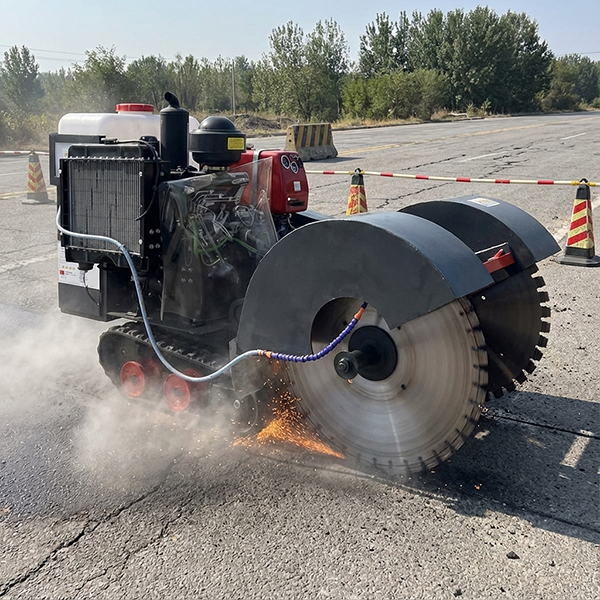
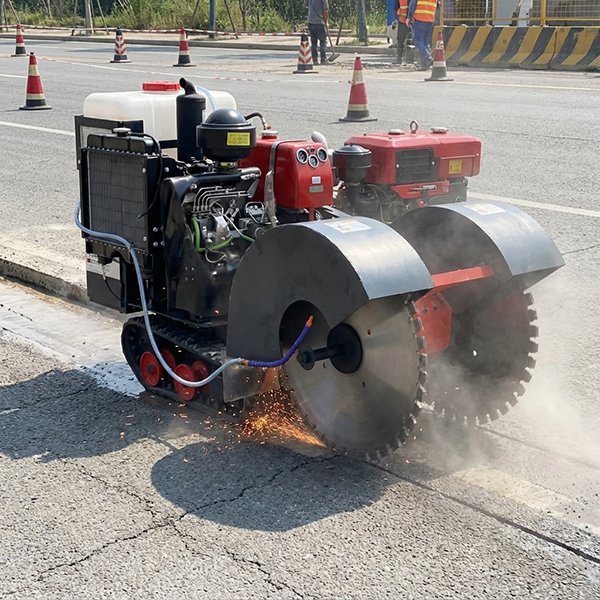
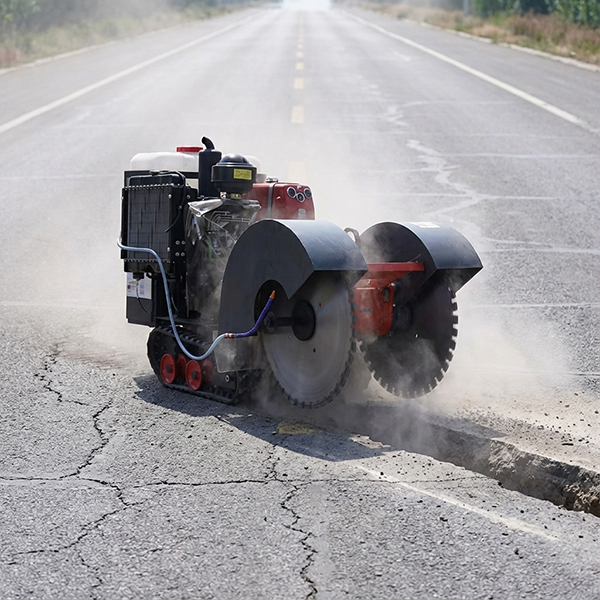
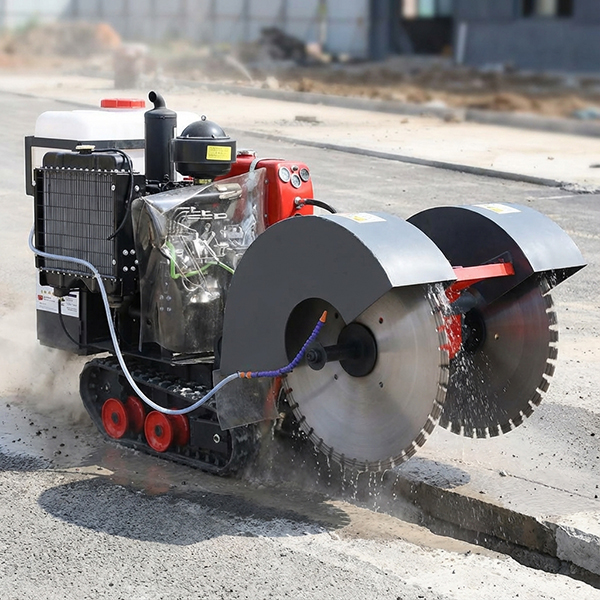
When people talk about road maintenance, most of them focus on asphalt mix, concrete strength, or curing time. But on real job sites, what often decides whether a project moves fast and clean is a reliable Crawler Road Cutting Machine.
Our 57 Model Crawler Road Cutting Machine (patented product) is built for one thing: making straight, clean cuts on concrete and asphalt, with stable movement, strong power, and easy control. Whether you’re cutting expansion joints on a concrete road, opening a groove for cables, or removing damaged pavement, this machine is designed to keep the cut neat and the work efficient.
Quick Overview (Real Site Use, Not Just Specs)
Road cutting machines are widely used for pavement joint cutting—usually the cut looks like a thin straight line, and in common road work the depth can be around 135mm / 160mm / 185mm depending on requirements. In addition to joints, they’re also used for:
Cutting expansion joints on concrete and asphalt surfaces
Road repair work: cutting out damaged concrete/asphalt areas
Straightening edges on concrete/asphalt surfaces
Demolition & renovation work on old buildings
Cutting precast concrete parts
Cutting floor joints and grooves
Laying signal system loops and cables (as needed)
That’s exactly why we keep emphasizing: a good Crawler Road Cutting Machine isn’t only for roads—it’s for municipal work, airport pavement cutting, communications projects, driveways, floors, and job sites where you need mobility and a straight cut.
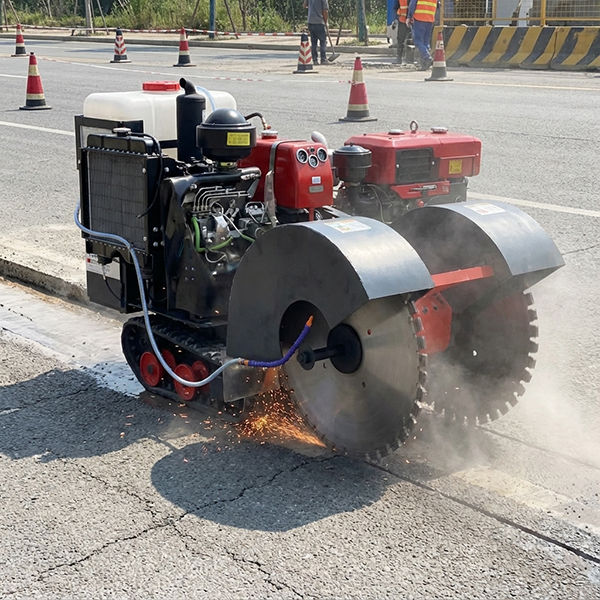
Key Specifications – 57 Model Crawler Road Cutting Machine
This is the data buyers usually ask for first:
Model: 57 Model Crawler Road Cutting Machine
Engine: Four-cylinder 490K
Drive: Electric control
Voltage: 24V
Operation: Remote control
Machine Size: 2200 × 1160 × 1400 mm
Weight: 700 KG
Max Cutting Depth: 30 cm
Max Cutting Spacing: Single cut 50–100 cm
If your project requires deeper grooves or stable cutting on uneven surfaces, the crawler structure plus strong power output makes a big difference in real use.
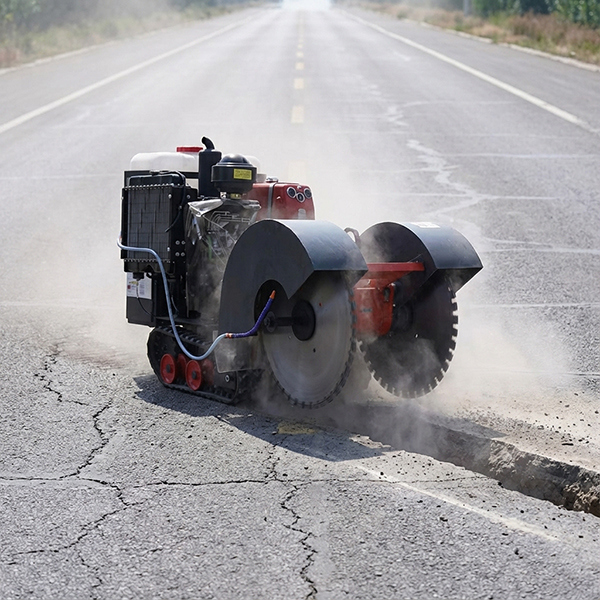
Why Contractors Like a Crawler Road Cutting Machine
In our training notes, road cutting machines are described as: simple structure, reliable, flexible operation, durable—and that’s exactly what contractors care about.
Here are the practical reasons:
1) Clean, Straight Cuts (Less Rework)
A road cutting machine should not “wander”. A rigid frame and stable movement matter because vibration and warping directly affect the cut line. This machine is built to stay straight and resist vibration, so the cut looks clean and professional.
2) Works on Both Concrete and Asphalt
A proper Crawler Road Cutting Machine can handle:
Concrete pavement
Asphalt pavement
Reinforced concrete (cutting through concrete with rebar)
And, depending on blade selection and job requirements, it can also be used for stone / granite / marble products and different concrete products and grooves.
3) Water-Assisted Cutting Helps Blade Life
In the product knowledge you shared, one key point is that the cutting machine can use water spray for the blade, which helps extend blade life and improve cutting performance. On long hours of cutting, this is not a “nice-to-have”—it’s how you control cost.
4) Safety and Control Matter More Than People Think
A lot of accidents happen because operators get too close, or leave the machine while it’s still running. With remote control operation, the operator can stay at a safer distance and still manage the cutting work precisely—this is a strong advantage for modern work sites.
Real-World Operation Tips (From the Training Notes)
These points sound basic, but they save time and prevent damage:
Use the correct blade for the material (concrete vs asphalt is different)
When starting the engine or raising/lowering the machine, don’t let the blade touch anything
During operation, the operator should not leave the control
Before leaving the machine: turn off the engine, and make sure it won’t roll or tip
No smoking/open flame near the machine
Refuel only when the engine is off; avoid fuel contacting hot engine parts or spilling on the ground
If working in tunnels, enclosed areas, entrances, or deep trenches: make sure there’s enough fresh air (important for fuel engines)
If the crawler wheels need to cross arranged concrete slabs/stone boards, use steel plate or angle steel to create a stable crossing surface
These are the kinds of details buyers trust—because they show you actually understand job sites.
FAQ – Questions Buyers Usually Ask About a Crawler Road Cutting Machine
Q1: What’s the main job for this machine? Expansion joints or road repair?
Both. The classic use is cutting expansion joints in concrete pavement, but it also works well for cutting out damaged areas in concrete/asphalt for repair work. It can also cut grooves for floor joints and cable loop installation when needed.
Q2: What is the maximum cutting depth?
For the 57 Model Crawler Road Cutting Machine, the maximum cutting depth is 30 cm.
In many routine road joint works, typical depths can be around 135mm / 160mm / 185mm, but if your project needs deeper cutting, this model is designed to handle up to 300mm.
Q3: Can it cut reinforced concrete with rebar?
Yes. Road cutting machines using diamond blades are commonly used because they can provide a fast cut with a smooth edge, and they are capable of cutting concrete including rebar (steel reinforcement). Blade choice still matters, but the machine is built for heavy-duty job sites.
Q4: Why does a crawler structure matter? Why not a normal wheel type?
On real construction surfaces—especially uneven or rough areas—crawler movement gives more stable traction. When stability improves, the cut line becomes straighter and vibration goes down. That usually means:
better-looking cuts
less blade wear
less operator fatigue
That’s why many contractors prefer a Crawler Road Cutting Machine for road maintenance and large-area cutting.
Q5: Is water cutting required?
Water-assisted cutting is strongly recommended because it helps cool the blade and improves blade life. In practical work, it also reduces dust, which makes the job site cleaner and easier to manage.
Q6: Is remote control really useful, or just a “feature for advertising”?
It’s useful—especially for safety and precision. Training guidelines emphasize that operators shouldn’t leave controls during operation, and should keep the machine stable. Remote control helps the operator keep full control while standing in a safer, more comfortable position. It’s also helpful on demolition or rescue-type jobs where distance matters.
Q7: What are the fuel and oil requirements?
For gasoline engine cutting machines used in mobile job sites without electricity, a common requirement is using quality fuel and maintaining an oil mixture ratio not lower than 40:1 (fuel:oil). This helps protect the engine during heavy-duty cutting work.
Q8: What kind of projects is it most suitable for?
Typical projects include:
municipal road maintenance and renovation
pavement cutting on airport roads
communications engineering cable loop installation
on-site cutting for floors, driveways, lanes
demolition and renovation jobs requiring cutting grooves or removing sections
Summary: A Patented Crawler Road Cutting Machine Built for Efficient, Straight Cutting
If you’re looking for a Crawler Road Cutting Machine that feels stable on the ground, cuts straight, and is designed for real road construction and maintenance, the 57 Model is a very practical option.
You get:
Four-cylinder 490K power
24V electric control drive system
Remote control operation for easier and safer handling
A solid machine body (700KG, 2200×1160×1400mm) for stability
Max cutting depth 30 cm
Single cut spacing 50–100 cm