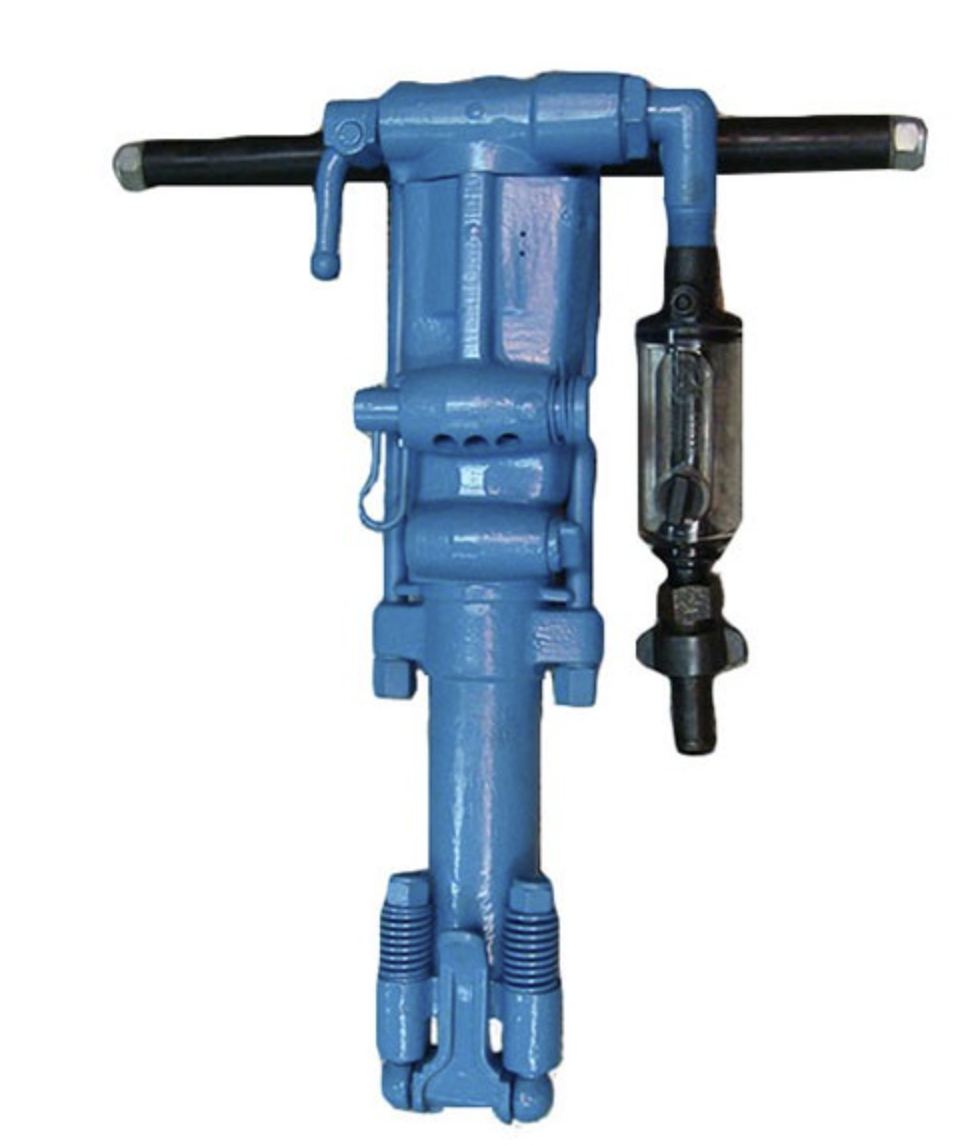

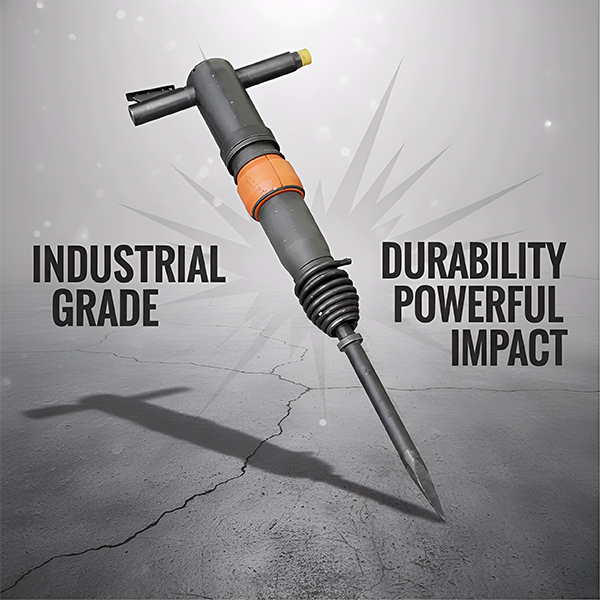
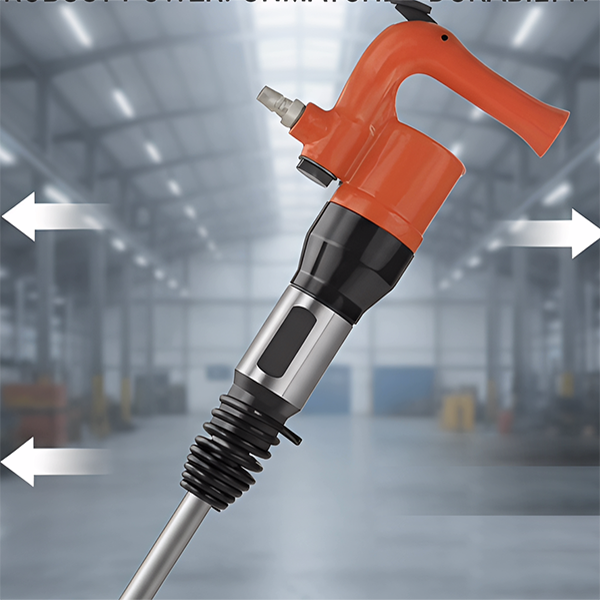
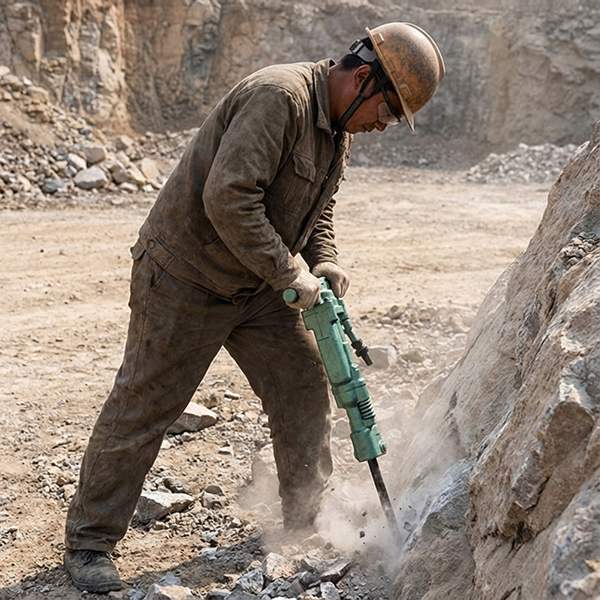
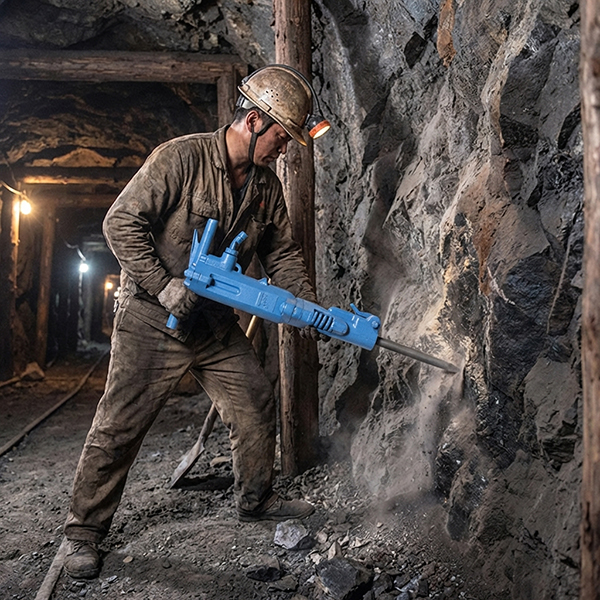
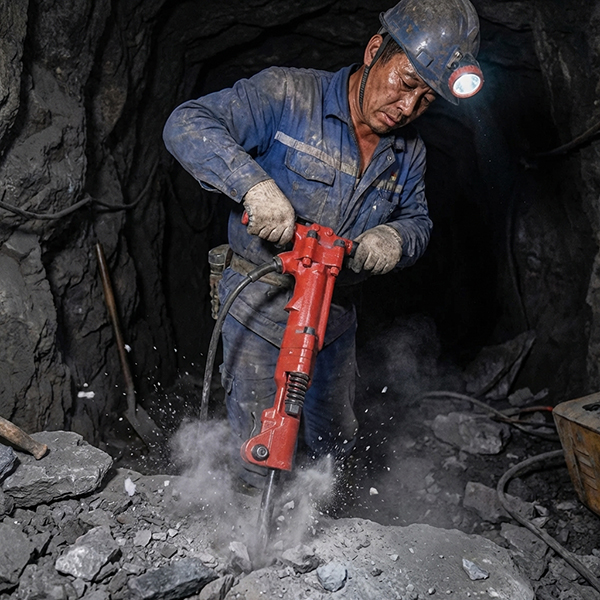
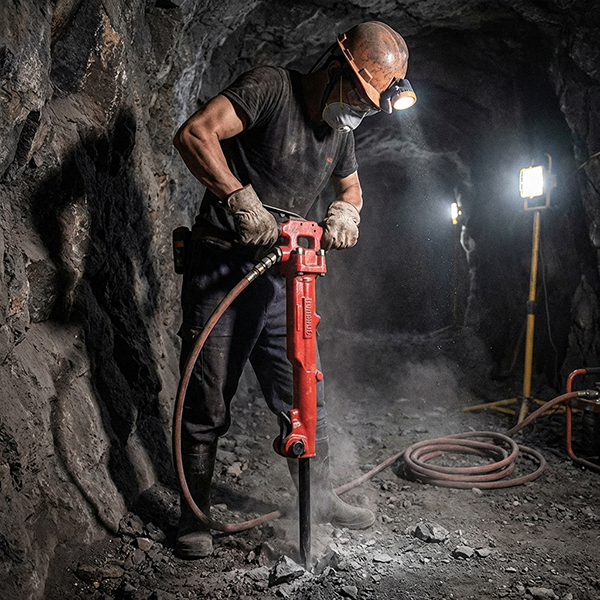
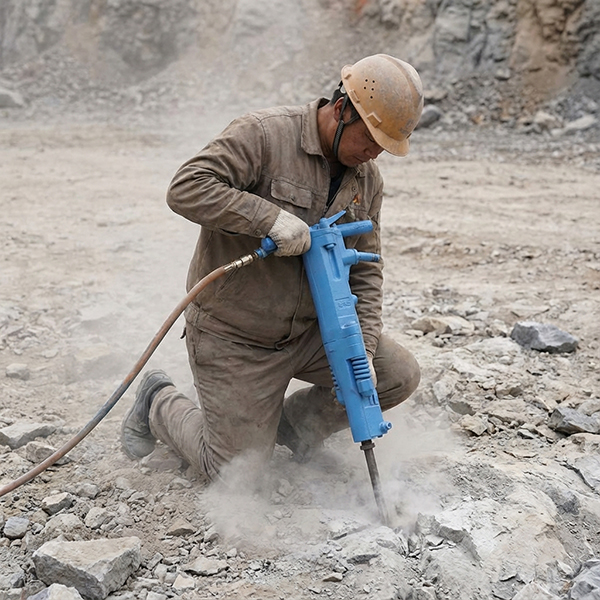
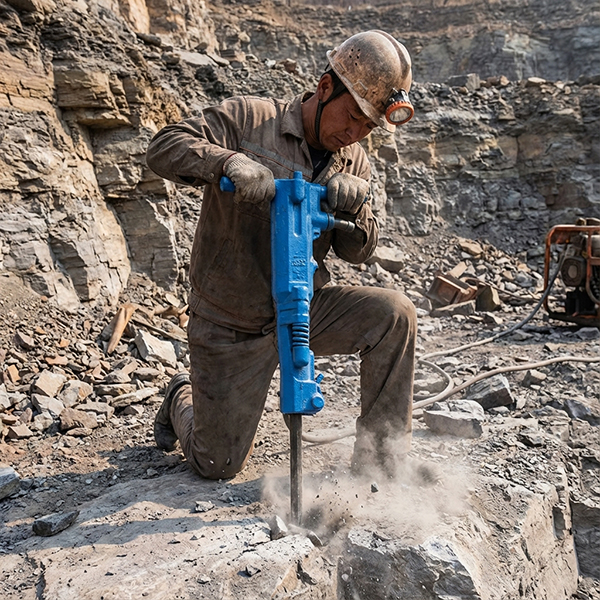
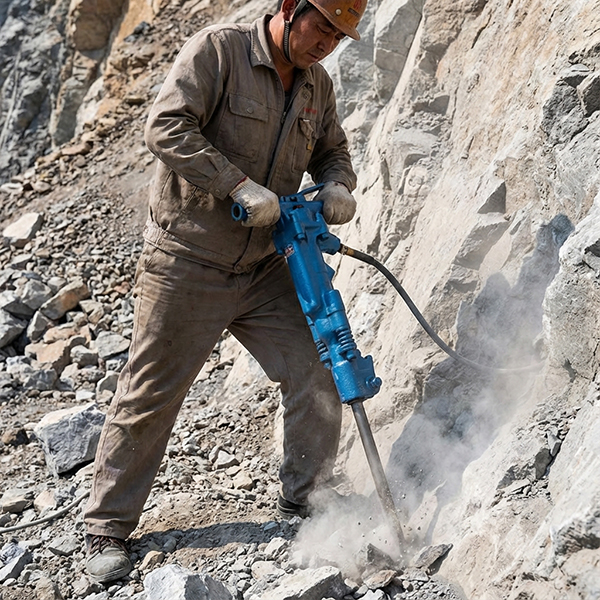
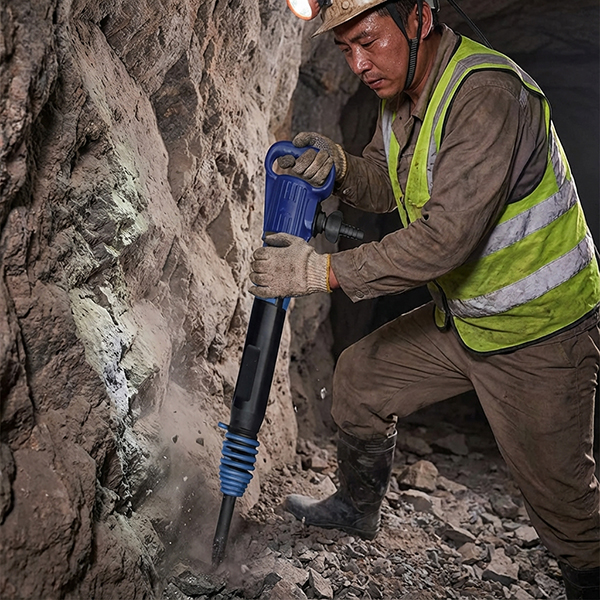
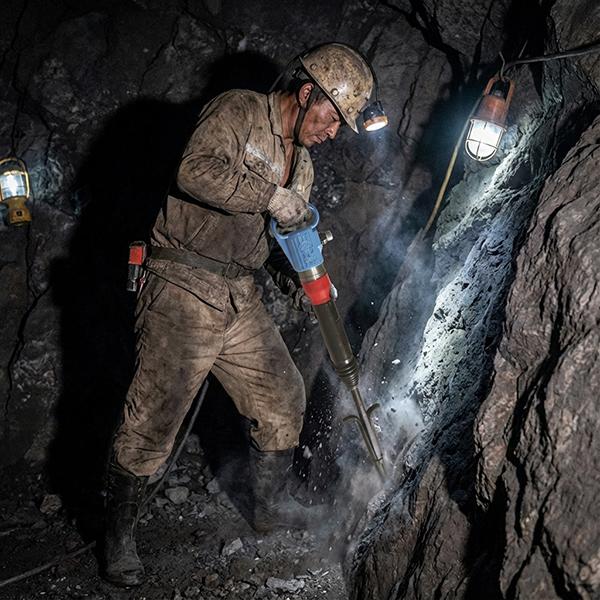
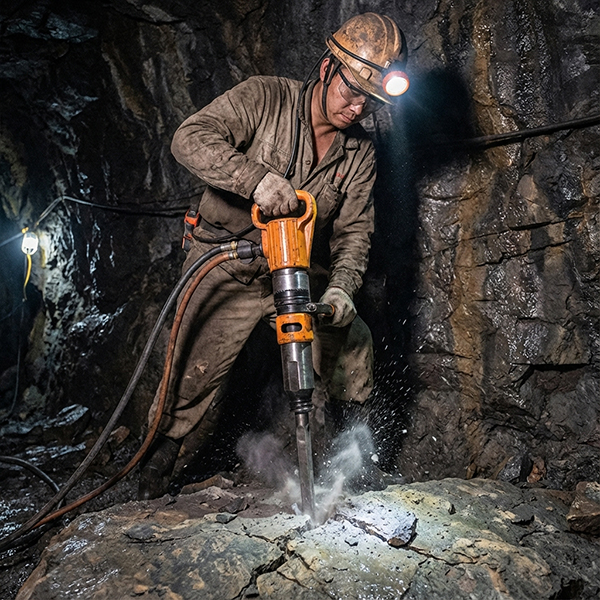
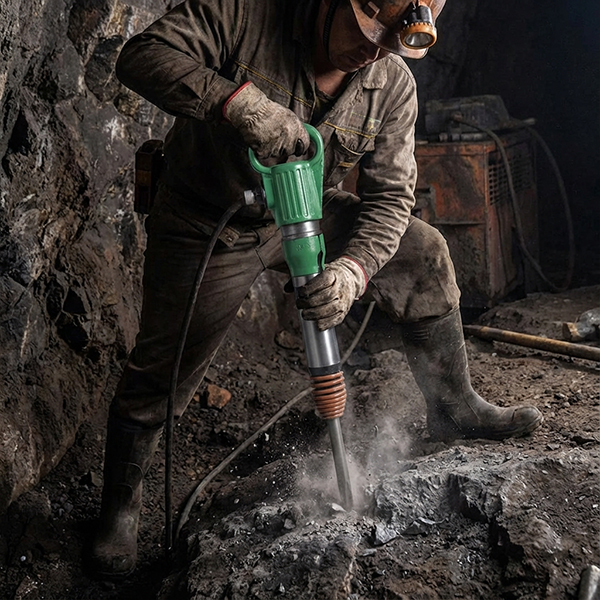
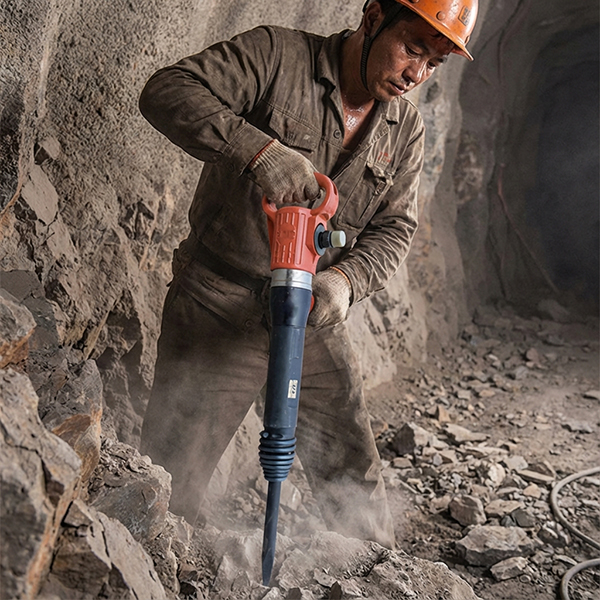
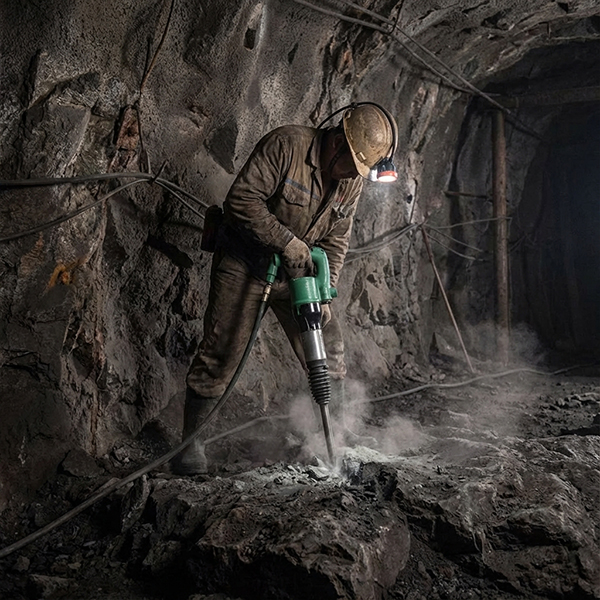
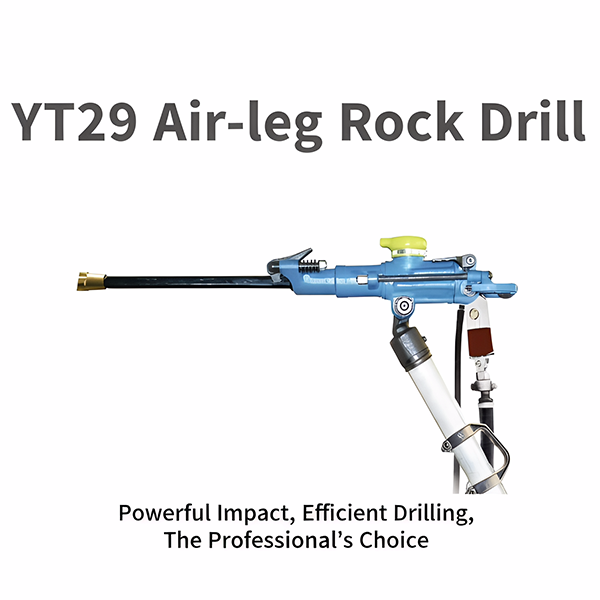
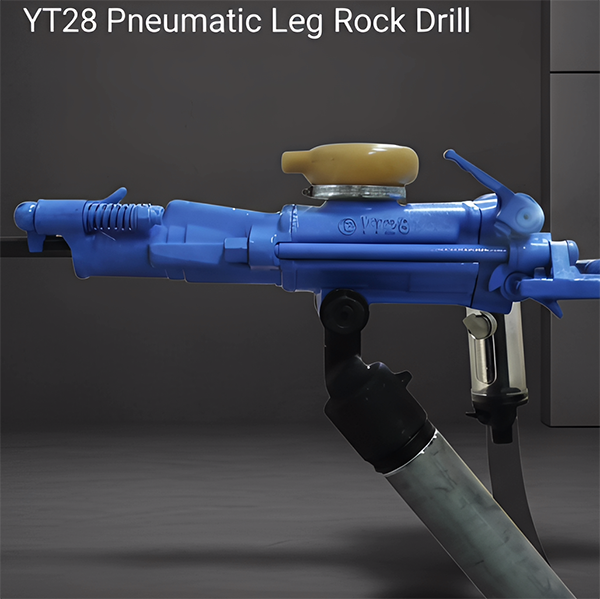
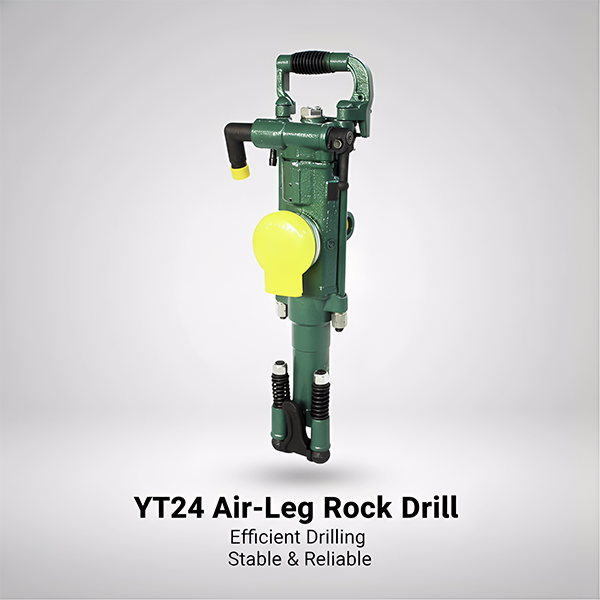
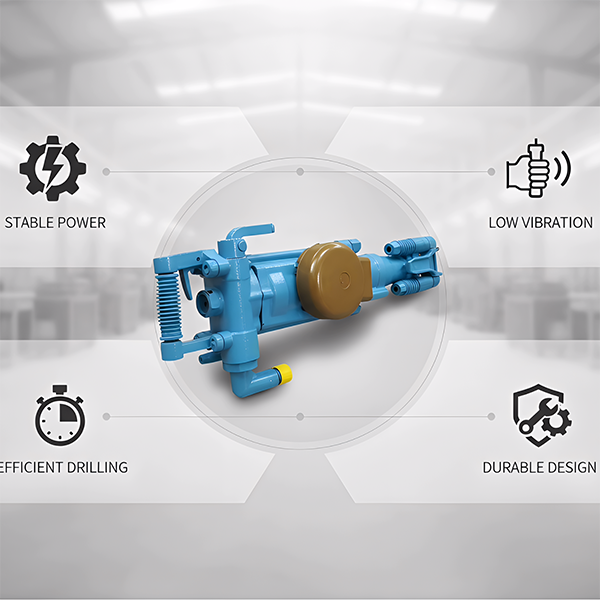
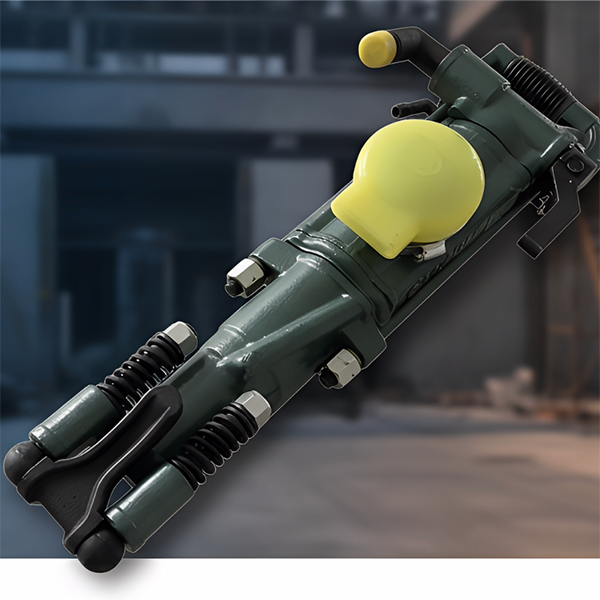
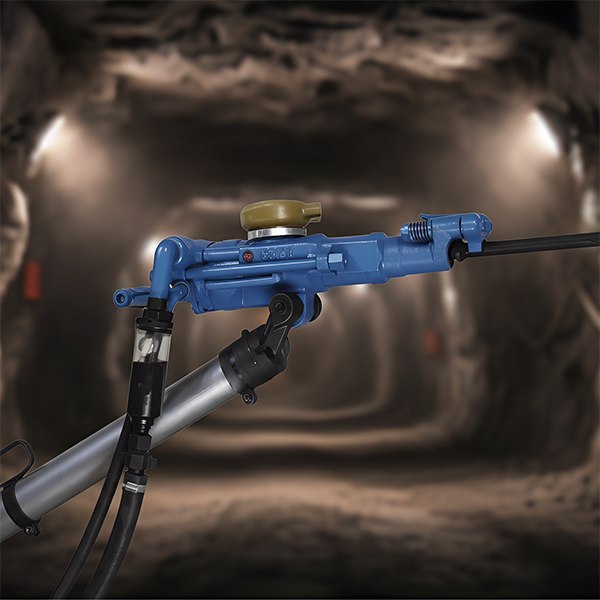
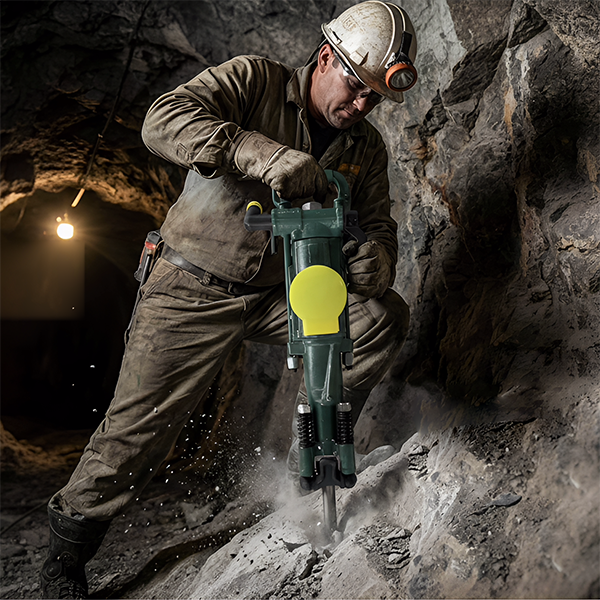
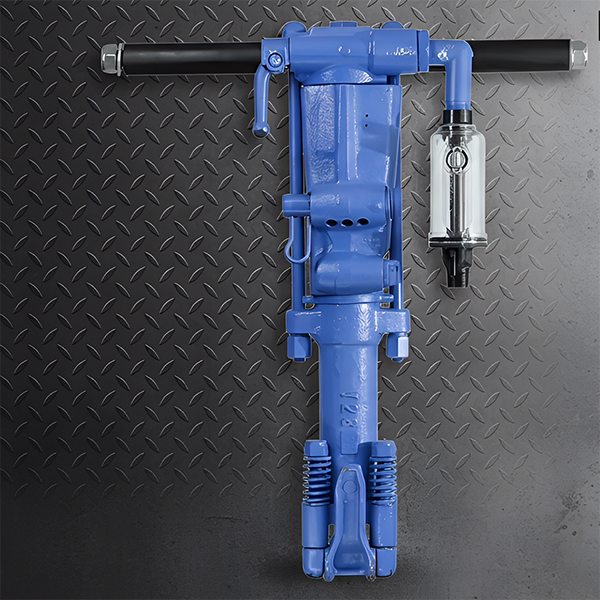
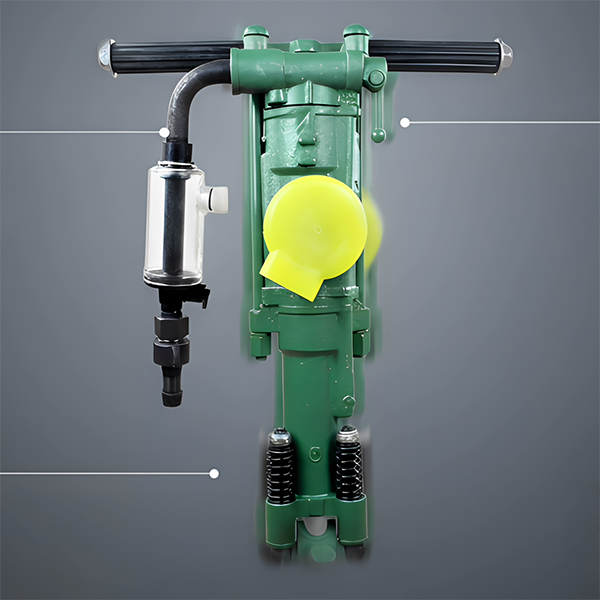
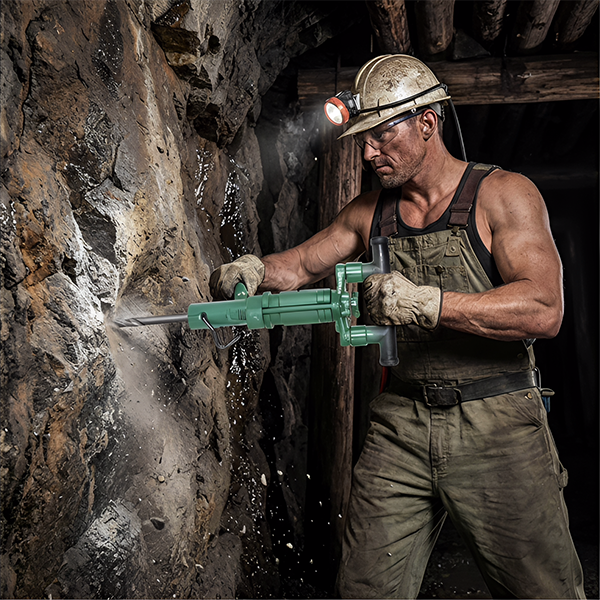
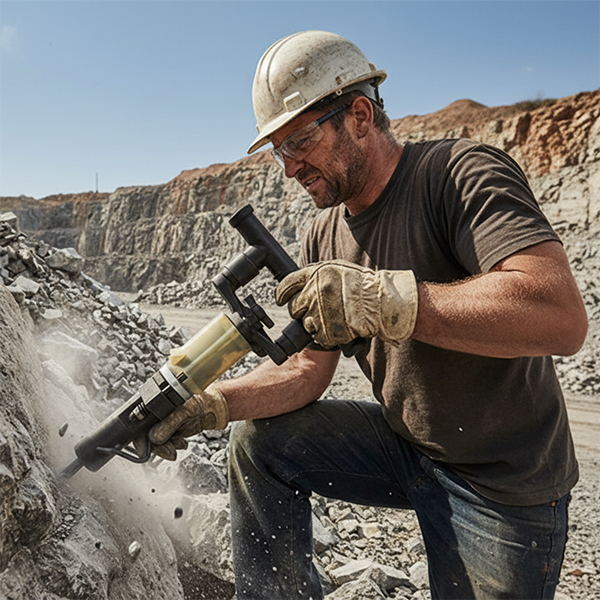
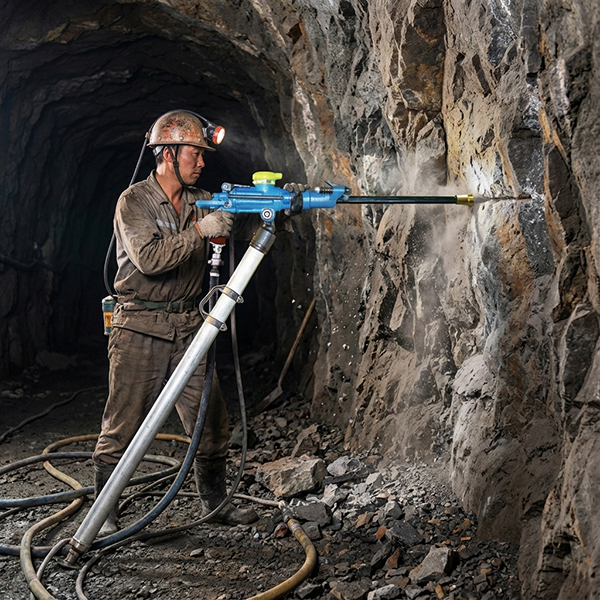
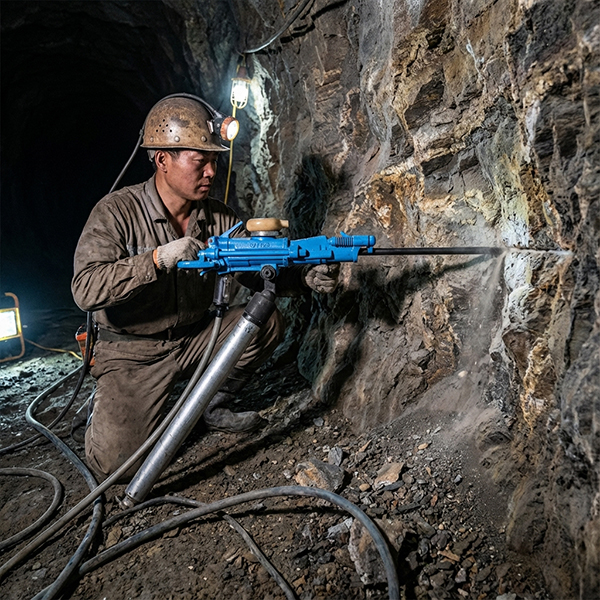
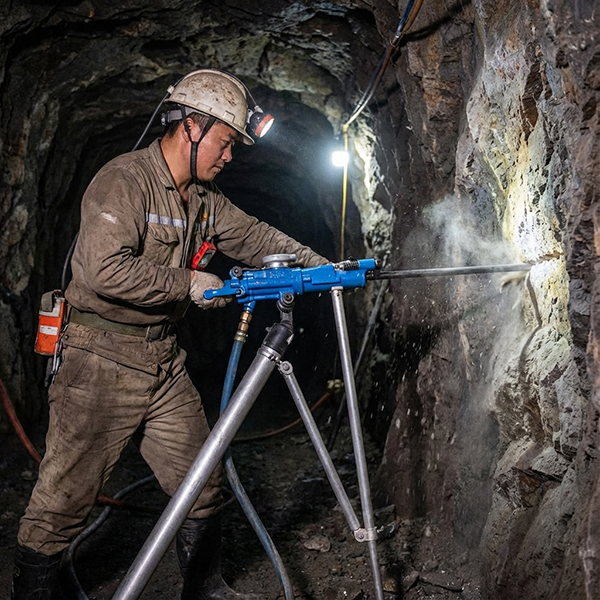
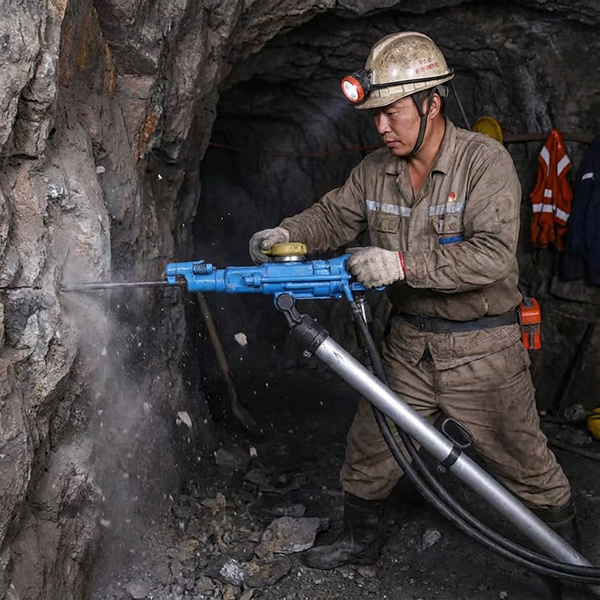
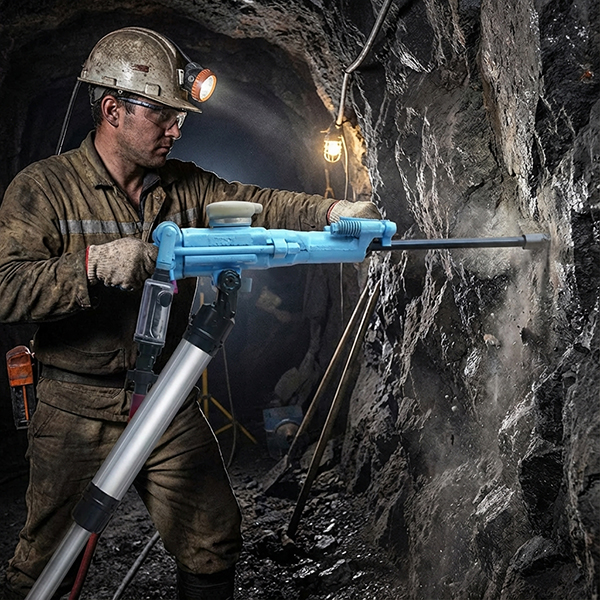
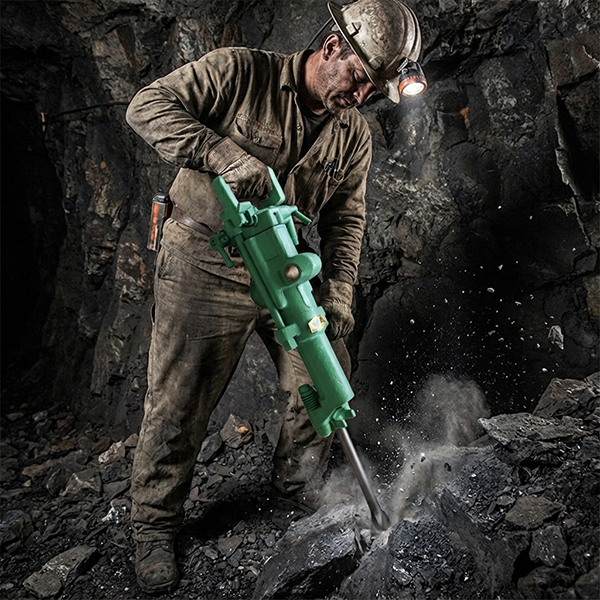
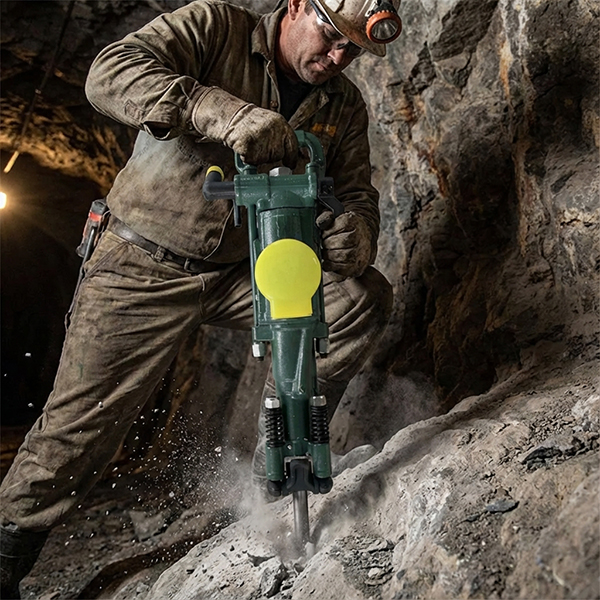
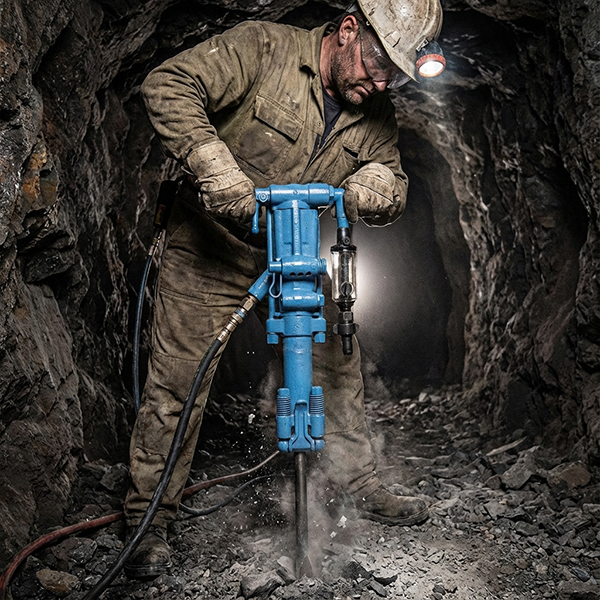
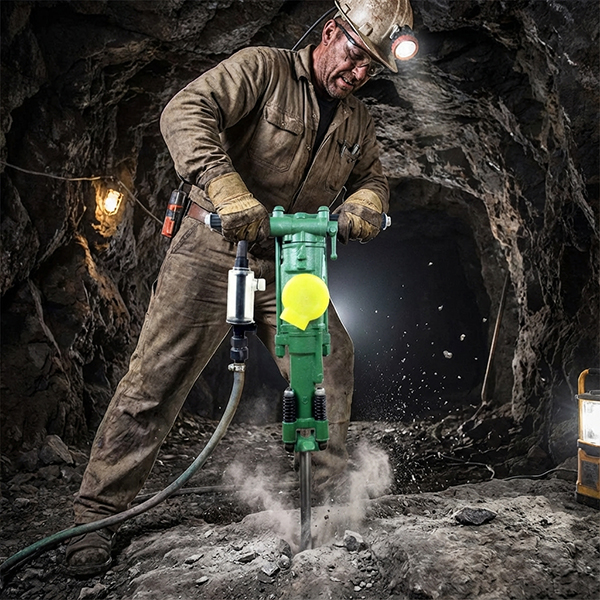
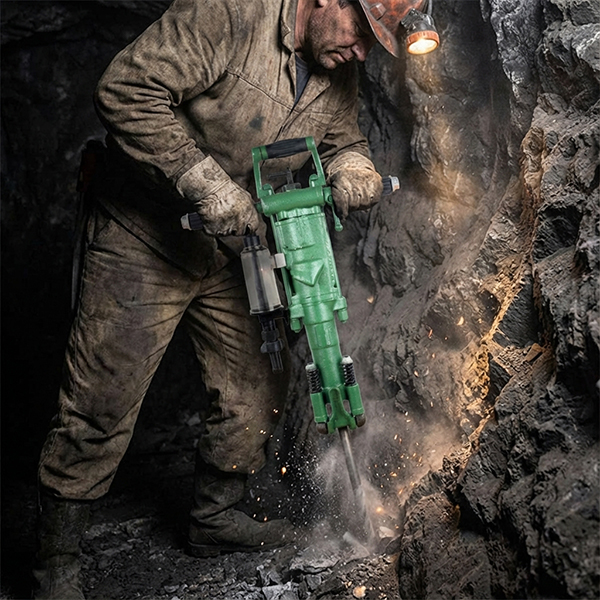
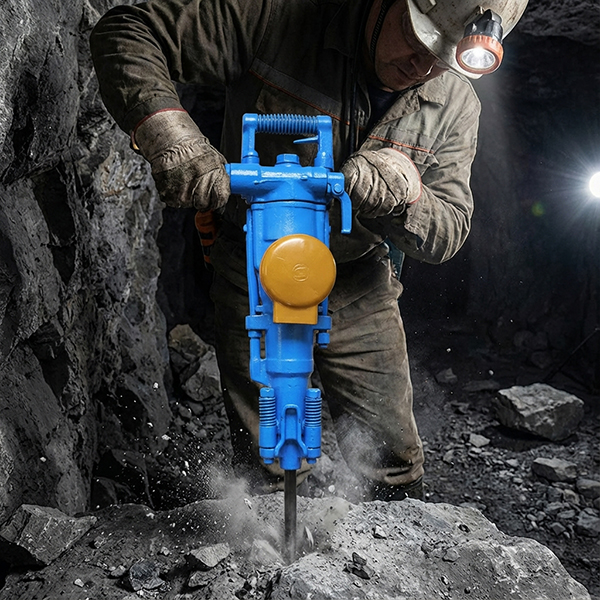
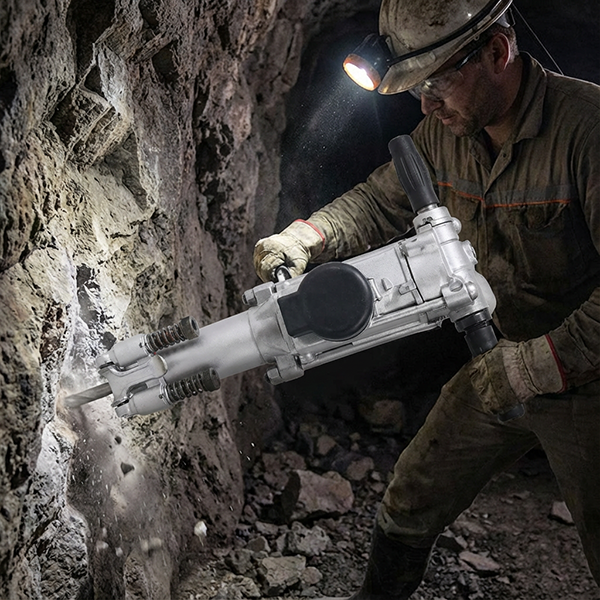
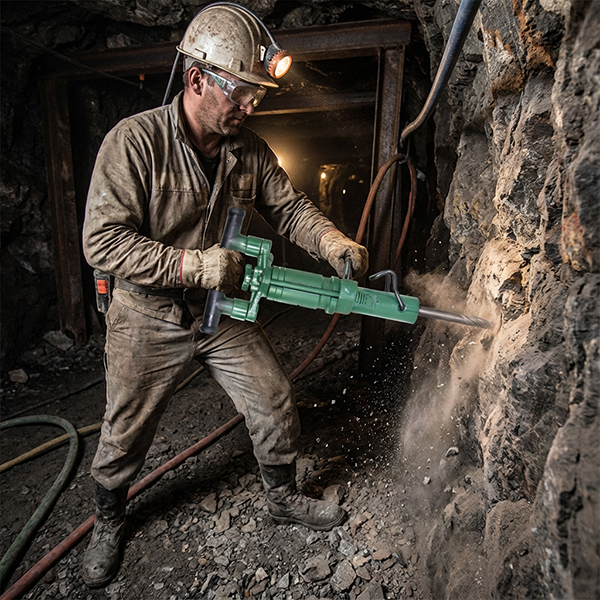
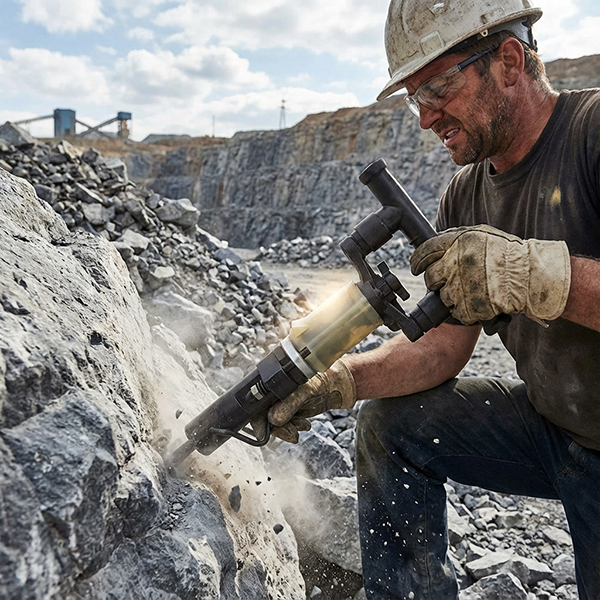
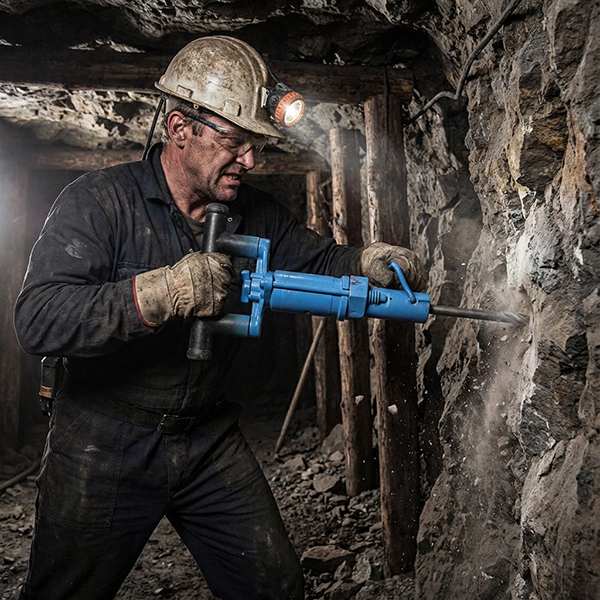
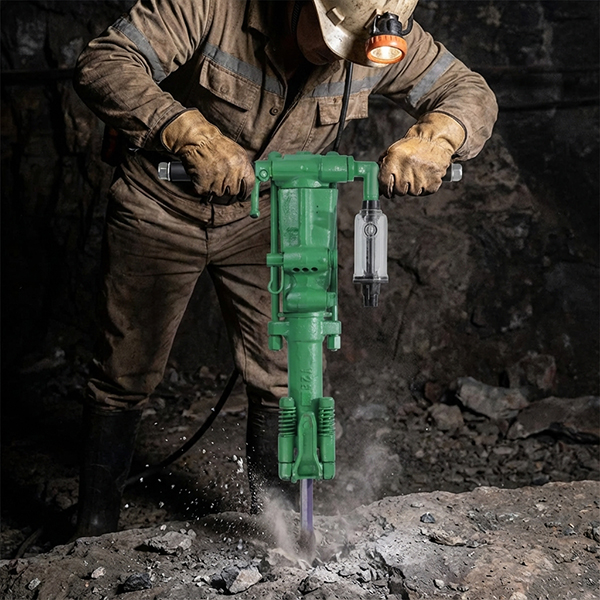
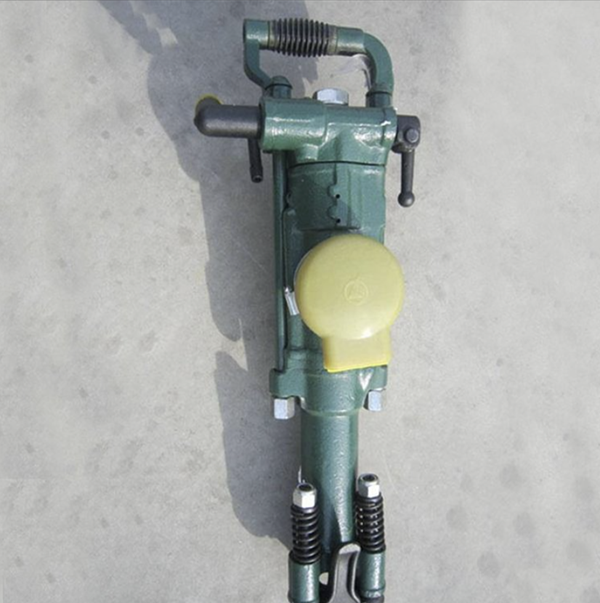
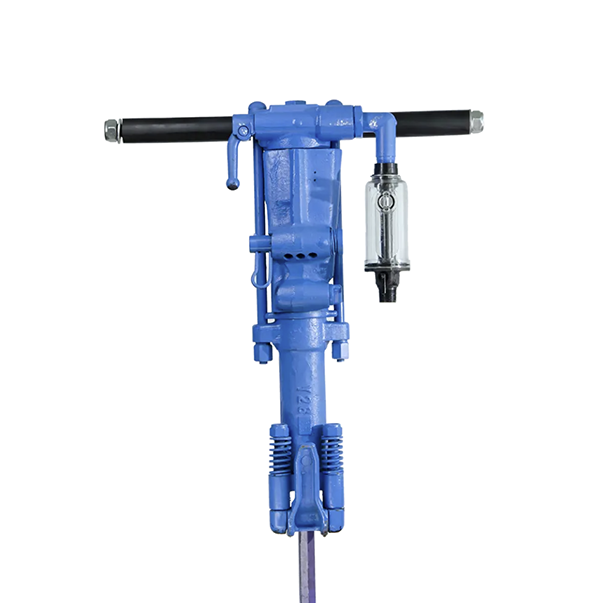
If you look at the data sheet of the Y26 Pneumatic air leg rock drill, you can more or less see what kind of tool it is before you ever touch it. This is not a light DIY toy; it’s a serious Pneumatic jack hammer for mining, tunneling and small to medium underground jobs.
The basics are very clear: the Y26 weighs 26 kg, has a length of 650 mm, uses a φ65 mm cylinder with a 70 mm piston stroke, and works at 0.4 MPa air pressure. Impact energy is rated at ≥30 J, with an impact frequency of ≥23 Hz. It drills φ34–φ42 mm holes up to 5 m deep, using standard 22 × 108 mm shank steel. Air consumption is ≤47 L/s, with a φ19 mm air hose and φ13 mm water hose, and the working water pressure is 0.2–0.3 MPa.
Those numbers already tell a pretty complete story of this hand held jack hammer.
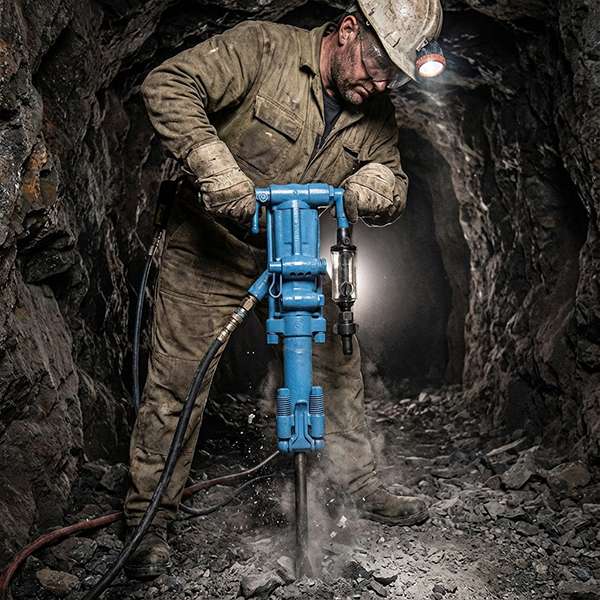
Key Specs of the Y26 Hand Held Jack Hammer (In Plain Terms)
Instead of only listing parameters, let’s walk through them as you would explain to a customer at the bench:
Weight: 26 kg – a bit on the heavy side for a hand held jack hammer, which usually means more stability on the rock face.
Length: 650 mm – compact enough for underground headings and tunnel faces.
Cylinder diameter: φ65 mm – this is where the impact power comes from.
Piston stroke: 70 mm – long stroke, more energy per blow.
Working pressure: 0.4 MPa – standard pressure in many mines and sites, easy for common compressors.
Impact energy: ≥30 J – each blow hits hard.
Impact frequency: ≥23 Hz – at least 23 blows per second.
Air consumption: ≤47 L/s – around 2.8 m³/min, so not the smallest, but reasonable for a powerful Pneumatic jack hammer.
Air pipe inner diameter: φ19 mm – tells you the air hose size you really need.
Working water pressure: 0.2–0.3 MPa with φ13 mm water pipe – enough water to flush 34–42 mm holes and keep dust under control.
Drill hole diameter: φ34–φ42 mm – typical blast and anchor hole range.
Max hole depth: 5 m – good for many mining and tunneling patterns.
Shank size: 22 × 108 mm – standard taper shank, easy to share steels with other jack hammer models.
So, on paper, the Y26 sits right in the middle: not the smallest hand held jack hammer, not the heaviest, but clearly built as a serious production tool with enough power to drive 34–42 mm bits down to 5 m.
What These Y26 Numbers Mean in Real Work
If we combine these parameters with normal rock drill practice (like the general principles in your product knowledge), the character of the Y26 becomes pretty obvious.
Power and Impact
A φ65 mm cylinder and 70 mm stroke, together with impact energy ≥30 J, tell you this Pneumatic jack hammer is made for hard or medium-hard rock, not just soft stuff.
Impact frequency ≥23 Hz is a deliberate choice. It’s not extremely high, but each blow is strong. For φ34–φ42 mm bits, this combination of “not too fast, but heavy blows” usually gives better penetration and less bit glazing in tougher rock.
Air and Water Requirements
Working pressure: 0.4 MPa
Air consumption: ≤47 L/s
Air pipe: φ19 mm
From a practical point of view, this means:
A normal mining compressor that can deliver around 3 m³/min at about 0.5–0.6 MPa to the pipe network is usually enough for one Y26 jack hammer, with some margin.
The fact that the spec insists on φ19 mm air pipe is important. If you try to run this drill on a small hose, your 0.4 MPa at the compressor may become 0.3 MPa or less at the drill, and the performance will drop immediately.
With working water pressure 0.2–0.3 MPa and a φ13 mm water pipe, the drill can push enough water through for 34–42 mm holes. This matches your general product knowledge: enough water to flush cuttings and control dust, but not so much that the hole floods and slows the bit.
Drilling Range: 34–42 mm, 5 m Depth
The Y26 is clearly designed around:
Hole diameter: φ34–φ42 mm
Max depth: 5 m
So if a customer tells you they mostly drill 1.5–4 m holes with 34–40 mm bits in medium-hard rock, this Pneumatic jack hammer is very much in its comfort zone. For much deeper holes or larger diameters, you’d usually go to a heavier class of rock drill; for smaller holes, you might switch to a lighter hand held jack hammer.
Handling and Stability
With 26 kg weight and 650 mm length, the Y26 is not a featherweight. But that’s usually what operators prefer when drilling 34–42 mm holes:
The drill presses more firmly into the rock.
Vibration and “jumping” are reduced compared to very light tools.
Combined with an air leg (as the name “Pneumatic air leg rock drill” suggests), the operator doesn’t have to carry all 26 kg in his arms; the leg carries the weight and provides feed force, while the operator mainly guides the jack hammer.
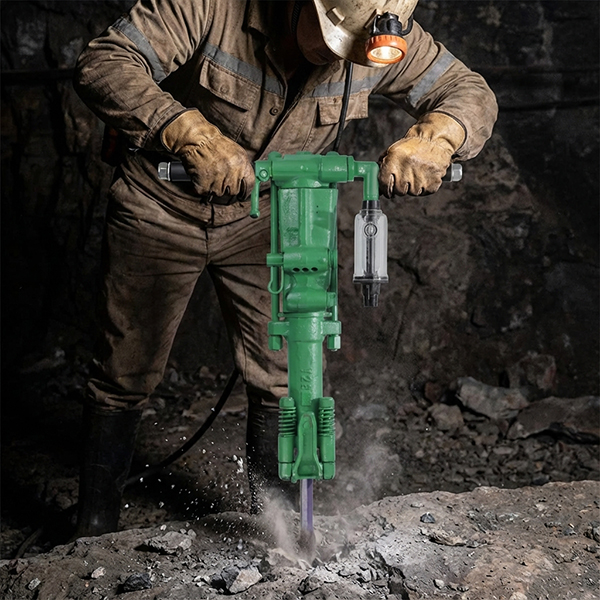
How the Y26 Pneumatic Jack Hammer Works (Short Version)
Mechanically, the Y26 works like other rock drills you’ve described in your product materials:
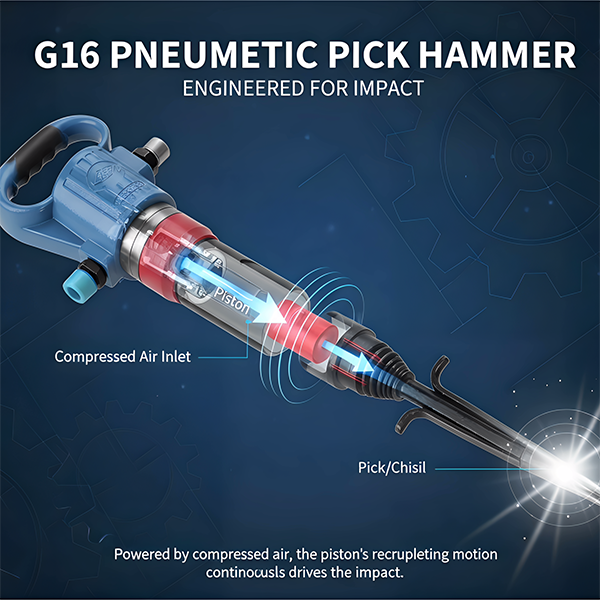
Compressed air at 0.4 MPa enters the φ65 mm cylinder.
The piston moves with 70 mm stroke and hits the tail of the 22 × 108 mm drill steel.
Each blow, with ≥30 J energy at ≥23 Hz, sends a stress wave down the steel to the bit, breaking rock at the bottom.
Between blows, the steel rotates a bit, so the bit teeth hit fresh rock every time.
Air and water (0.2–0.3 MPa through the φ13 mm water pipe) flush the cuttings out of the φ34–φ42 mm hole.
The air leg provides steady push against the face, keeping the hand held jack hammer engaged properly.
This is exactly the combination of impact + rotation + feed + flushing that you mentioned in your general product knowledge.
Questions Customers Usually Ask About the Y26
Based on the kind of Q&A you shared for your other models, plus typical conversations around rock drills, here are some realistic questions buyers care about, and answers that lean directly on the Y26 data.
1. What compressor do I need for the Y26 Pneumatic jack hammer?
From the specs:
Working pressure: 0.4 MPa
Air consumption: ≤47 L/s
Air pipe inner diameter: φ19 mm
For one Y26:
You should plan for a compressor that can give you about 2.8–3.0 m³/min of air at 0.5–0.7 MPa. That allows for line losses and still keeps close to 0.4 MPa at the drill when it is working.
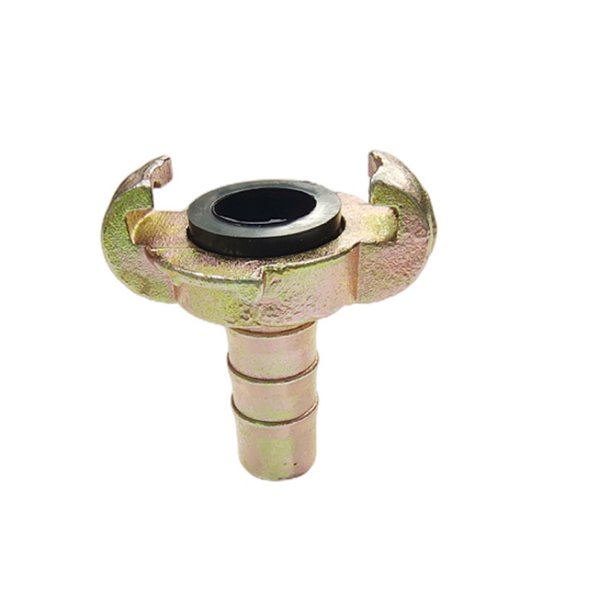
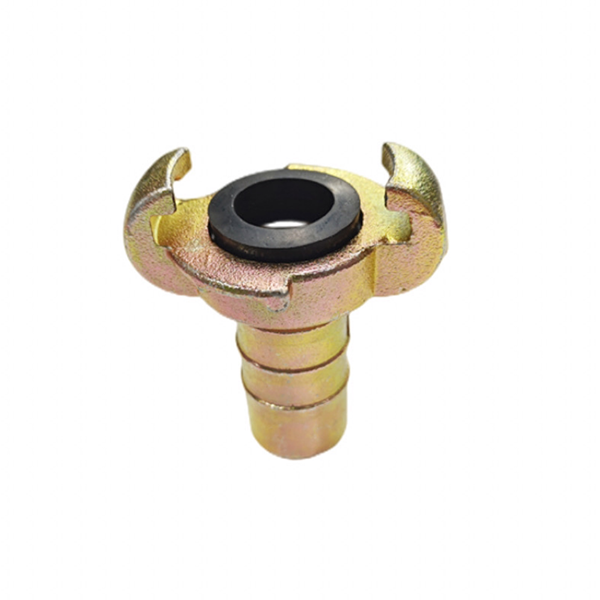
Use a φ19 mm air hose from the manifold to the drill. If you reduce to 16 mm or smaller over long distances, the pressure at the jack hammer will drop and you’ll lose impact energy and drilling speed.
This is the same principle as in your product knowledge: always talk about “pressure at the drill during impact”, not just “pressure at the compressor”.
2. Is 26 kg too heavy for a hand held jack hammer?
On paper:
Weight: 26 kg
Length: 650 mm
In real use:
For pure hand-held overhead work, 26 kg would be very tiring. But as an air leg rock drill, the Y26 is normally used with a leg, so the operator doesn’t lift the full 26 kg.
The extra weight actually helps. When drilling φ34–φ42 mm holes in hard rock, a heavier hand held jack hammer like the Y26 tends to be more stable, and it transfers the ≥30 J impact energy more efficiently into the rock instead of bouncing.
So, yes, it is heavy, but that’s part of why it works well in its intended drilling range.
3. How does the Y26 perform compared to lighter Pneumatic jack hammers?
Look at these numbers:
Cylinder dia: φ65 mm
Piston stroke: 70 mm
Impact energy: ≥30 J
Impact frequency: ≥23 Hz
Air consumption: ≤47 L/s
Lighter tools often have smaller cylinders and/or shorter strokes, and lower impact energy. They may hit faster, but each blow is weaker. For hard rock and φ34–φ42 mm holes:
The Y26’s ≥30 J per blow at ≥23 Hz generally means deeper penetration per minute, especially in tougher rock.
The trade‑off is higher air consumption (up to 47 L/s) and a heavier machine (26 kg).
So if a customer’s priority is strong performance in 34–42 mm holes and they already have a compressor that can handle about 3 m³/min, the Y26 is usually a better choice than very small Pneumatic jack hammer models.
4. What drill steel and bits can I use with the Y26?
The Y26 uses:
Shank size: 22 × 108 mm
Hole diameter: φ34–φ42 mm
This makes life easier:
22 × 108 mm is a very common taper shank. If you already use this size on other hand held jack hammer models, you can generally share rods and many bits across them.
In the φ34–φ42 mm range, you can choose chisel, cross or button bits depending on your rock and hole requirements. Staying inside this range allows the φ65 mm cylinder and ≥30 J impact to work in their designed window.
If someone asks about using larger bits (for example 45 mm or more), it’s better to be honest: it is not what the Y26 is optimized for, and penetration and tool life will suffer.
5. How should I set air and water for best results?
From the spec:
Working air pressure: 0.4 MPa
Air pipe: φ19 mm
Working water pressure: 0.2–0.3 MPa
Water pipe: φ13 mm
In practice:
Try to keep actual working pressure at the Pneumatic jack hammer between about 0.38 and 0.42 MPa while drilling. If your compressor is set at 0.5–0.6 MPa, this is usually achievable with proper hose sizing.
Don’t starve the drill with a thin air line. The φ19 mm inner diameter is there for a reason.
Set water pressure around 0.2–0.3 MPa. You want a steady flow through the φ13 mm line: enough to carry cuttings out of the φ34–φ42 mm hole and control dust, not so much that everything turns to mud.
This aligns directly with the general advice in your product knowledge: correct pressure and water flow matter as much as the drill model itself.
6. What kind of daily maintenance does the Y26 need?
The Y26 doesn’t ask for anything unusual compared with other rock drills you described:
Before work:
Blow the φ19 mm air hose clean to remove water and dirt.
Check that the lubricator (if external) is filled with proper rock drill oil.
During work:
Listen to the sound of the jack hammer. A sudden change often means lubrication or pressure issues.
Check hoses and clamps regularly – a 26 kg drill hitting at ≥23 Hz creates vibration that can loosen connections.
After work:
Shut off water first, then let it run on air briefly to blow out moisture from the passages and the φ13 mm water line.
Wipe the shank area and check for unusual wear on the 22 × 108 mm steel.
This is all in line with the maintenance principles already present in your product information: clean air, correct lubrication, and quick checks every day are what keep a Pneumatic jack hammer like the Y26 working steadily.
Conclusion – Where the Y26 Fits in Your Fleet
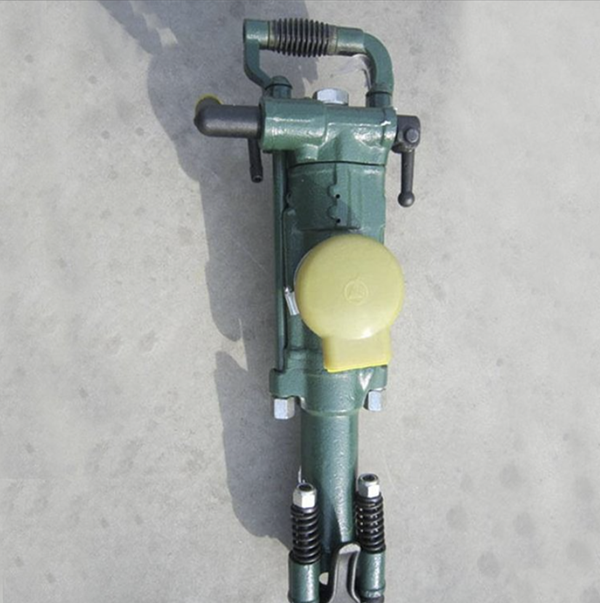
When you put all the numbers and practical points together, the Y26 Pneumatic air leg rock drill is best described as a solid, mid‑heavy hand held jack hammer for everyday underground work:
26 kg weight, 650 mm length – stable, compact, suitable for air‑leg drilling.
φ65 mm cylinder, 70 mm stroke, impact energy ≥30 J, impact frequency ≥23 Hz – clearly designed to drive φ34–φ42 mm bits in medium‑hard and hard rock.
Working pressure 0.4 MPa, air consumption ≤47 L/s, φ19 mm air pipe – a strong but reasonable Pneumatic jack hammer for sites with a standard mining compressor.
Working water pressure 0.2–0.3 MPa, φ13 mm water pipe – enough flushing for up to 5 m hole depth.
Standard 22 × 108 mm shank – easy tooling compatibility with many other jack hammers.
If a customer tells you they mostly drill 34–42 mm holes up to 5 m deep, have around 0.4 MPa air available, and want something reliable rather than experimental, the Y26 is simply a straightforward, field‑proven choice in the Pneumatic jack hammer category.