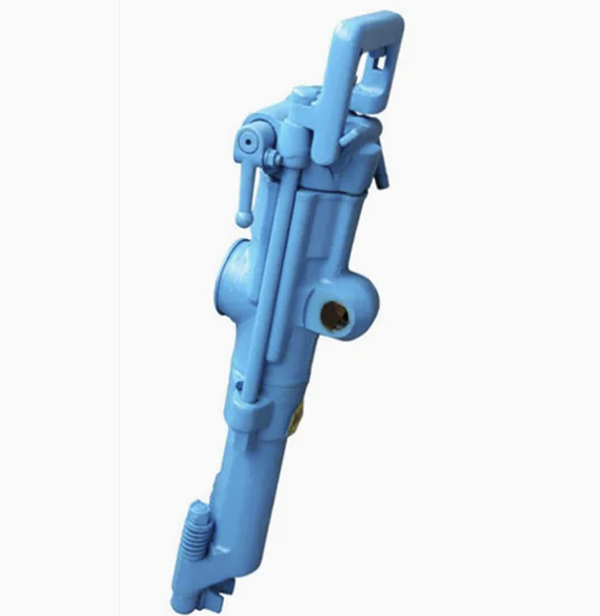

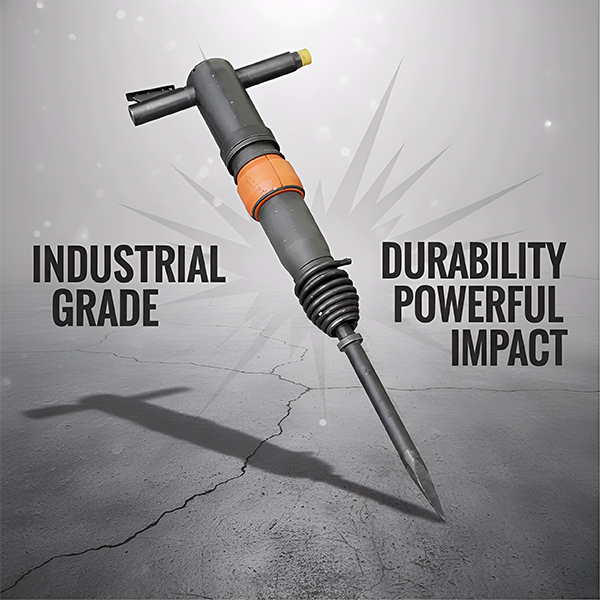
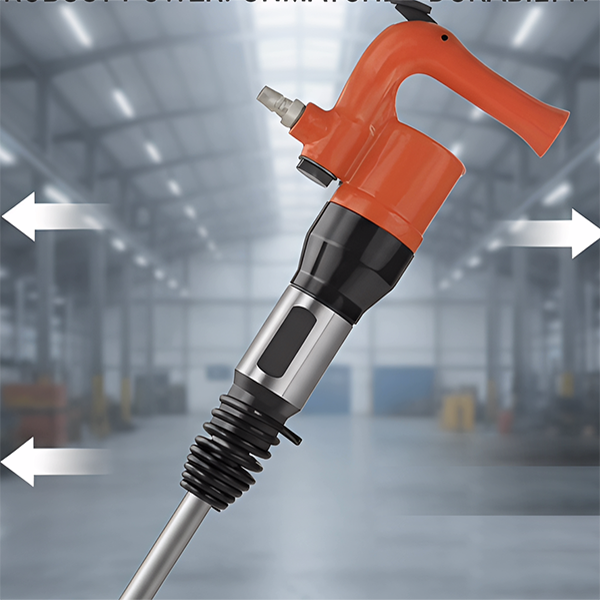
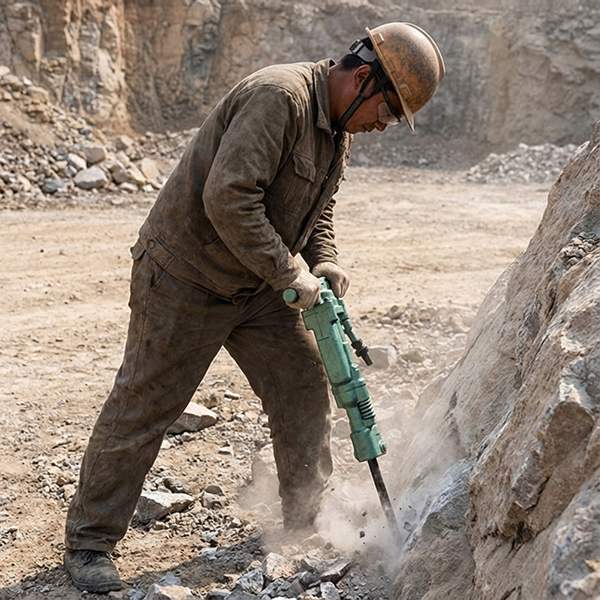
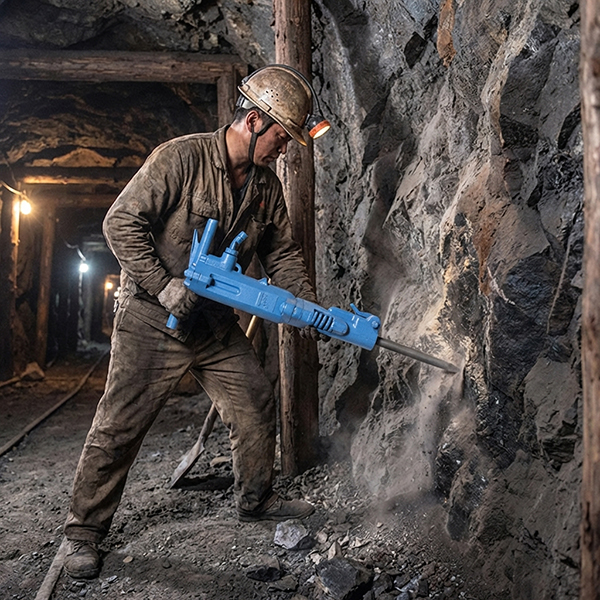
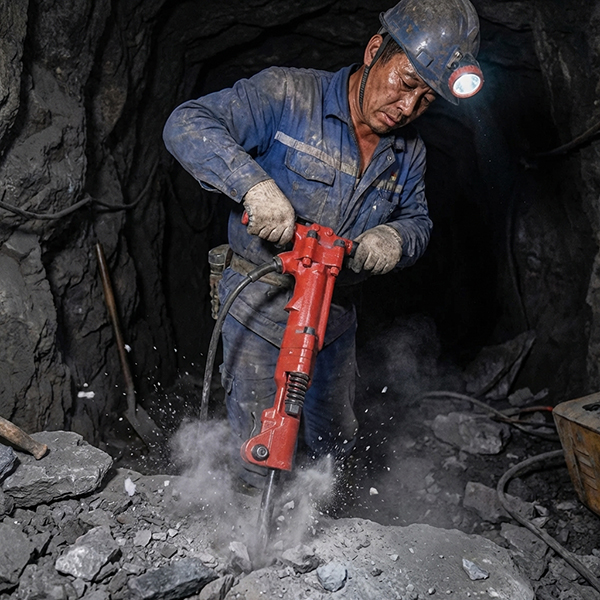
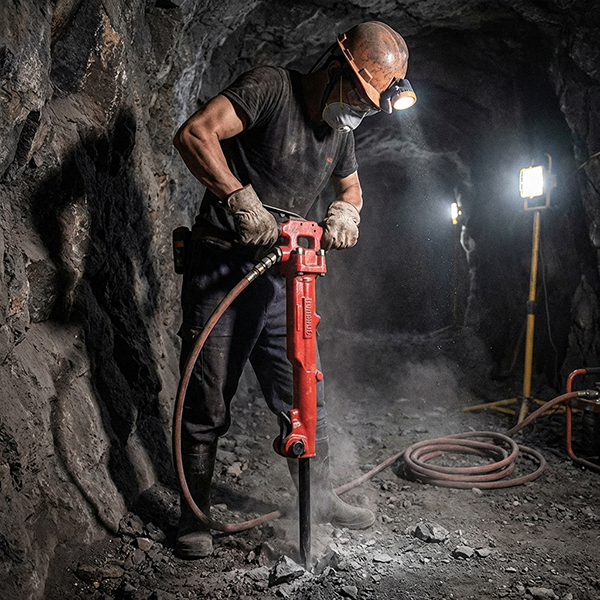
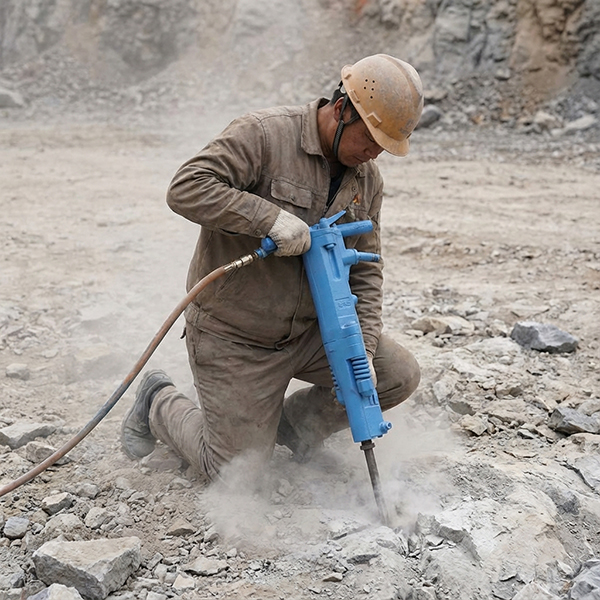
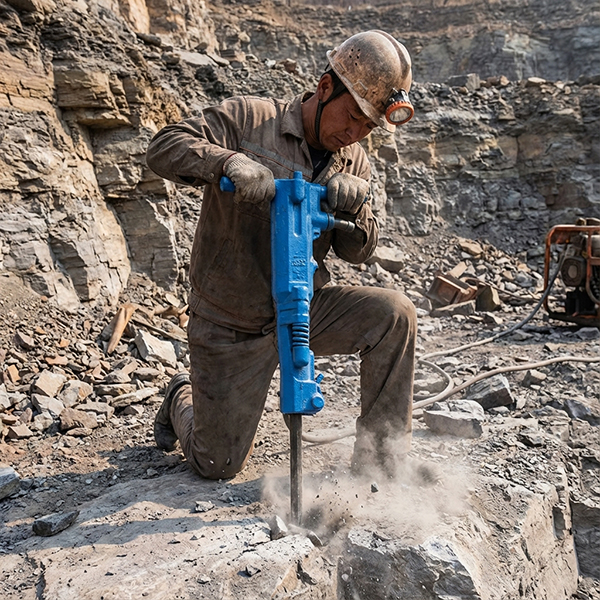
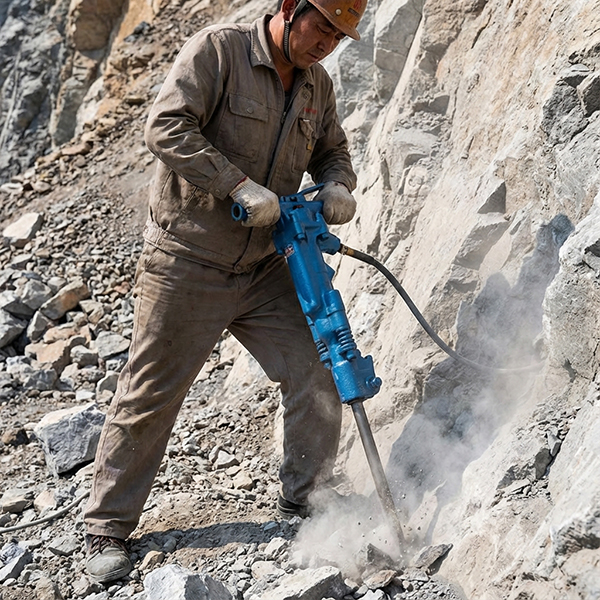
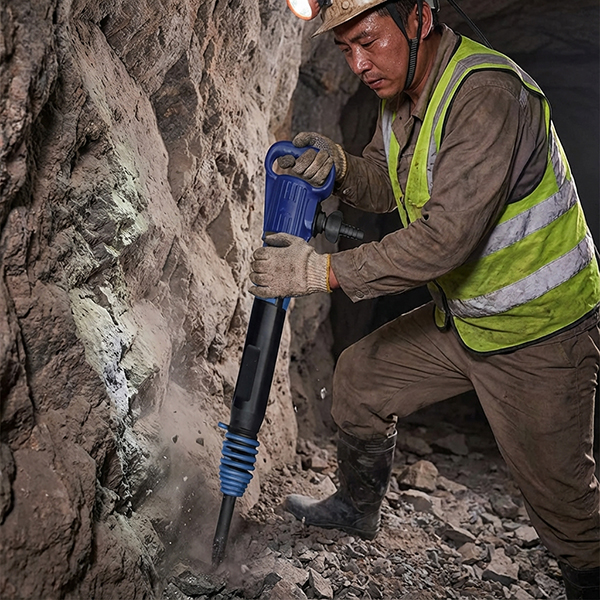
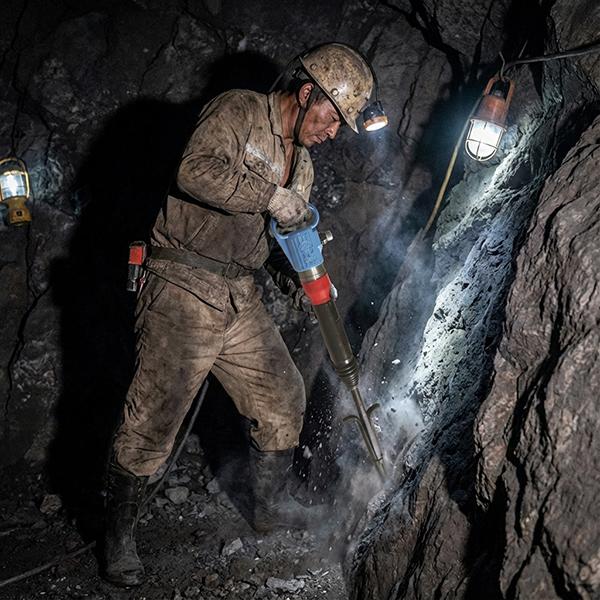
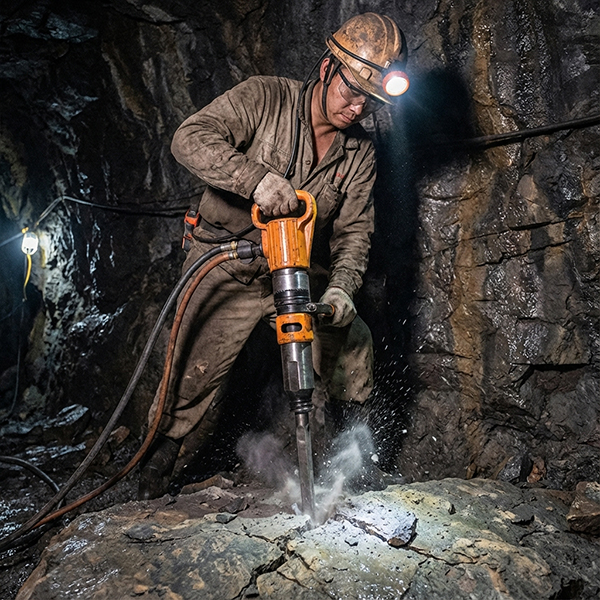
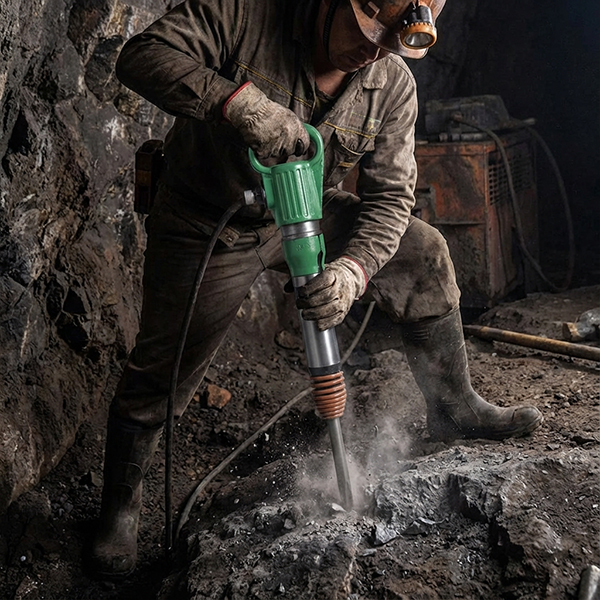
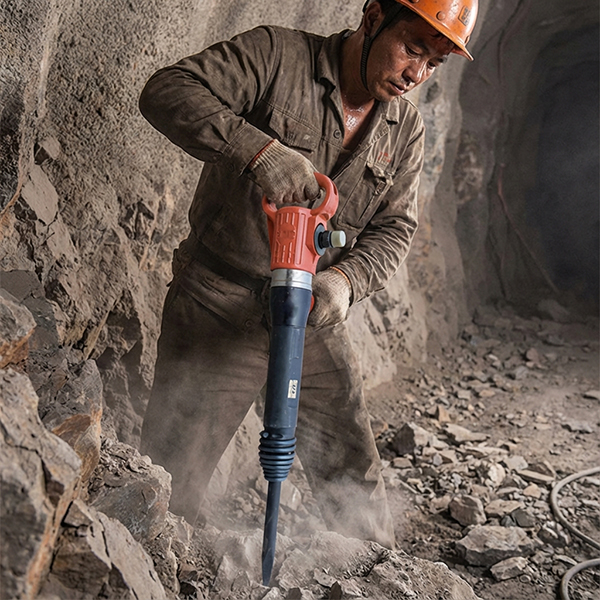
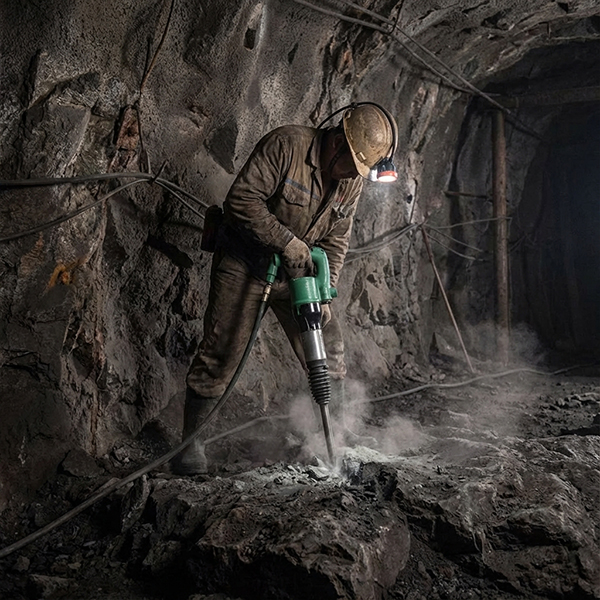
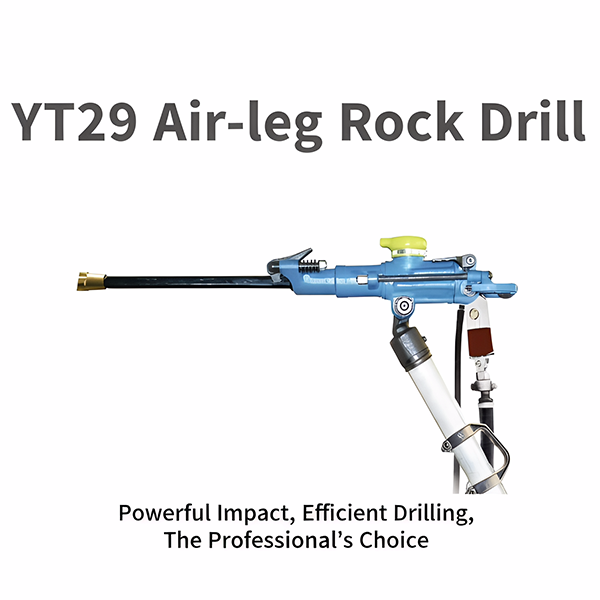
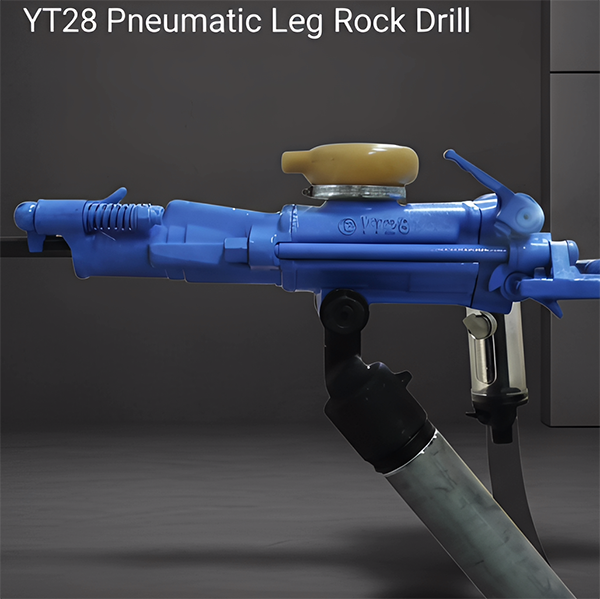
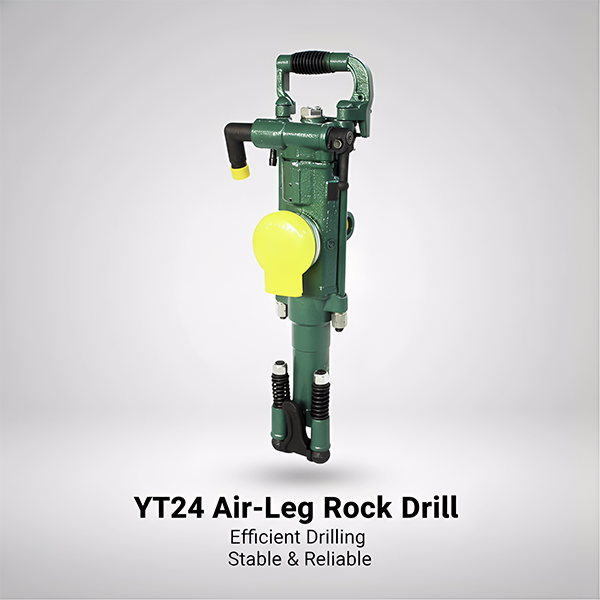
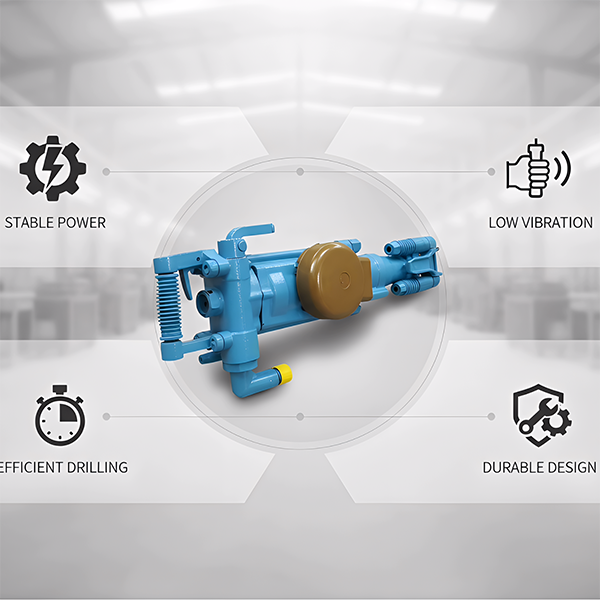
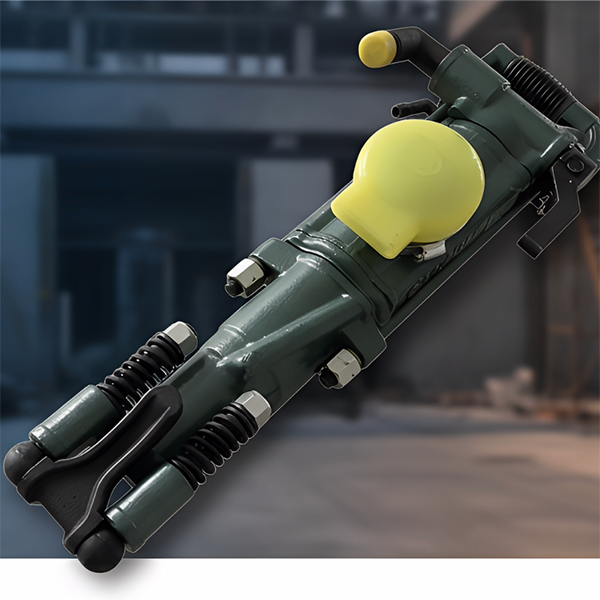
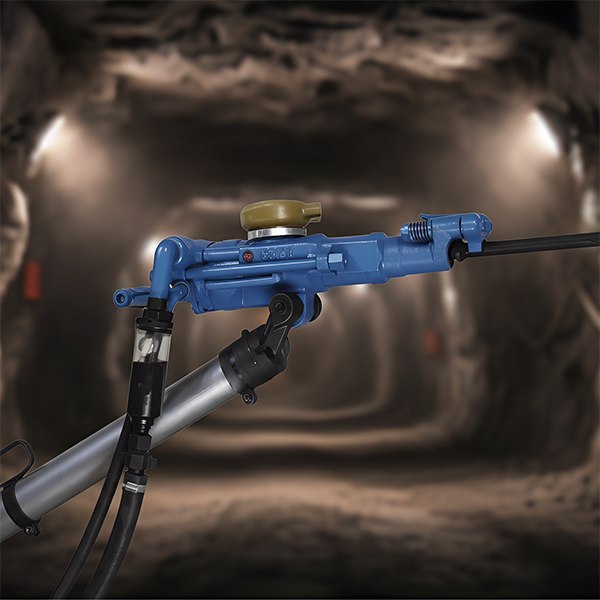
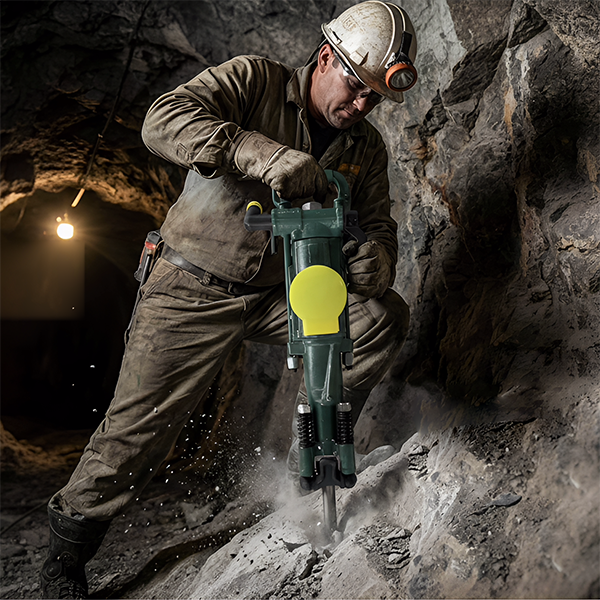
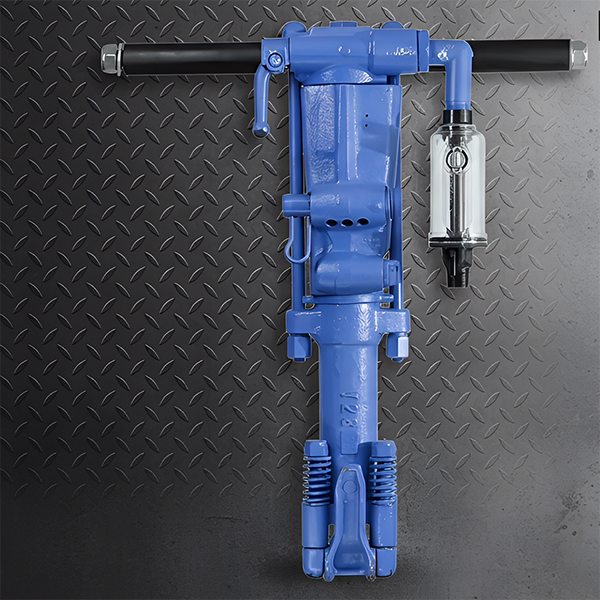
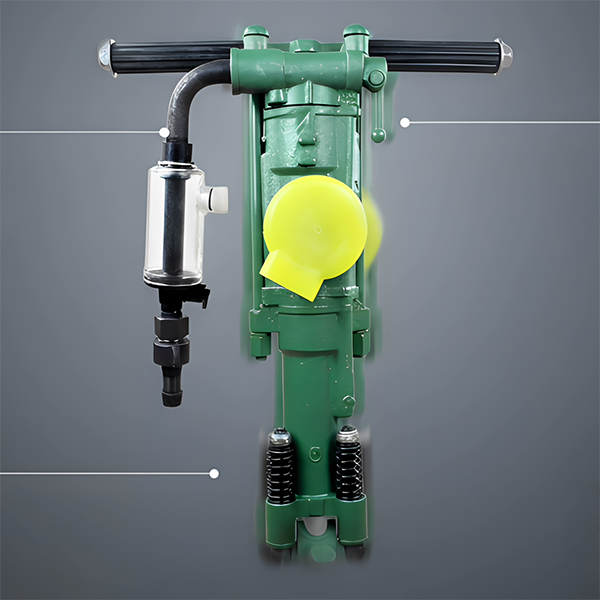
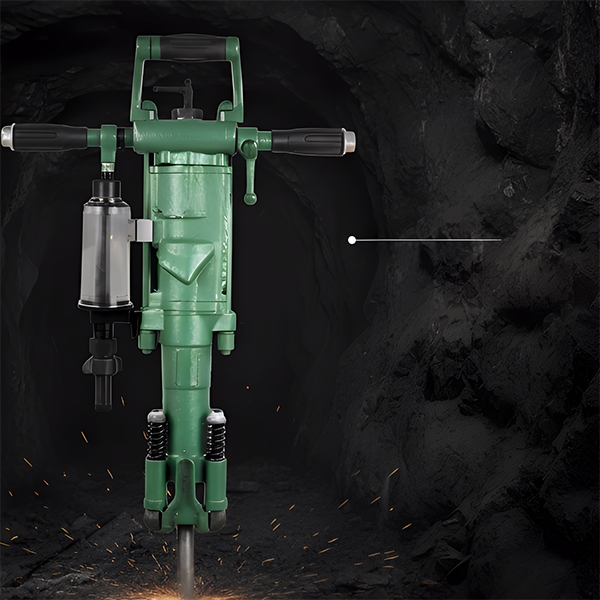
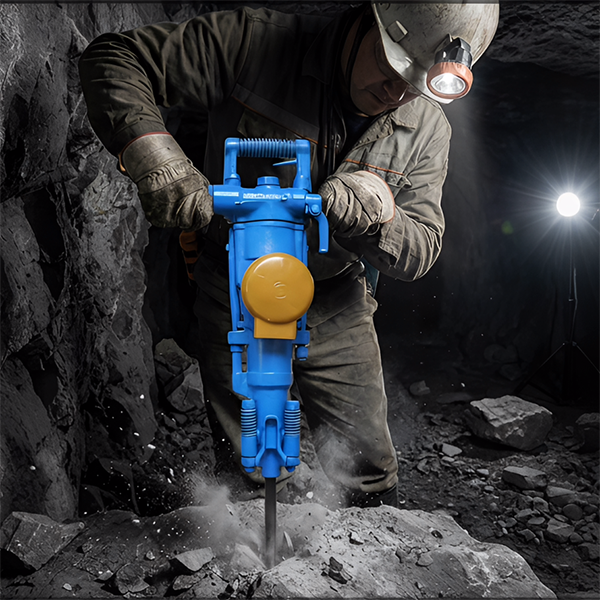
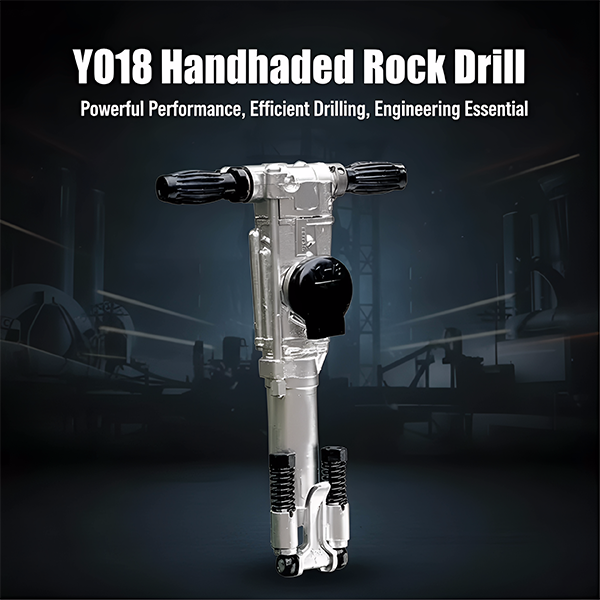
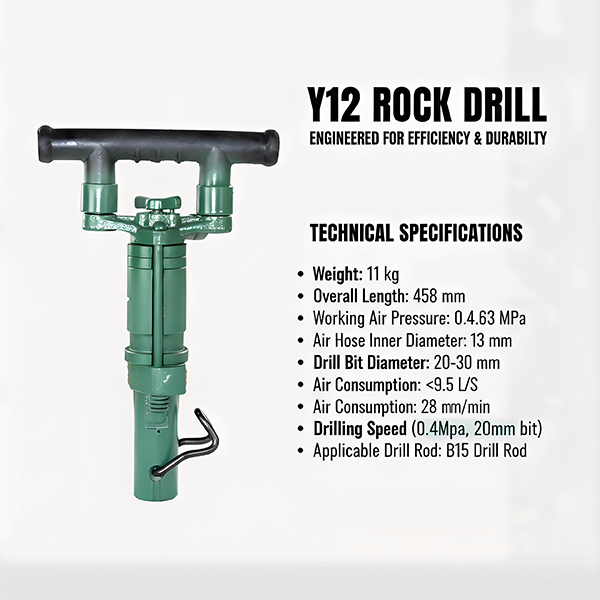
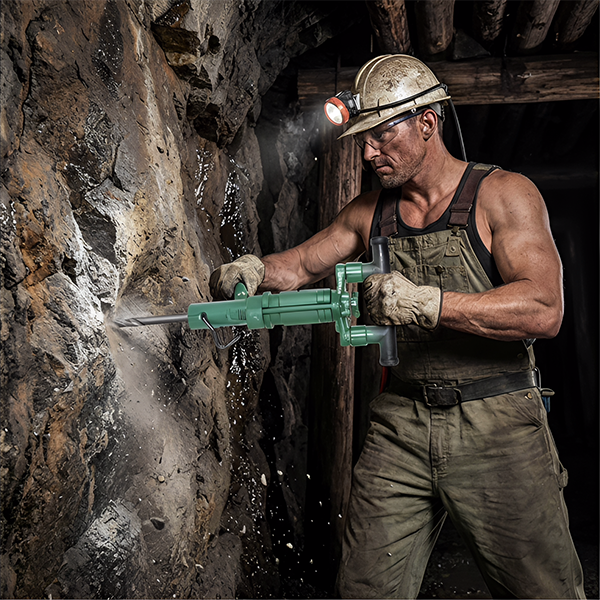
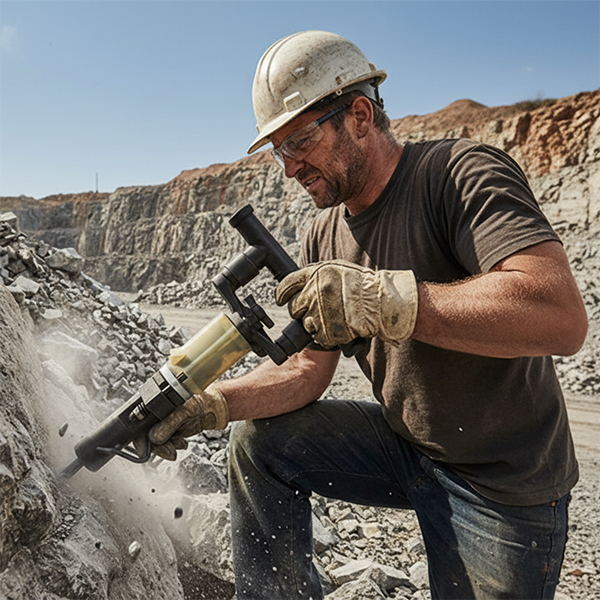
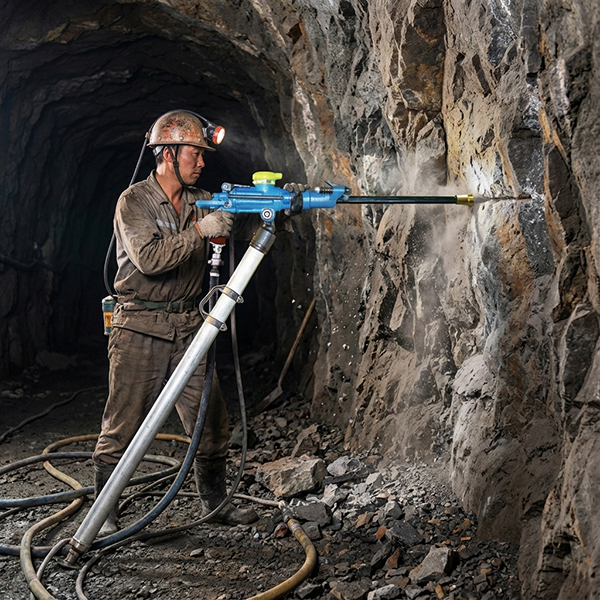
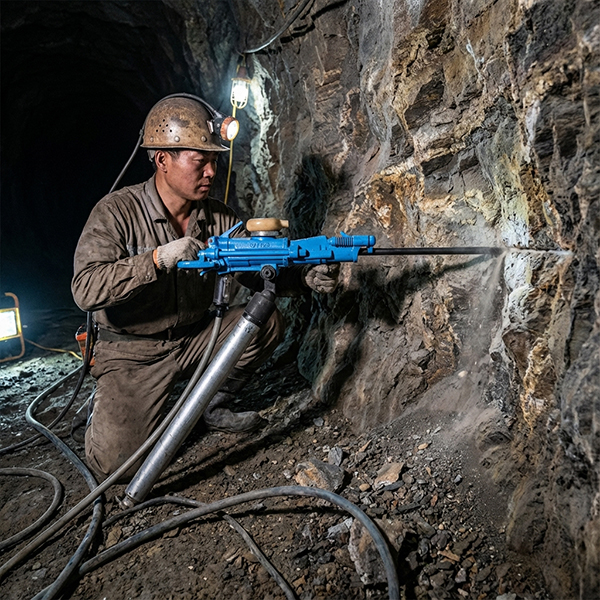
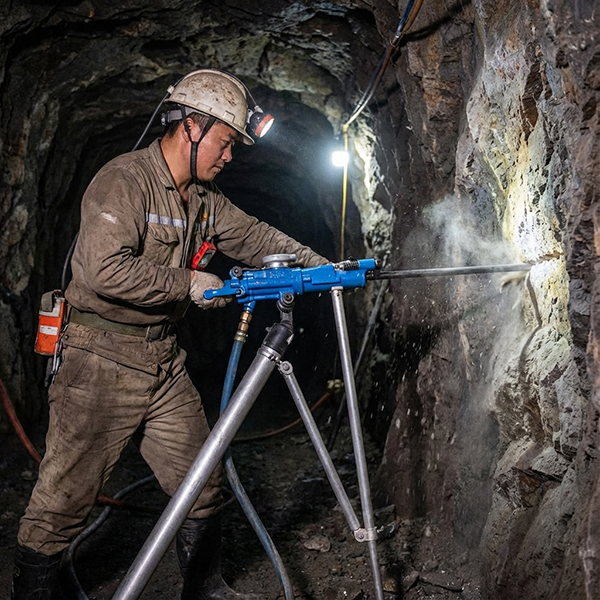
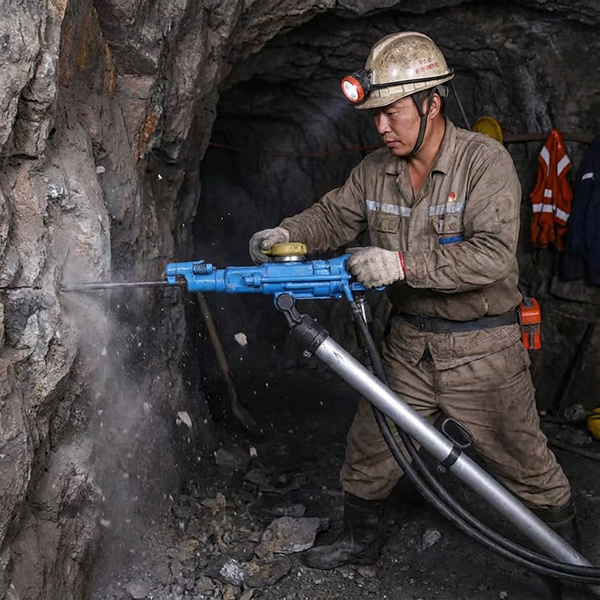
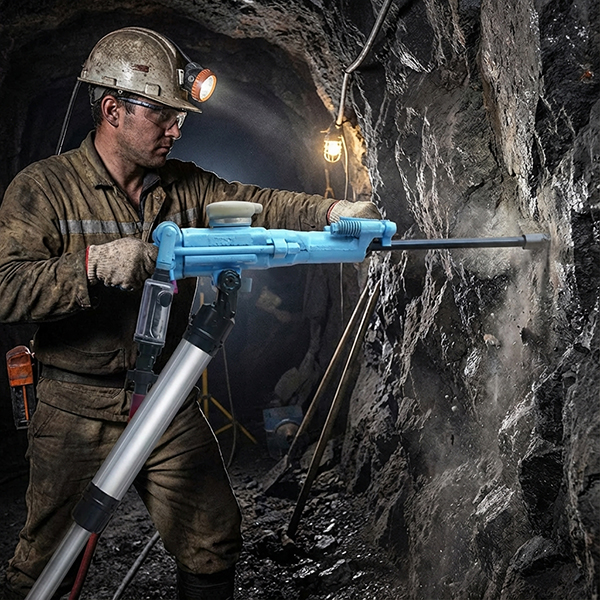
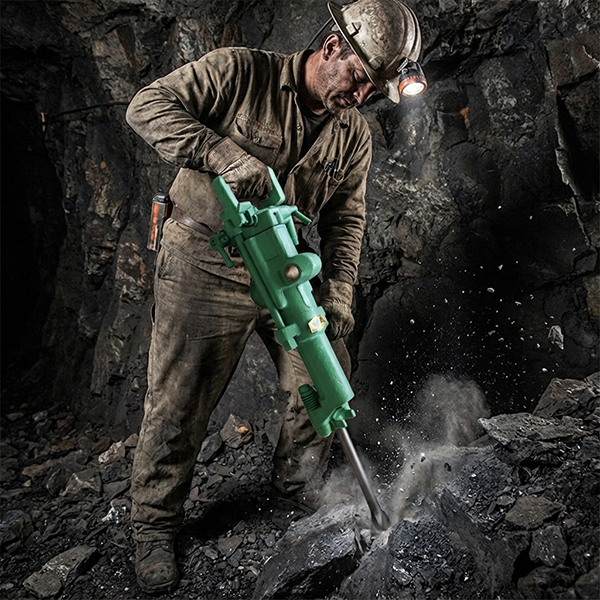
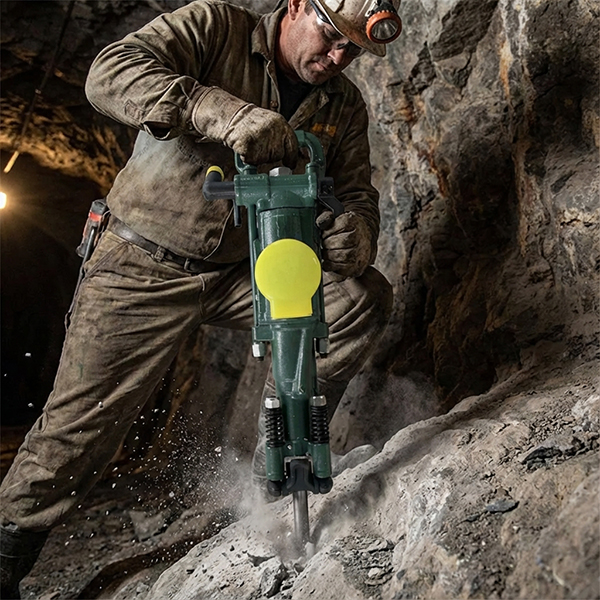
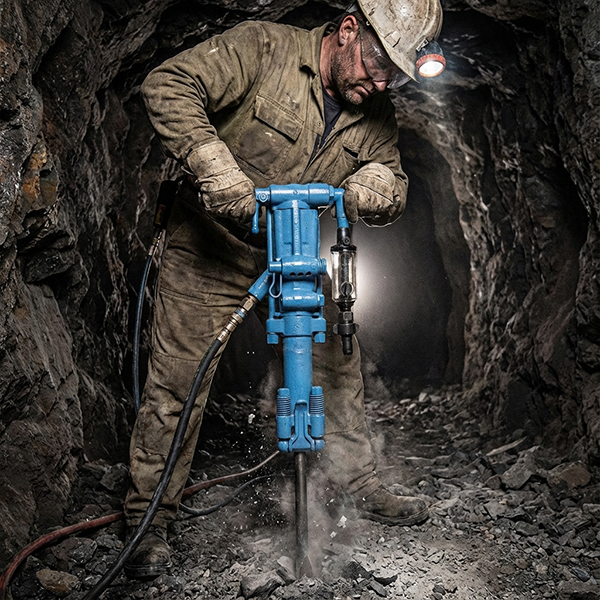
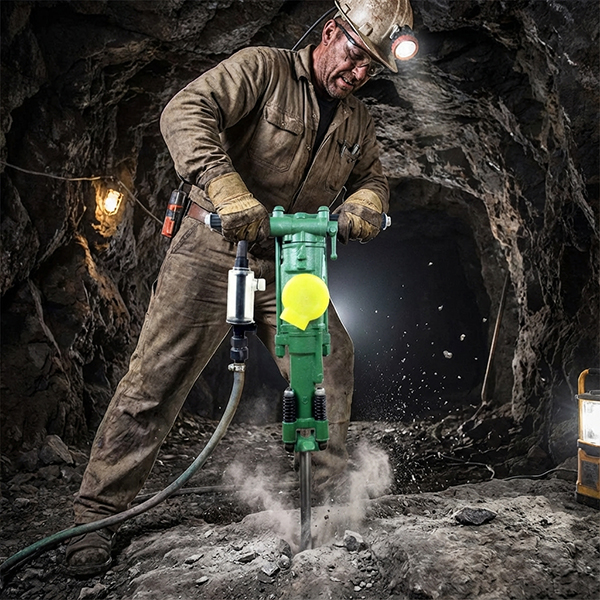
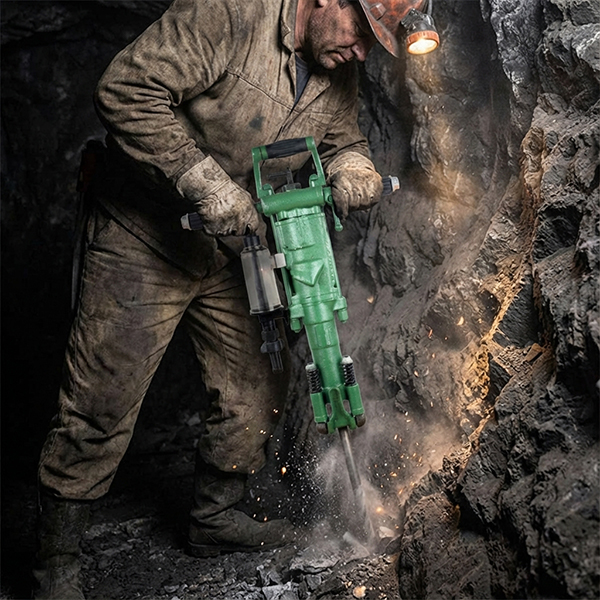
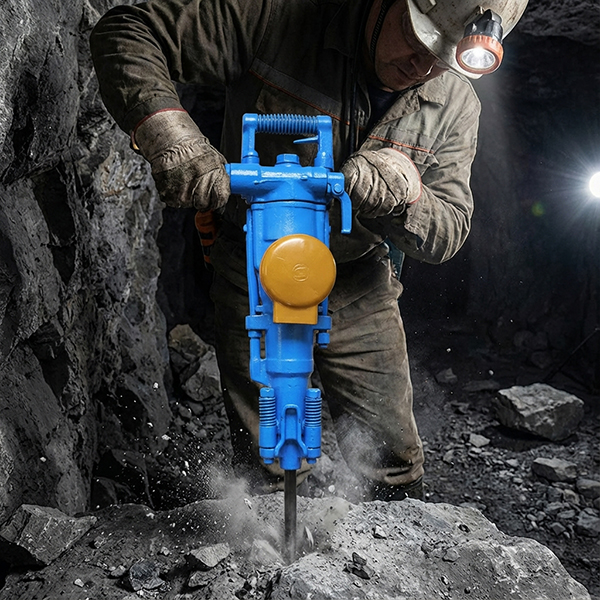
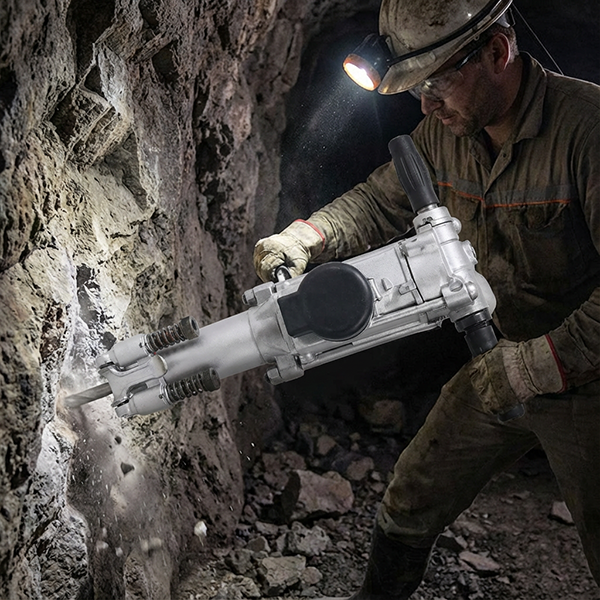
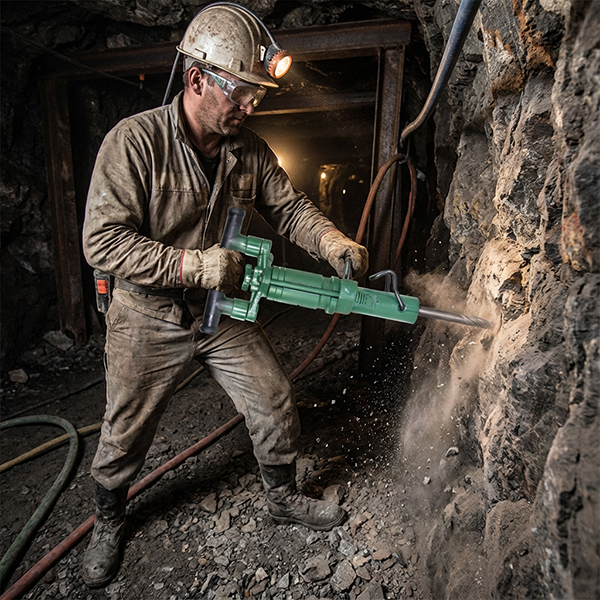
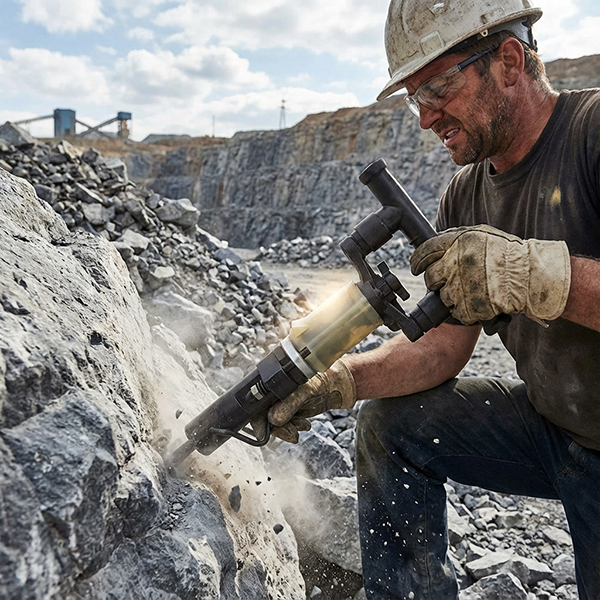
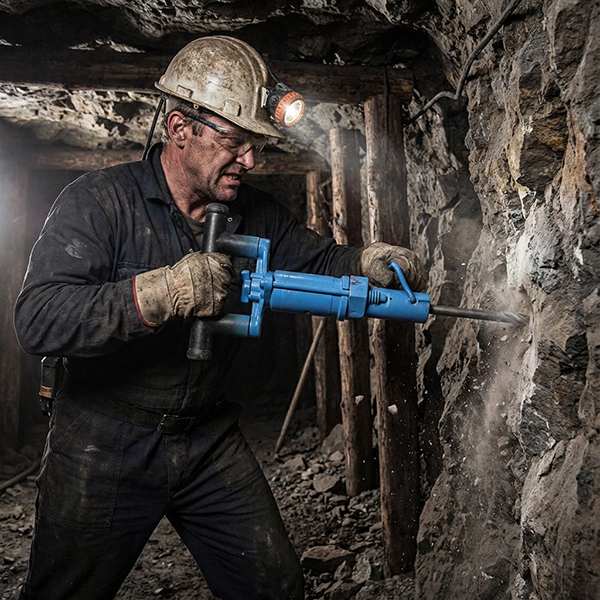
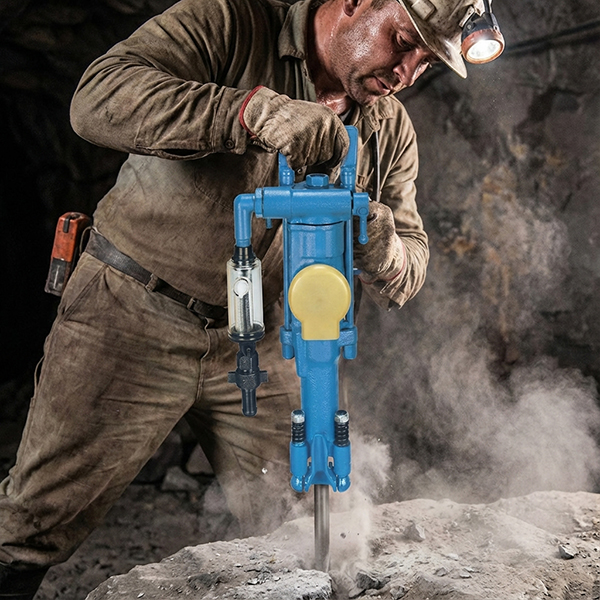
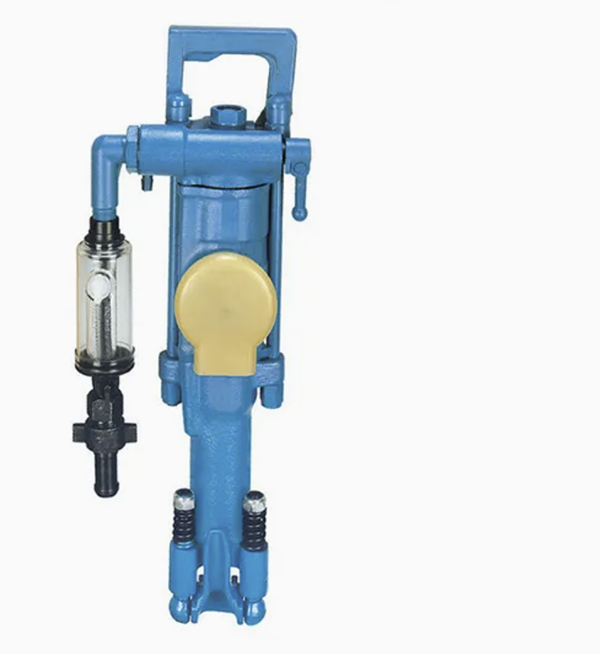
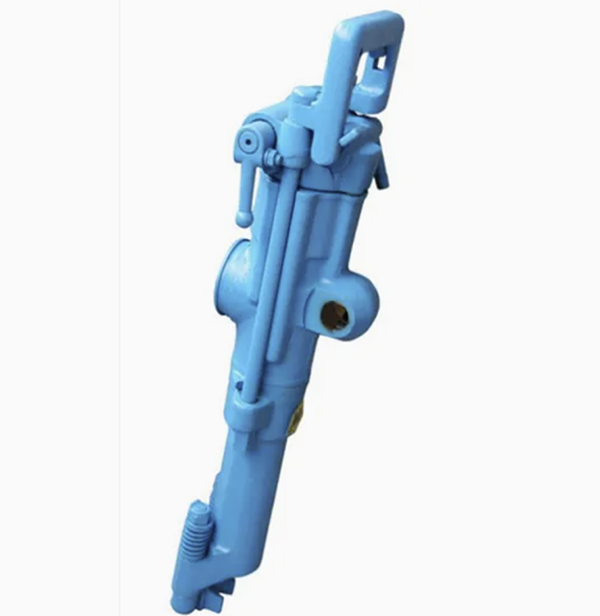
When you look at the data sheet of the 7655 Pneumatic air leg rock drill, it’s clear this is not an entry‑level tool. The 7655 is a strong, high‑impact Pneumatic jack hammer designed for serious mining and tunneling work where you need reliable power in 34–42 mm holes up to 5 m deep.
The main numbers already describe its character:
Weight: 24 kg
Length: 628 mm
Working pressure: 0.63 MPa
Cylinder diameter: 76 mm
Piston stroke: 60 mm
Impact frequency: ≥36 Hz
Impact energy: ≥65 J
Air consumption: ≤80 L/s
Drilling / rotation speed: ≥300 r/min
Noise level: ≤112 dB(A)
Flushing pressure: 0.2–0.3 MPa
Air pipe inner diameter: 25 mm
Water pipe inner diameter: 13 mm
Hole diameter: 34–42 mm
Max drilling depth: 5 m
Shank specification: B22 × 108 mm (≈22 × 108 mm)
Just from this, you can see the 7655 is a compact but powerful hand held jack hammer with a 76 mm cylinder and 60 mm stroke, running at 0.63 MPa working pressure, delivering ≥65 J per blow at ≥36 Hz, and using up to 80 L/s of air through a 25 mm hose. In other words: a high‑energy Pneumatic jack hammer for operators who want serious penetration, not a light handyman tool.
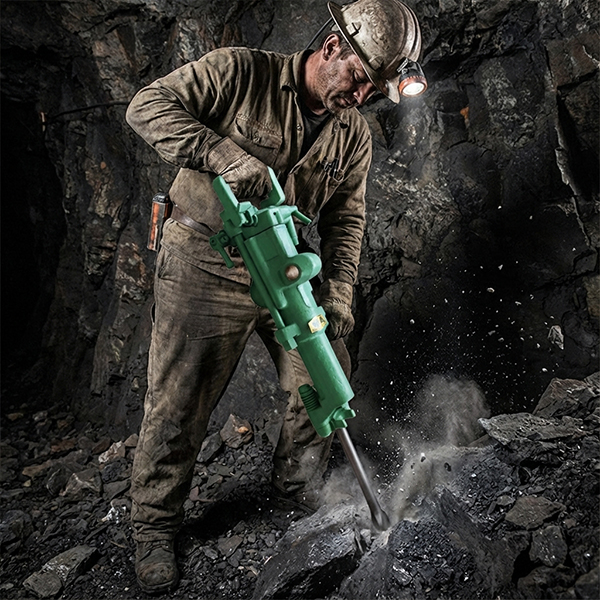
Key Specs of the 7655 Hand Held Jack Hammer (In Real Terms)
Instead of just listing parameters, let’s walk through what they mean in practical use.
24 kg weight, 628 mm length
At 24 kg, the 7655 is slightly lighter than some 26 kg models, but still definitely a heavy‑class hand held jack hammer. The 628 mm length keeps it compact for face drilling and underground headings, especially with an air leg.76 mm cylinder, 60 mm piston stroke
The 76 mm cylinder and 60 mm stroke are a very important combination. The stroke isn’t extremely long, but the big cylinder area and 0.63 MPa working pressure produce serious impact. This matches the spec of impact energy ≥65 J, which is quite high for a rock drill in this size.Impact frequency ≥36 Hz
At ≥36 Hz, the 7655 delivers at least 36 blows per second. That’s a high frequency for a Pneumatic jack hammer with this level of impact energy. You can think of it as: strong blows, and many of them.Working pressure 0.63 MPa
The rated working pressure is 0.63 MPa, higher than many 0.4 MPa drills. This is one reason the 7655 can reach ≥65 J impact energy. It also means your compressed air system must be able to supply this pressure at the drill, not just at the compressor.Air consumption ≤80 L/s
Air consumption is up to 80 L/s (about 4.8 m³/min). That’s not a small number. It tells you that this Pneumatic jack hammer is built for power and speed, not for ultra‑low air usage. In exchange for more air, you get higher energy and frequency.Drilling/rotation speed ≥300 r/min
A drilling/rotation speed of ≥300 r/min helps the bit cut efficiently in 34–42 mm holes. Combined with ≥36 Hz impact, this rotation keeps the bit teeth constantly working on fresh rock.Noise level ≤112 dB(A)
At ≤112 dB(A) the 7655 is loud, as you’d expect from a high‑energy jack hammer, but it’s within typical limits for this class. Hearing protection is still absolutely necessary.Air pipe 25 mm, water pipe 13 mm, flushing 0.2–0.3 MPa
The required 25 mm inner‑diameter air hose is a clear sign: the drill needs volume. A smaller hose will starve it. The 13 mm water line with about 0.2–0.3 MPa flushing pressure is standard for proper cuttings removal and dust control in 34–42 mm holes.Hole diameter 34–42 mm, depth up to 5 m
The 7655 is optimized for 34–42 mm blast or anchor holes, with a maximum practical depth of 5 m. This range is very common in mining and tunneling faces.Shank B22 × 108 mm
Shank size B22 × 108 mm (essentially 22 × 108 mm) is a standard taper shank, so steels and bits are easy to source and often compatible with other hand held jack hammer models.
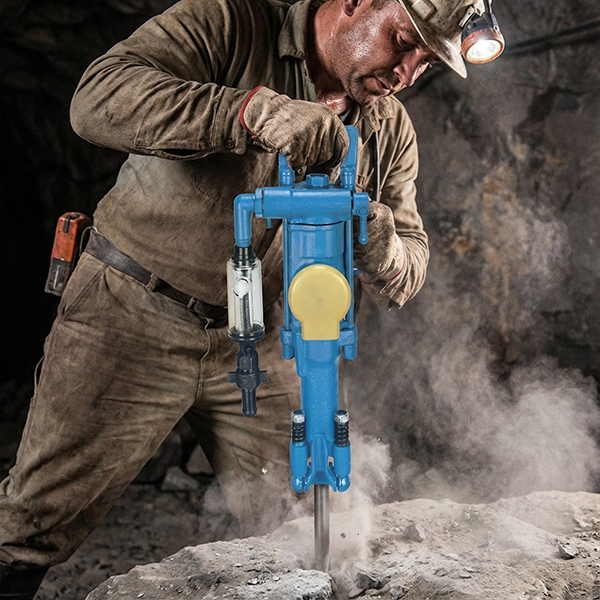
What Kind of Work Is the 7655 Pneumatic Jack Hammer Made For?
If you put the numbers together:
≥65 J impact energy
≥36 Hz impact frequency
Working pressure 0.63 MPa
Air consumption ≤80 L/s
Hole diameter 34–42 mm, depth 5 m
you get a clear picture: the 7655 is a high‑energy Pneumatic jack hammer for serious drilling in medium‑hard to hard rock, especially when you need reliable penetration in 34–42 mm holes and you already have a strong compressor on site.
Compared with lower‑pressure, lower‑consumption tools, the 7655:
Hits harder (≥65 J vs ~30 J of lighter drills)
Hits faster (≥36 Hz)
Needs more air (up to 80 L/s)
Rewards you with faster drilling, provided air and water supply are correct.
How the 7655 Works (Simple Overview)
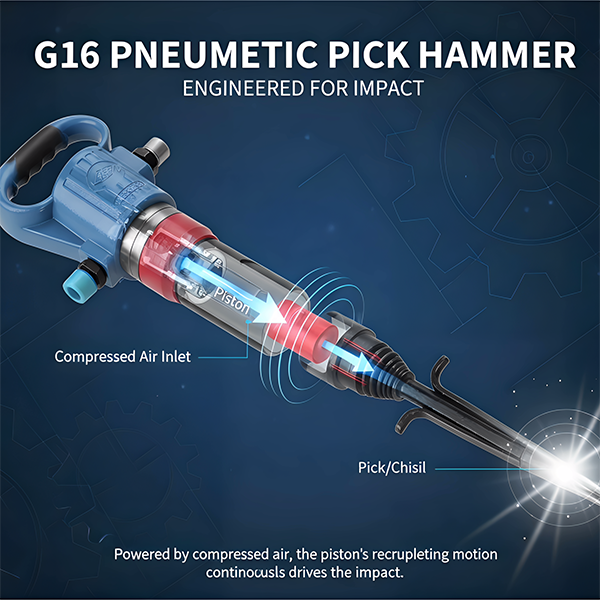
Mechanically, the 7655 follows the same principles you’ve described in your rock drill product knowledge:
Compressed air at about 0.63 MPa enters the 76 mm cylinder via a 25 mm inner‑diameter hose.
The piston moves over a 60 mm stroke, striking the tail of the B22 × 108 mm drill steel.
Each blow carries ≥65 J of energy and repeats at ≥36 Hz.
The blow travels as a stress wave to the bit at the bottom of the 34–42 mm hole, breaking rock.
Between blows, the drill steel rotates (up to ≥300 r/min), so the bit teeth always contact fresh rock.
Air and water (through the 13 mm water pipe at about 0.2–0.3 MPa flushing pressure) carry cuttings out of the hole and control dust.
As long as air pressure, hose size, lubrication, and flushing are all in spec, the 7655 will keep this impact‑rotation‑flushing cycle stable and efficient.
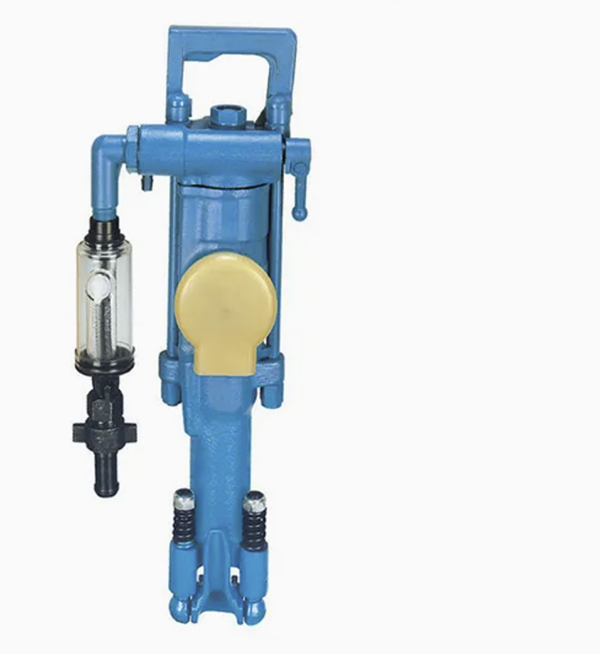
Questions Customers Usually Ask About the 7655
Based on the style of Q&A in your other product info and real buyer concerns, here are some typical questions and answers tied directly to the 7655’s data.
1. What size compressor do I need for the 7655 Pneumatic jack hammer?
The key numbers:
Working pressure: 0.63 MPa
Air consumption: ≤80 L/s (≈4.8 m³/min)
Air pipe inner dia.: 25 mm
For a single 7655:
Plan for at least 5 m³/min compressor capacity at around 0.7 MPa or a bit higher at the compressor, so you can still maintain close to 0.63 MPa at the drill under load.
Use 25 mm inner‑diameter air hose from the manifold to the drill, as specified. A smaller hose will cause pressure drop and reduce impact energy and frequency.
If a customer wants to run two 7655 drills, you’re already in the 9–10 m³/min compressor range, plus some margin for line losses and other tools.
2. How is the 7655 different from a lighter hand held jack hammer?
The 7655 stands out in three areas:
Higher working pressure: 0.63 MPa
Higher impact energy: ≥65 J per blow
High frequency: ≥36 Hz
Compared to lighter hand held jack hammer models that work at 0.4 MPa with around 30 J of impact energy, the 7655:
Hits more than twice as hard on paper (≥65 J vs ~30 J)
Maintains a high blow rate (≥36 Hz vs ~23 Hz)
Drills 34–42 mm holes faster in tough rock, especially up to 5 m deep.
The trade‑off is clear: more air required (up to 80 L/s) and a need for proper 25 mm air hose and a stronger compressor. But for hard, demanding conditions, that extra power pays off.
3. Is 24 kg manageable for daily work?
Spec:
Weight: 24 kg
Length: 628 mm
24 kg is still heavy for a hand held jack hammer, but slightly less than some 26 kg models.
In practice:
For face drilling with an air leg (which “Pneumatic air leg rock drill” implies), the leg carries the weight and provides feed force, while the operator mainly guides and controls direction.
The 24 kg mass helps stabilize the tool when you’re delivering ≥65 J blows at ≥36 Hz. A very light machine with this impact would jump more and transfer less energy into the rock.
For overhead work, you’d still consider a lighter model. For bench and face drilling, 24 kg is a reasonable compromise between control and stability.
4. What hole sizes and steels does the 7655 support?
According to the parameters:
Hole diameter: 34–42 mm
Max drilling depth: 5 m
Shank: B22 × 108 mm
That means:
You can choose bits in the 34–42 mm range depending on your blast pattern or anchor diameter.
5 m is the practical top depth in most rock conditions with this tool. Beyond that, you’d consider other drilling systems.
The B22 × 108 mm shank makes it easy to find compatible rods and bits. Many operators already use 22 × 108 mm steels, so integrating the 7655 into an existing fleet is straightforward.
5. How should I set air and water for best performance?
Key specs:
Working pressure: 0.63 MPa
Air pipe inner dia.: 25 mm
Flushing pressure: 0.2–0.3 MPa
Water pipe inner dia.: 13 mm
Practical guidelines:
At the compressor, you may need to set pressure above 0.63 MPa to compensate for pipeline losses, so that at the drill (while working) you are close to the rated 0.63 MPa.
Use 25 mm inner‑diameter hose for the final run to the Pneumatic jack hammer. If you reduce to 19 mm or less, you’ll quickly feel the loss in power.
Keep the flushing pressure around 0.2–0.3 MPa through the 13 mm water line, enough to carry cuttings out of the 34–42 mm hole and control dust, without flooding the hole.
This is consistent with the general principles you emphasize in your product knowledge: correct pressure at the tool and proper flushing are just as important as the drill’s model.
6. How loud is the 7655, and what about operator safety?
The data sheet gives:
Noise: ≤112 dB(A)
This is typical for a strong Pneumatic jack hammer and means:
Hearing protection is mandatory.
Operators should also use vibration‑reducing gloves and follow proper posture, especially in long shifts with a 24 kg drill hitting at ≥36 Hz.
The important thing is: the noise level is known and defined, so you can plan protection and safety procedures around a clear ≤112 dB(A) value.
7. What daily maintenance does the 7655 hand held jack hammer need?
The 7655 doesn’t ask for anything unusual, but with high energy and high air flow, basic care is important:
Before starting
Blow the 25 mm air hose to remove water and dirt.
Check the lubricator (if external) and fill with proper rock drill oil.
During operation
Listen for changes in sound or impact rhythm; changes often mean pressure or lubrication issues.
Check hose clamps and joints. At ≥36 Hz and ≥65 J, vibrations can slowly loosen fittings.
After drilling
Turn off water first, then run the jack hammer briefly with air only to blow out moisture from internal passages and the 13 mm water line.
Clean the shank area and check the B22 × 108 mm steel for wear.
These steps are in line with the general maintenance guidelines you already use for rock drills: clean air, constant oil, correct pressures, and short daily inspections.
Conclusion – Where the 7655 Sits in the Pneumatic Jack Hammer Range
If you put all numbers together:
24 kg, 628 mm compact body
76 mm cylinder, 60 mm stroke
Impact energy ≥65 J, impact frequency ≥36 Hz
Working pressure 0.63 MPa, air consumption ≤80 L/s
Drilling speed ≥300 r/min
Noise ≤112 dB(A)
Hole diameter 34–42 mm, depth up to 5 m
B22 × 108 mm shank, 25 mm air hose, 13 mm water hose
the 7655 Pneumatic air leg rock drill is best described as a compact, high‑power Pneumatic jack hammer for demanding mining and tunneling tasks. It is a hand held jack hammer for users who:
Need strong impact (≥65 J) and high blow rate (≥36 Hz) in 34–42 mm holes;
Have a compressor that can deliver around 5 m³/min at the required pressure;
Want a reliable, production‑grade jack hammer rather than a small, air‑saving tool.
Used with the correct 25 mm air hose, proper 0.63 MPa working pressure, and regular maintenance, the 7655 offers the kind of drilling performance and durability that experienced operators expect from a serious Pneumatic jack hammer in this class.