
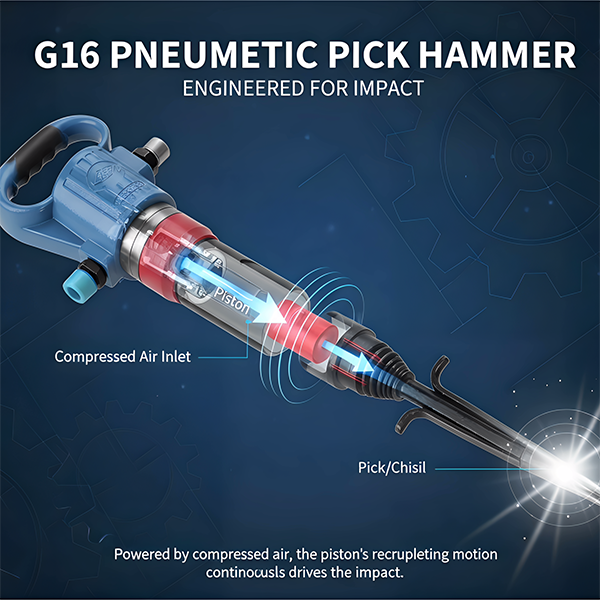
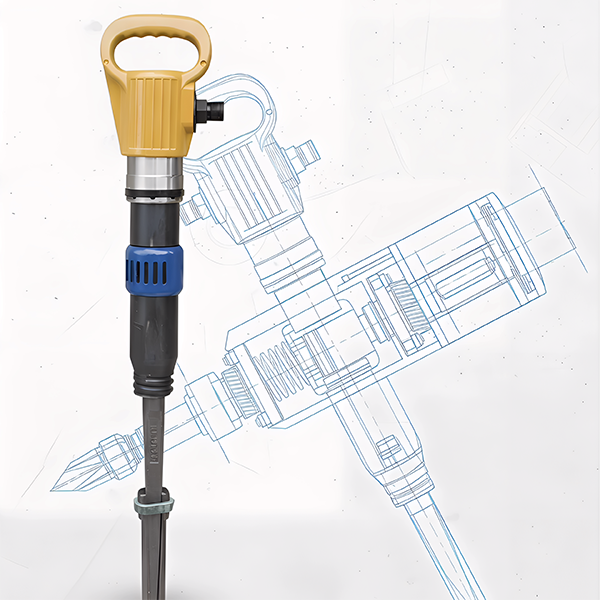
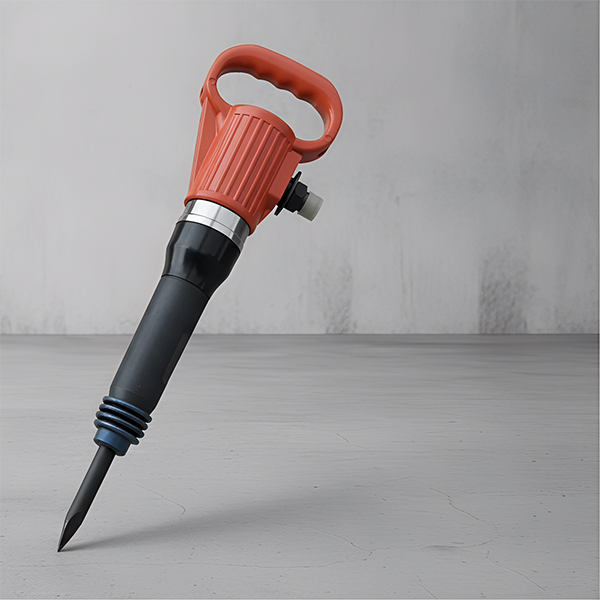
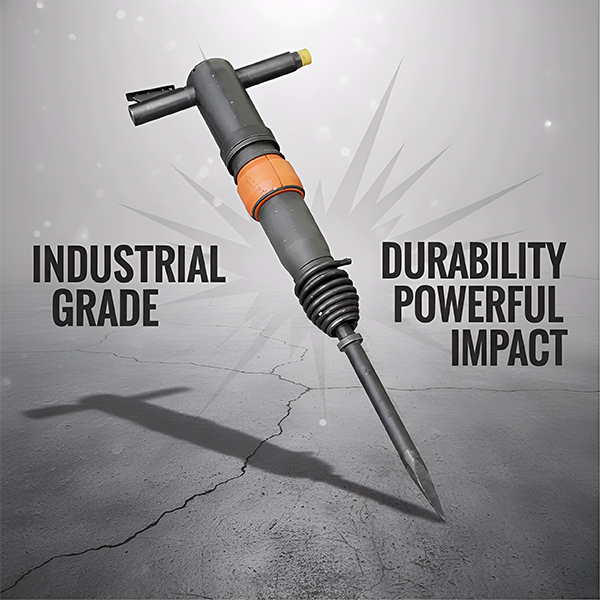
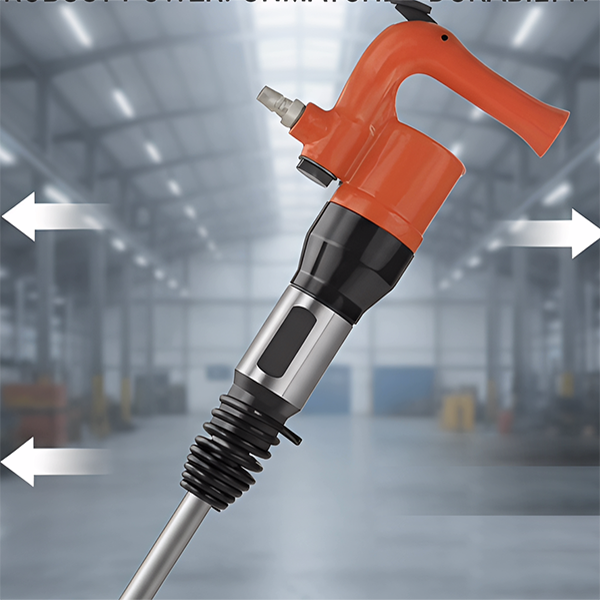
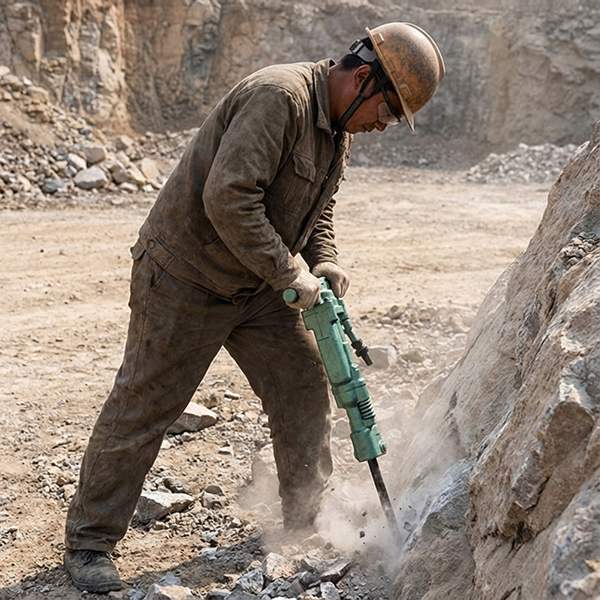
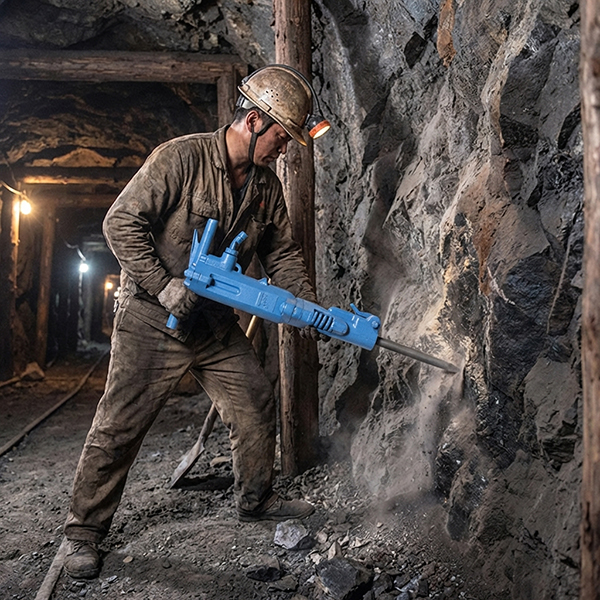
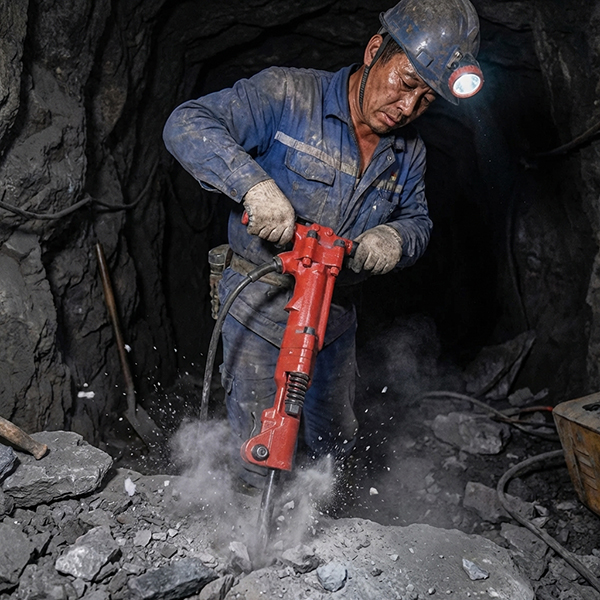
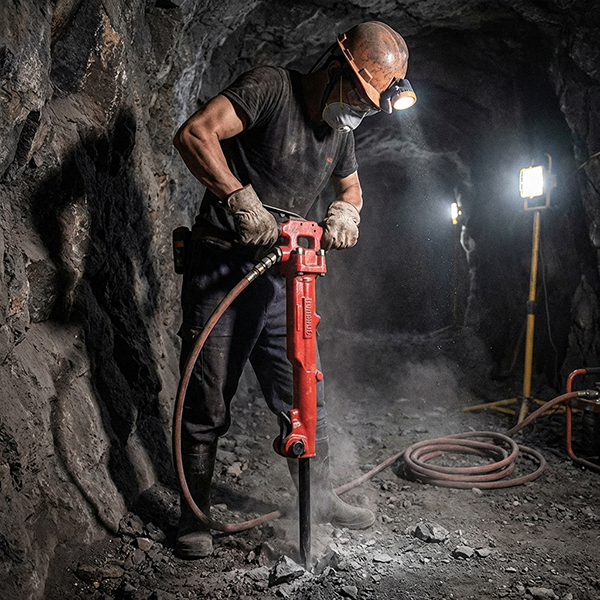
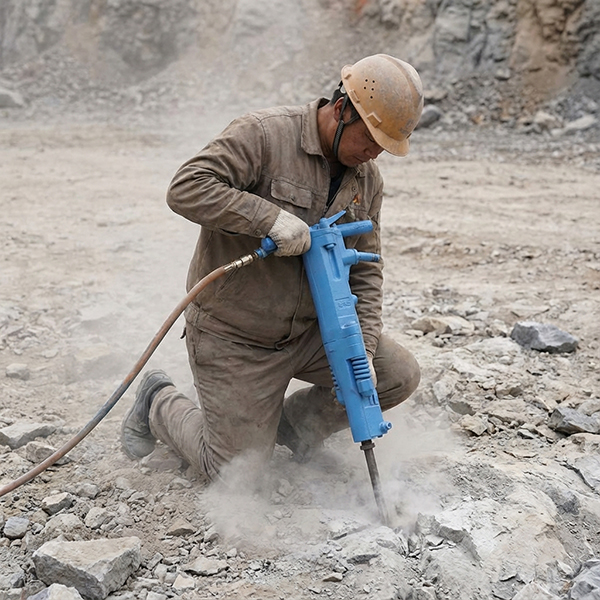
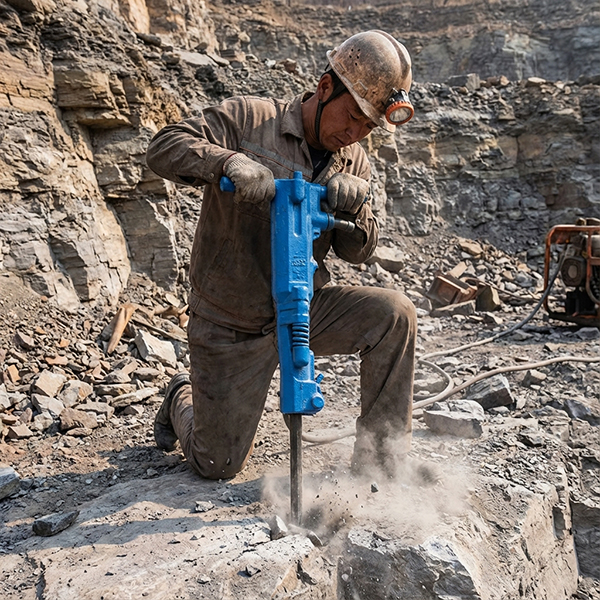
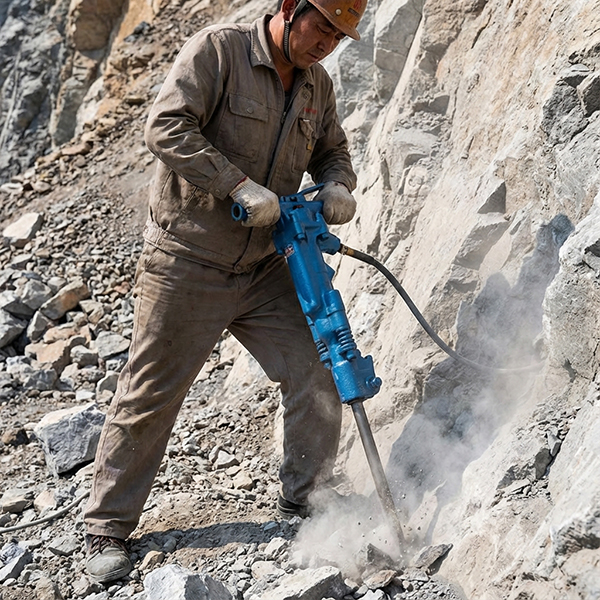
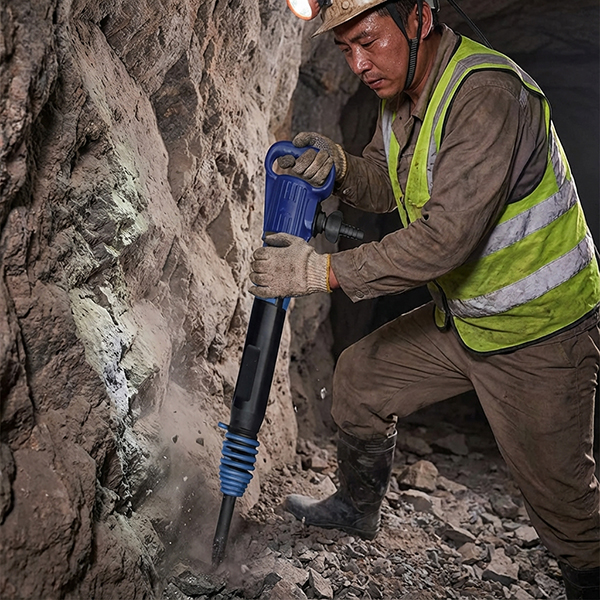
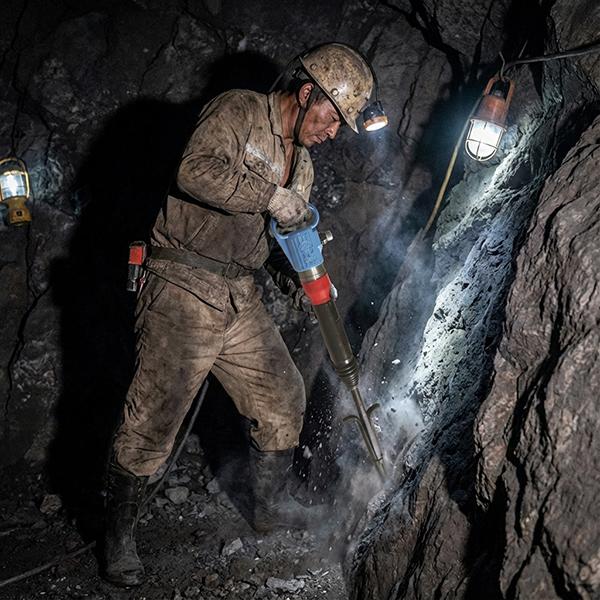
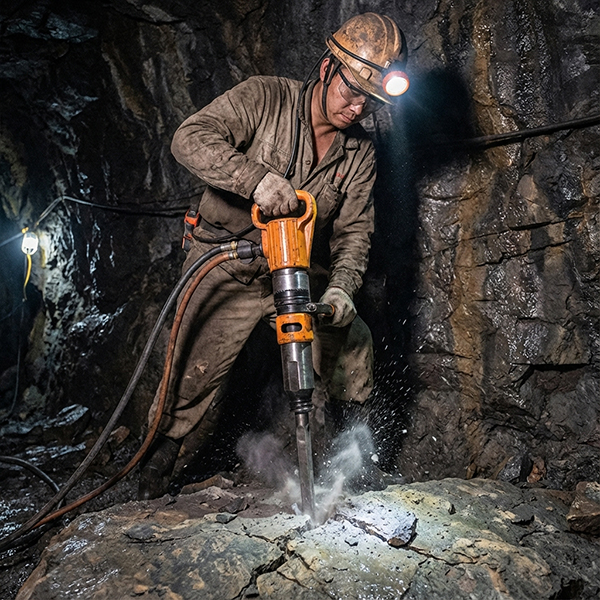
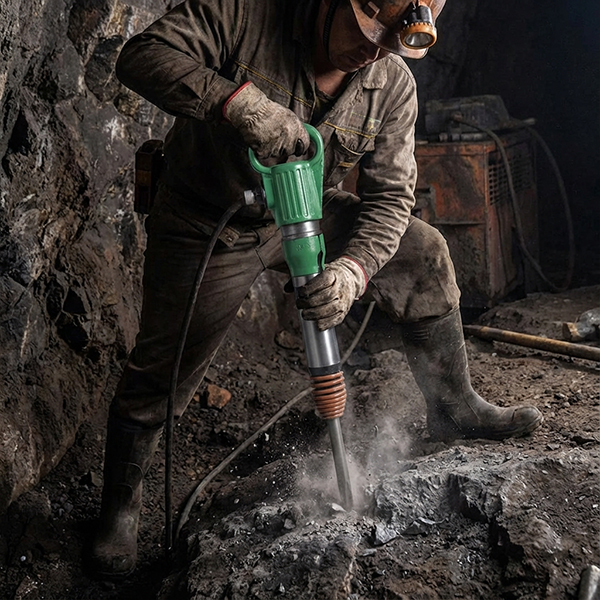
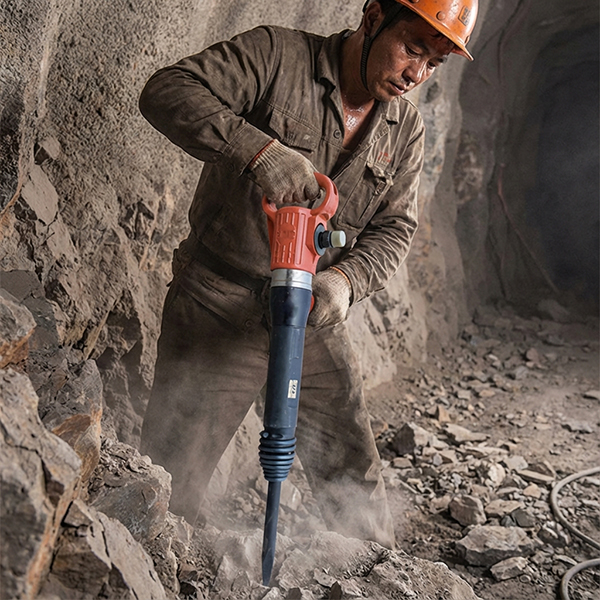
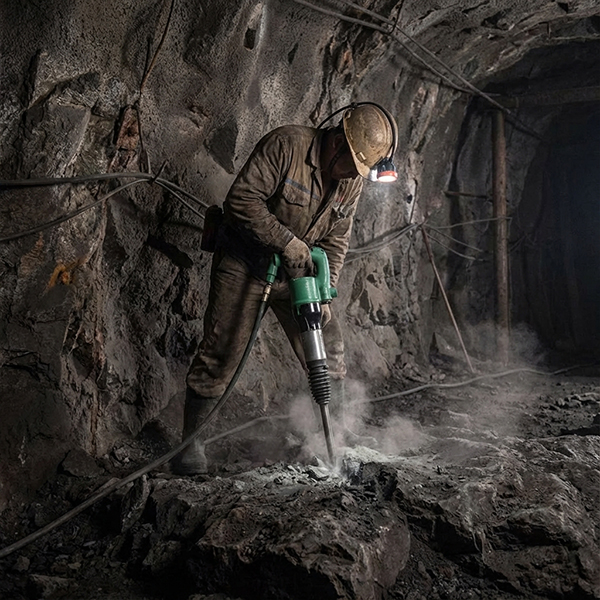
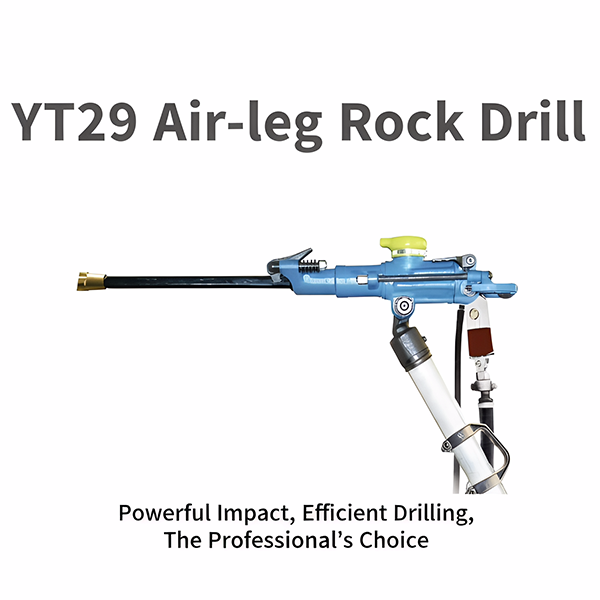
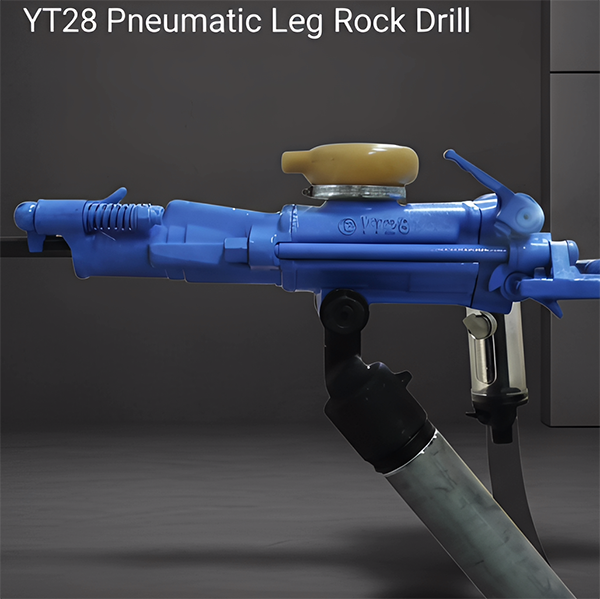
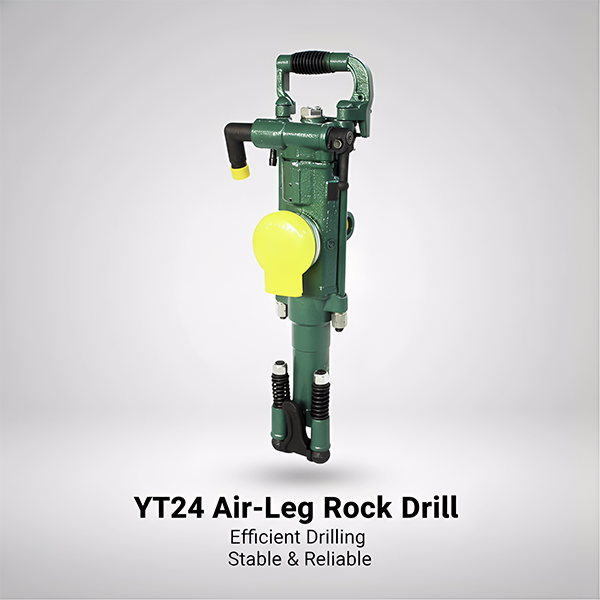
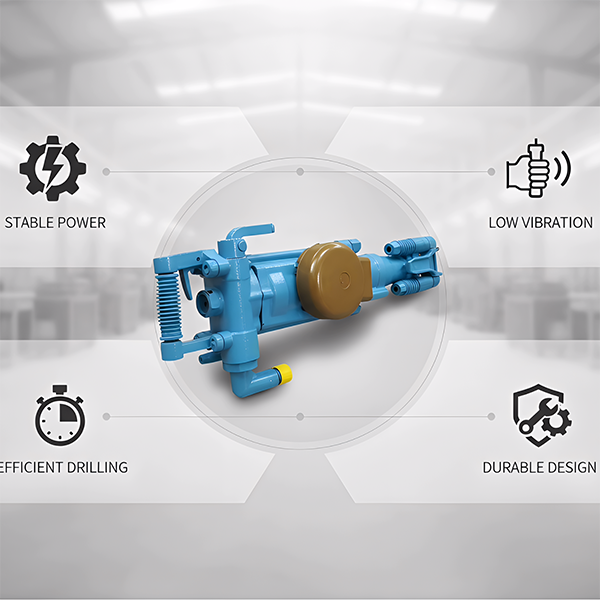
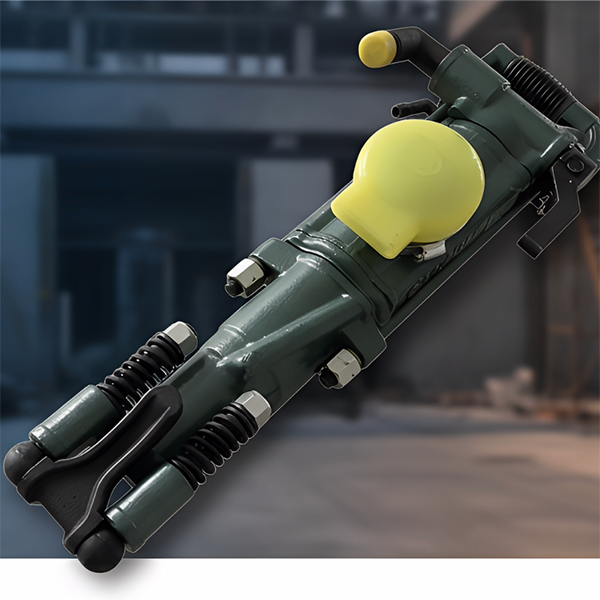
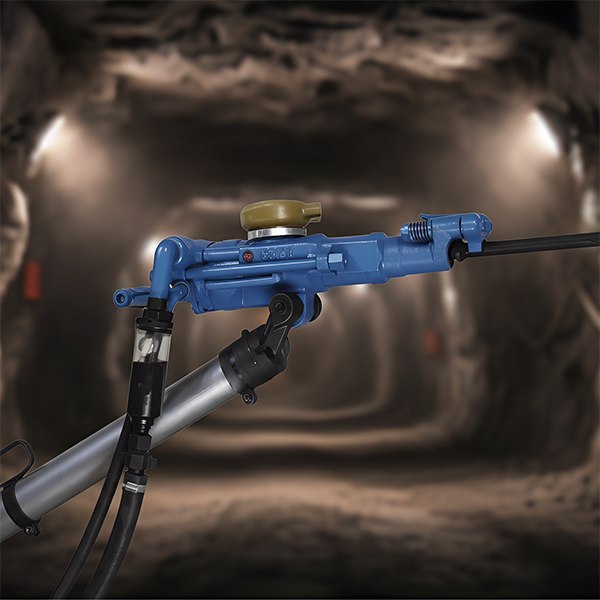
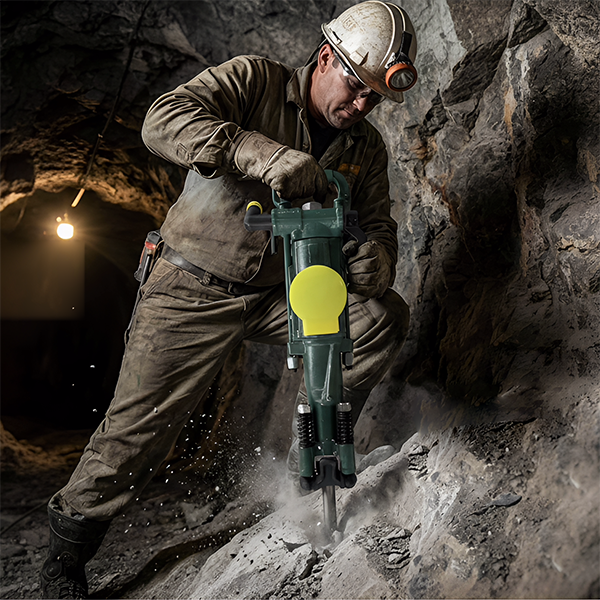
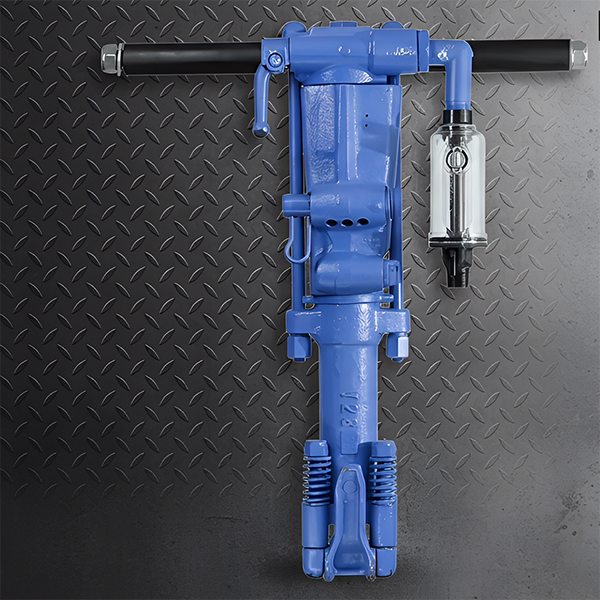
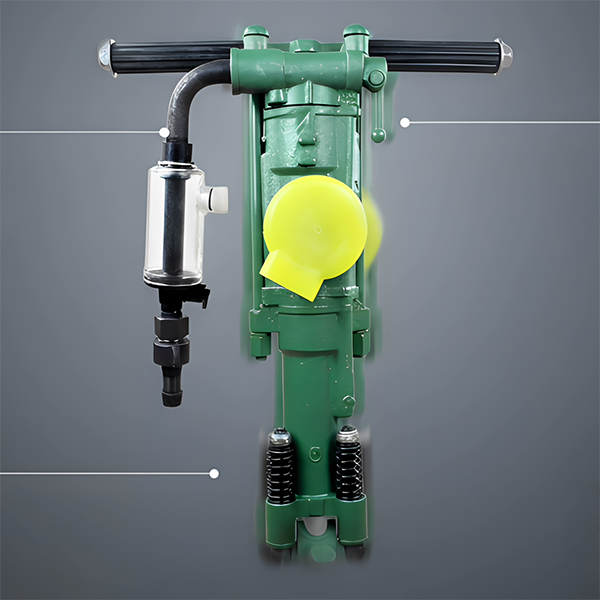
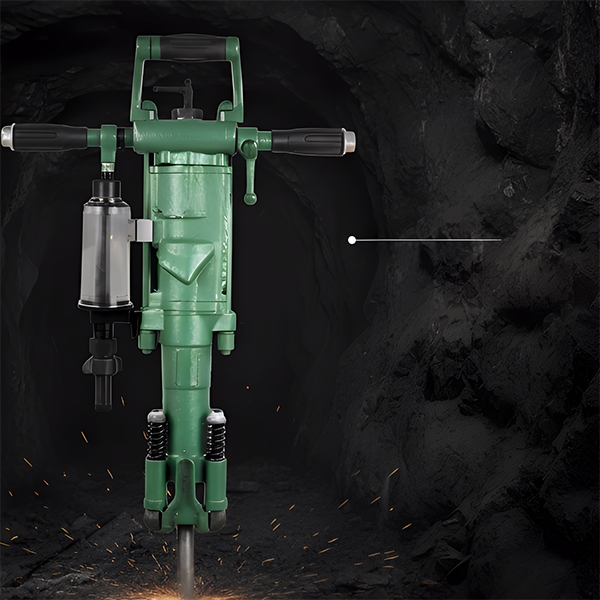
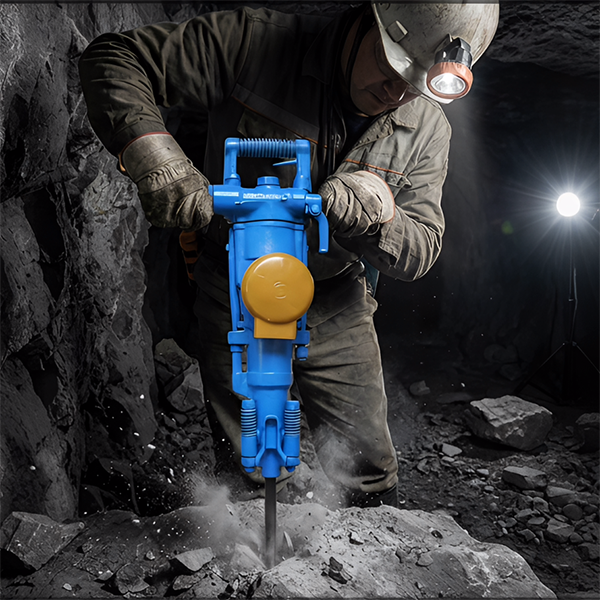
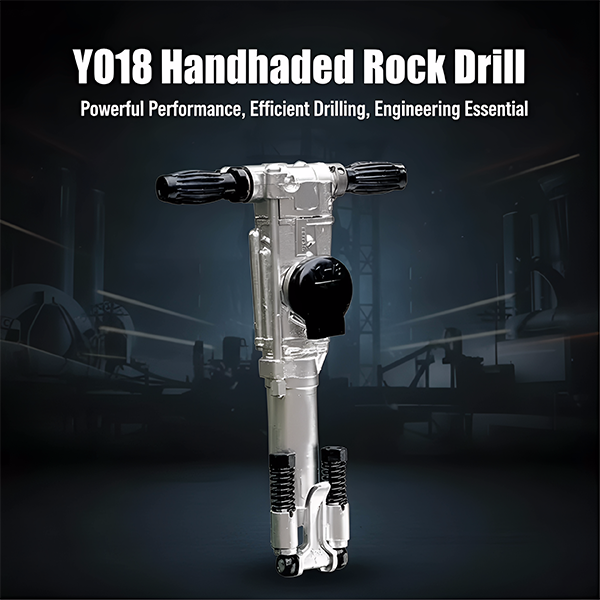
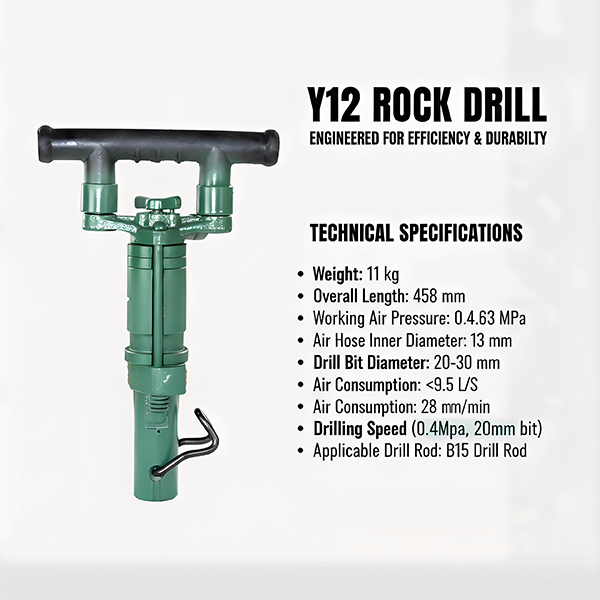
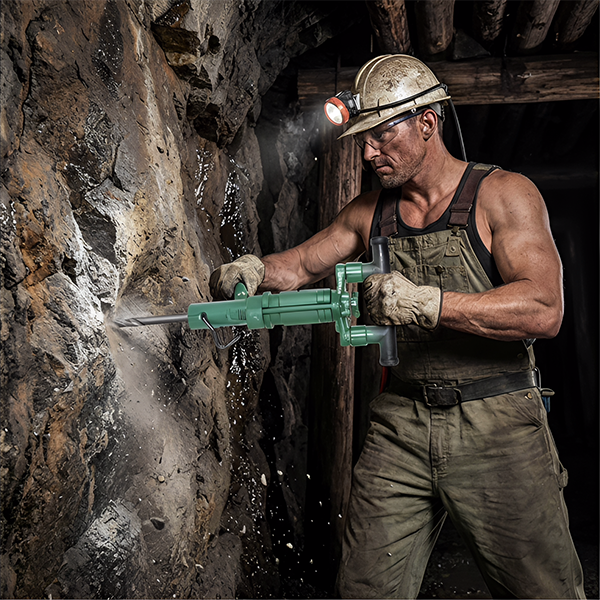
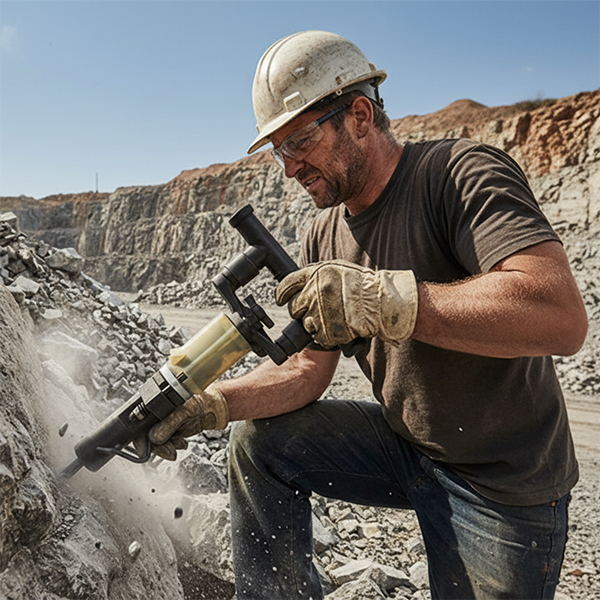
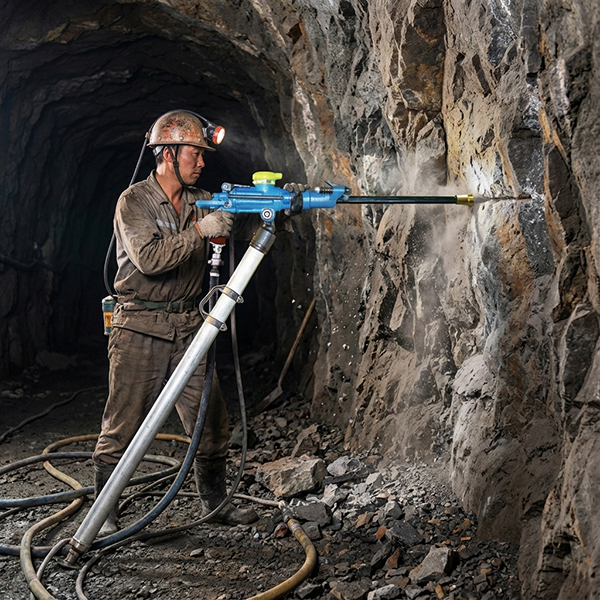
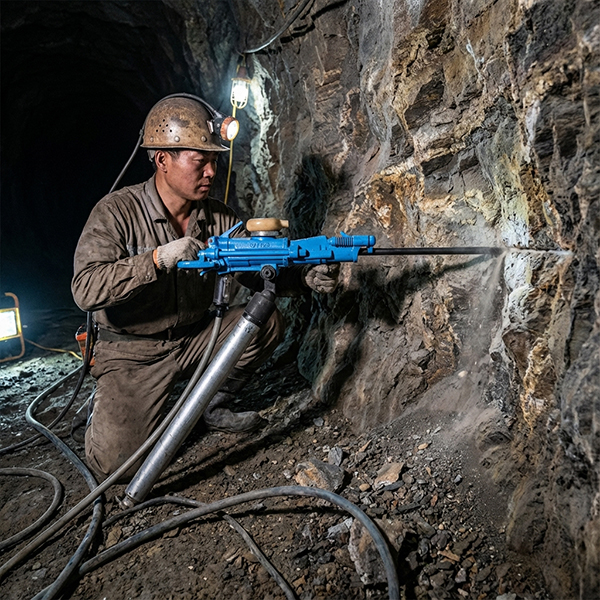
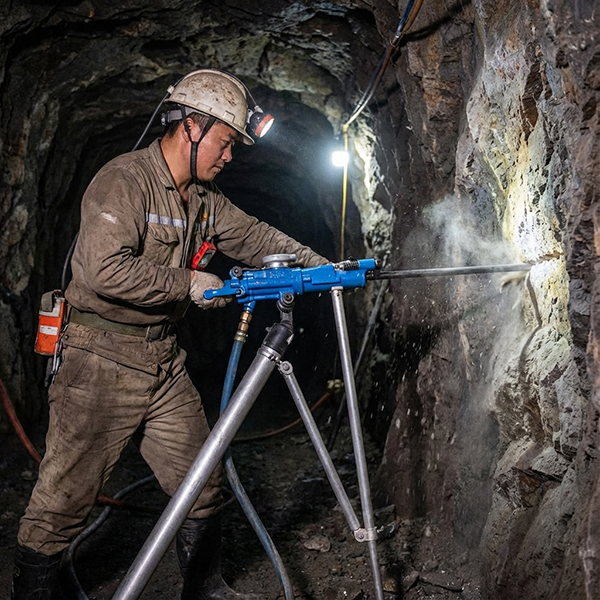
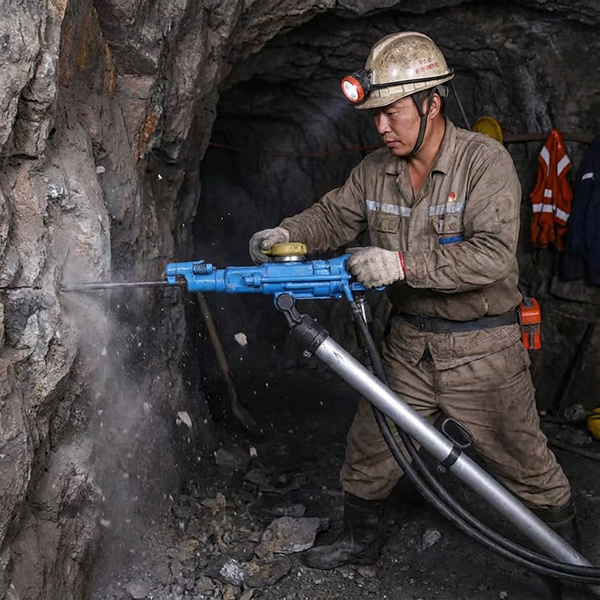
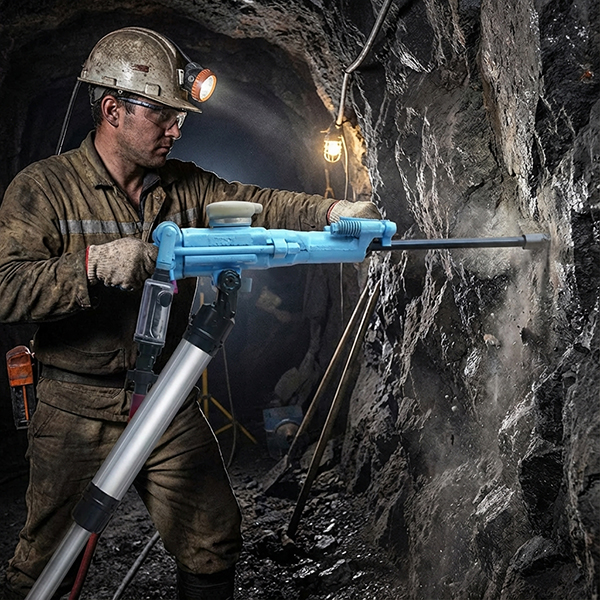
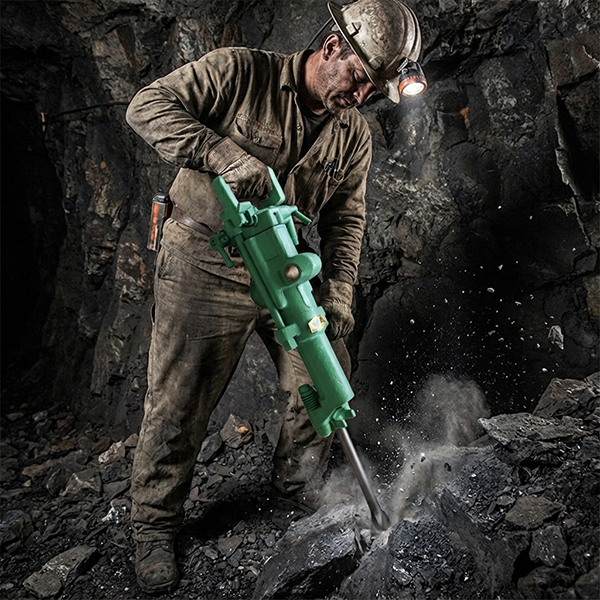
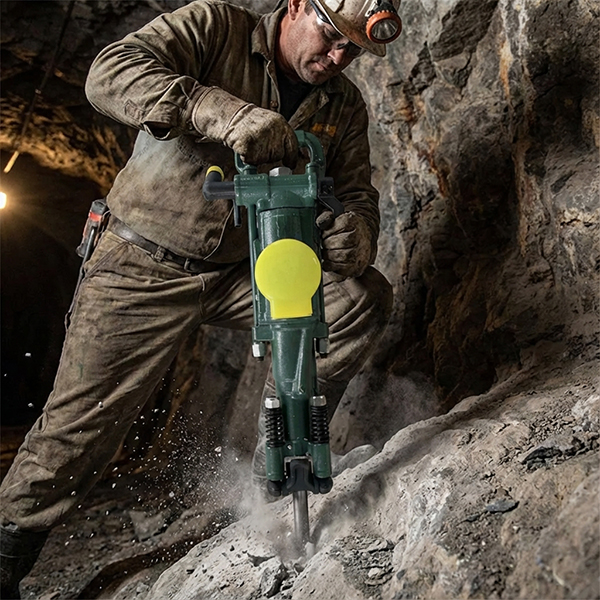
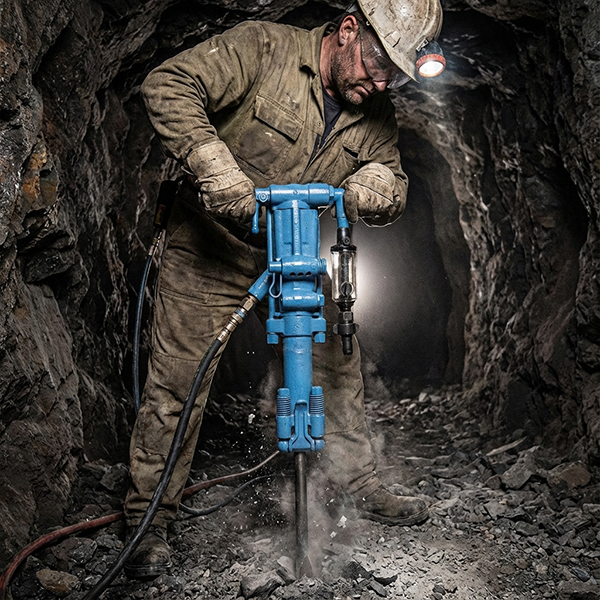
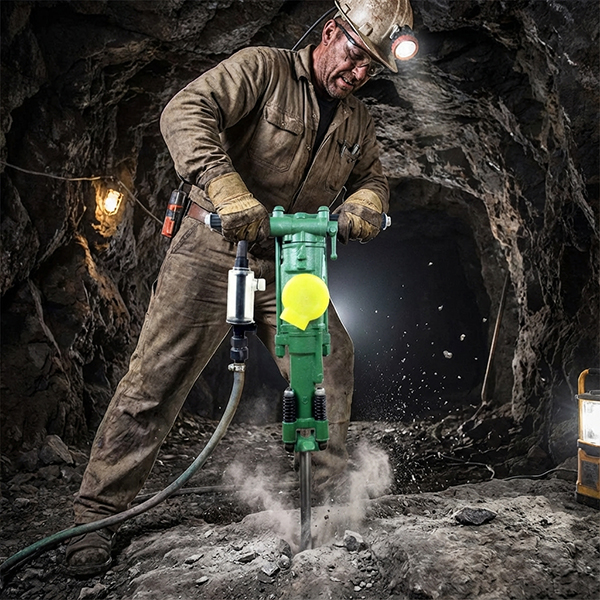
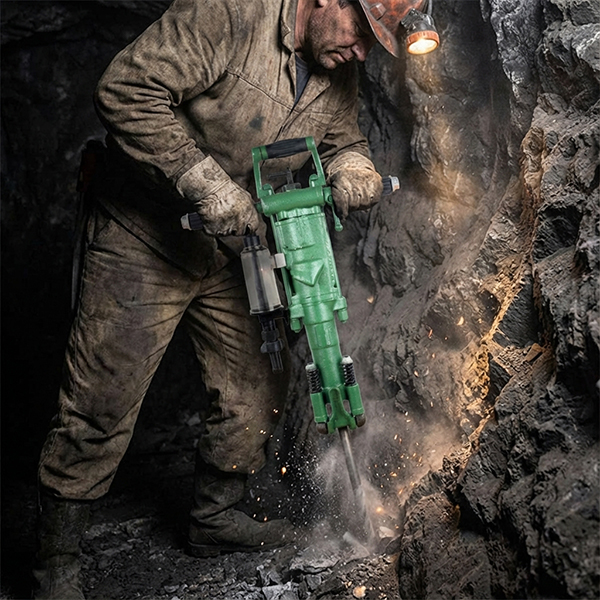
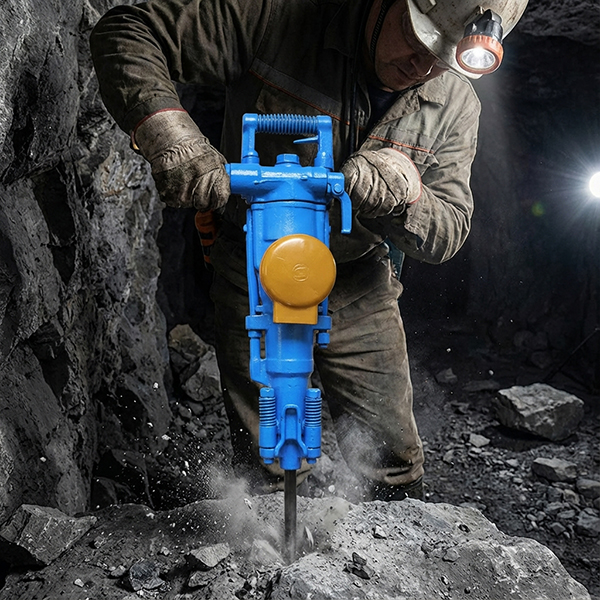
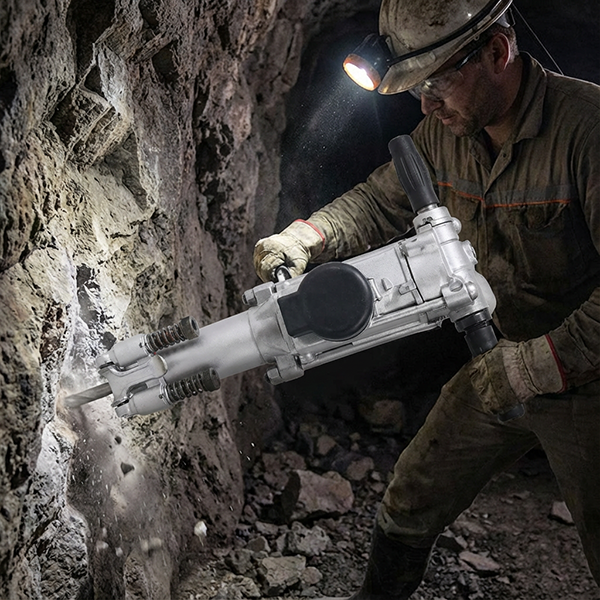
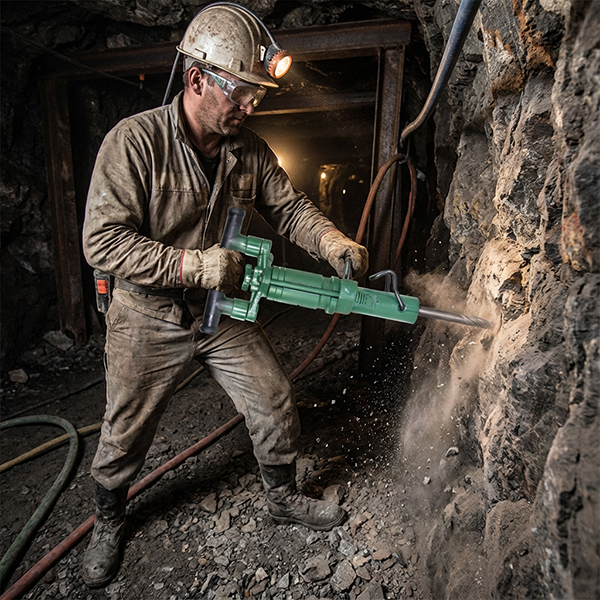
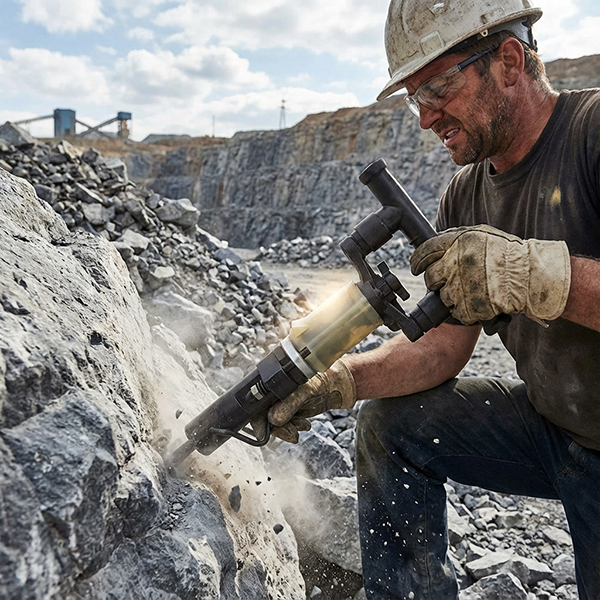
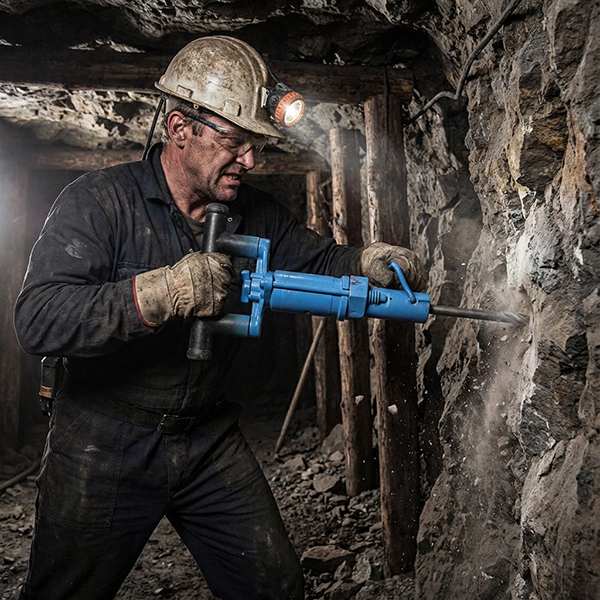
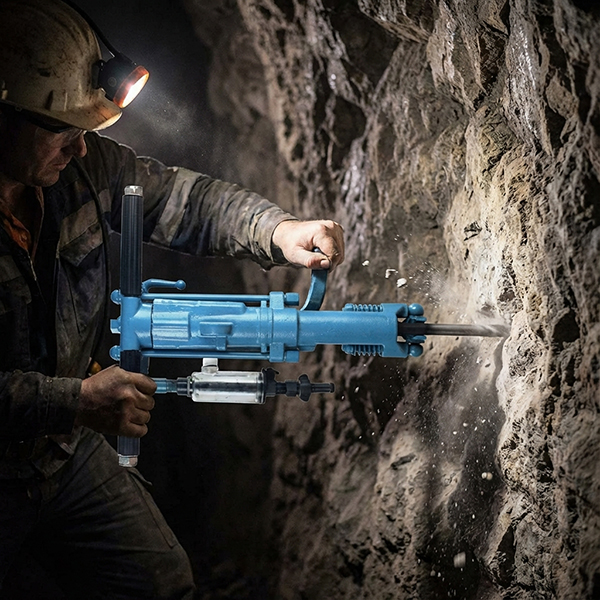
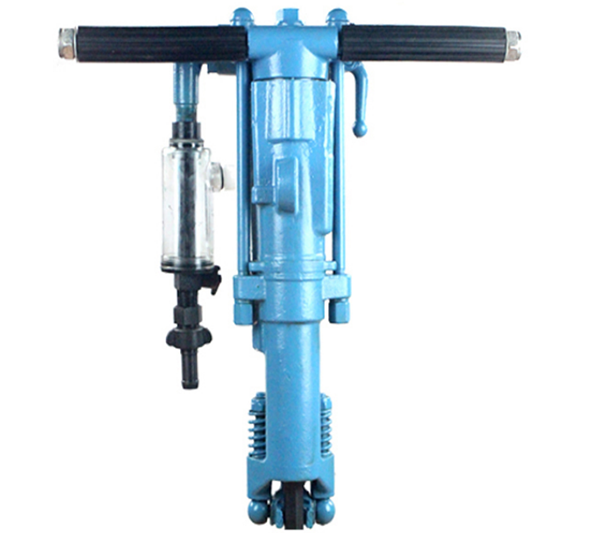
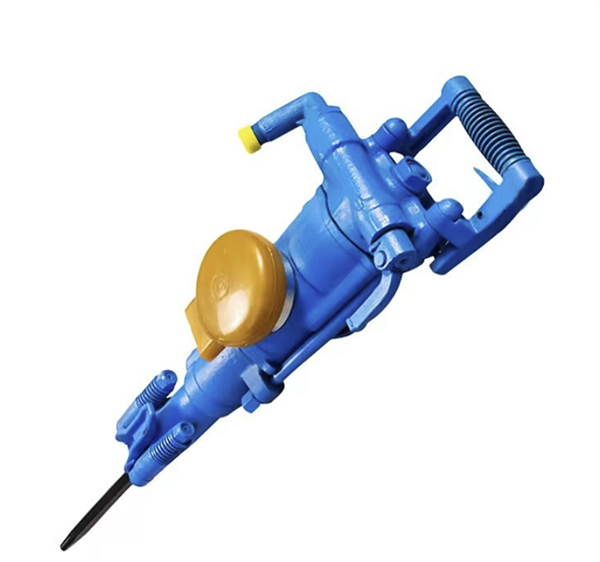
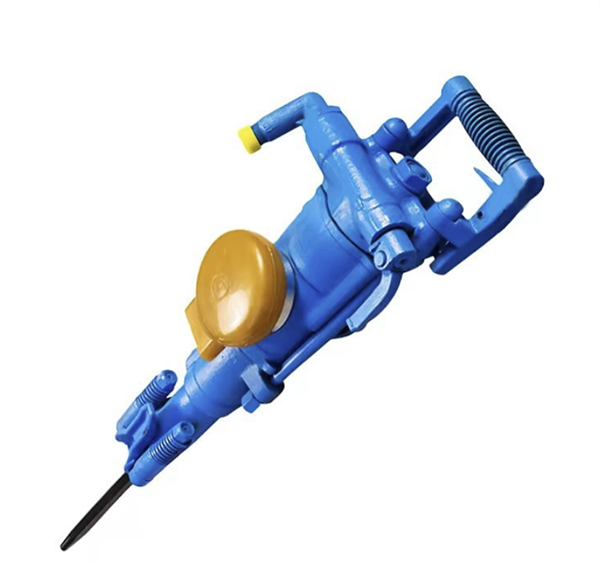
If you look at the data sheet of the Y19A air‑leg rock drill, you can more or less see what kind of tool it is before even picking it up. This is a 19 kg Pneumatic jack hammer designed to work with an air‑leg, but it still keeps the compact size and handling of a hand held jack hammer when the leg is removed.
Here are the main numbers:
Model: Y19A air-leg rock drill
Weight: 19 kg
Working pressure: 0.4–0.5 MPa
Outside dimensions: 600 × 534 × 106 mm
Impact frequency: 35 Hz
Cylinder diameter: 65 mm
Piston stroke: 54 mm
Impact energy: 40 J
Air consumption: 43 L/s
Bit shank: 22 × 108 ±1 mm
Inner diameter of air pipe: 19 mm
Inner diameter of water pipe: 13 mm
Drilling speed (catalog): 200 N/min
A 65 mm cylinder with a 54 mm piston stroke, hitting at about 35 blows per second, and 40 J single‑blow impact energy tells you straight away: this is a strong, fast Pneumatic jack hammer in the air‑leg class, not a light DIY tool.
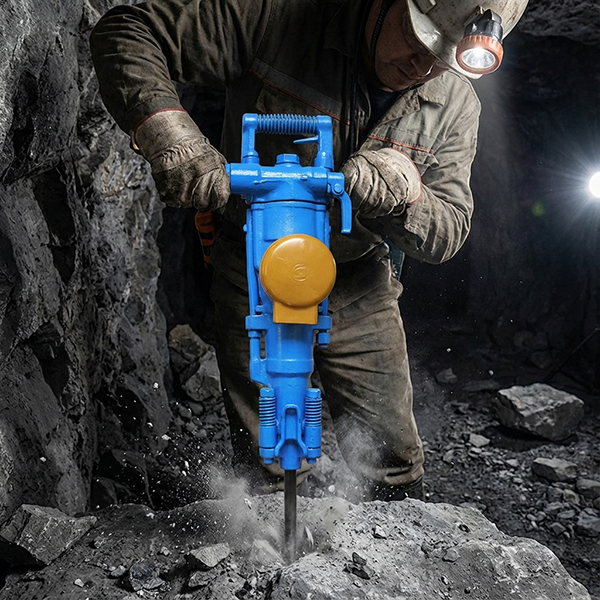
What the Y19A Data Tells You in Practice
When I put these parameters next to the general rock drill theory you provided, the picture looks like this:
Working pressure 0.4–0.5 MPa
This matches the usual “sweet spot” for pneumatic rock drills: around 0.45–0.55 MPa at the drill. Below 0.4 MPa, penetration drops off; above 0.55–0.6 MPa, wear grows quickly. The Y19A is clearly designed to work in that efficient window.Impact frequency 35 Hz + impact energy 40 J
Frequency and single‑blow energy together decide how much rock you break per minute.
35 Hz means about 35 impacts every second, so roughly 2,100 blows a minute, each at around 40 J. That is exactly the kind of output you want for an air‑leg jack hammer in mining and tunneling.Air consumption 43 L/s with 19 mm air pipe
43 L/s is a serious airflow (around 2.6 m³/min). The 19 mm inner‑diameter air pipe is there to reduce pressure loss. This tells you the Y19A is not a small, low‑air tool; it is built to convert a decent air supply into high drilling performance.Water pipe 13 mm
A relatively large 13 mm water line is meant to give enough water for flushing and dust suppression. In underground headings this matters a lot, both for visibility and for health.Drilling speed 200 N/min
The catalog lists “drilling speed 200 N/min”. In context with your other models, this is typically understood as about 200 mm/min penetration in standard test conditions (medium‑hard rock, proper pressure, standard bit). So you can treat it as a reference speed figure, not an exact promise.
Taken together, these numbers fit a picture: a 19 kg air‑leg Pneumatic jack hammer optimized for 0.4–0.5 MPa air pressure, with good blow energy, high frequency and enough water and air flow to keep the hole clean.
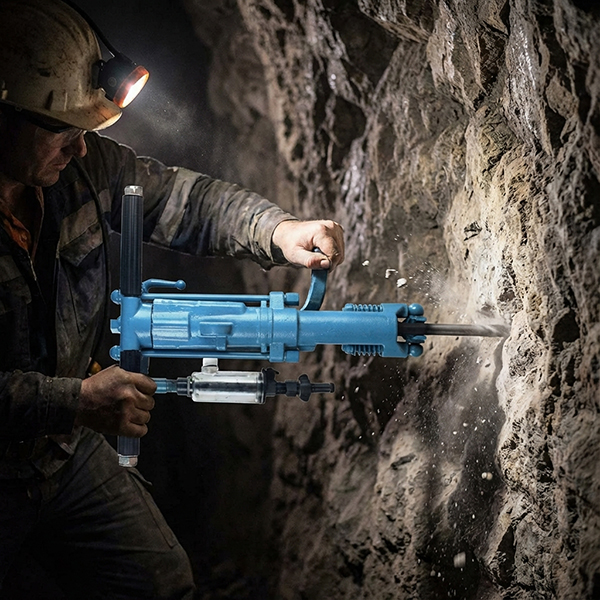
How the Y19A Pneumatic Jack Hammer Works
Mechanically, the Y19A follows the same principle as the other pneumatic rock drills in your product knowledge:
Compressed air at 0.4–0.5 MPa enters the 65 mm cylinder.
The piston runs back and forth with a 54 mm stroke, striking the tail of a 22 × 108 mm drill steel.
Each blow sends a stress wave down the steel to the bit, which cracks and chips the rock at the bottom of the hole.
Between blows, the drill steel rotates a small angle, so the bit is always hitting fresh rock.
Broken rock chips and dust are carried out by air and water flowing through internal passages, fed by the 19 mm air pipe and 13 mm water pipe.
The air‑leg itself takes over the job of feed force, which is one of the key elements in your theory: impact + rotation + feed + flushing. The Y19A keeps the impact and rotation inside the machine, the air‑leg provides steady push, and the air/water flushing keeps the bit cutting efficiently.
Because the Y19A uses standard 22 × 108 ±1 mm bit shanks, it works with the same steels and bits as many common hand held jack hammers, which makes tooling supply and maintenance much easier.
Where the Y19A Air-Leg Rock Drill Fits Best
From the parameters and general experience, the Y19A is well suited to:
Underground tunneling and mining faces
At 0.4–0.5 MPa, with 40 J impact energy and 35 Hz frequency, it has more than enough power for typical blast holes in headings. The air‑leg holds most of the weight, so even though the machine is 19 kg, the operator mainly guides it instead of carrying it.Slope and small tunnel support
The combination of 13 mm water pipe and wet drilling is good for anchor holes and support holes where dust and hole cleanliness matter.Medium‑hard to hard rock
Your rock drill knowledge mentions hardness ranges often around f = 8–18. With 65 mm cylinder and strong stroke, the Y19A is meant for that kind of work, not just soft rock.Situations where you still need some flexibility
Although it’s an air‑leg drill, the body itself is only 600 × 534 × 106 mm and 19 kg, so in some cases it can be used like a powerful hand held jack hammer (for example, with the leg removed for short, awkward drilling tasks).
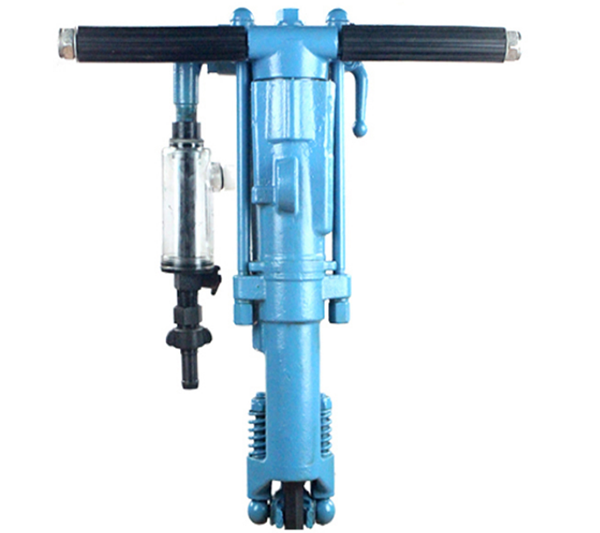
Questions Customers Usually Ask About the Y19A Jack Hammer
Based on previous Q&A and on these parameters, here are some questions that tend to come up, and clear answers you can give.
1. What compressor do I actually need for a Y19A?
The key data here is:
Working pressure: 0.4–0.5 MPa
Air consumption: 43 L/s
Air pipe inner diameter: 19 mm
43 L/s is about 2.6 m³/min for one machine. So in practice:
For one Y19A Pneumatic jack hammer, you want a compressor that can deliver a bit more than 2.6 m³/min at around 0.5–0.6 MPa, so that after hose losses you still have 0.4–0.5 MPa at the drill.
If you plan to run two or three Y19A drills at the same time, simply multiply the flow and leave some margin.
This fits the general rule from your product knowledge: the important thing is not just compressor pressure, but the actual working pressure at the rock drill while it is drilling. The 19 mm hose size is there to reduce pressure drop and help reach that 0.4–0.5 MPa window.
2. Is 19 kg too heavy for a “hand held” jack hammer?
On paper, 19 kg looks heavier than many small hand drills. But remember:
In air‑leg drilling, the leg carries most of the weight. The operator adjusts position and direction more than lifting the machine all the time.
In your classification, anything under about 30 kg is still considered in the hand‑held range. The Y19A at 19 kg sits right in that zone.
So while you would not call it a “light” hand held jack hammer, it’s definitely manageable in daily work, especially with the air‑leg. The advantage of that 19 kg mass is that, together with the 65 mm cylinder and 54 mm stroke, it lets the Y19A transfer its 40 J impact energy into the rock more steadily, with less jumping and wandering of the bit.
3. How fast does the Y19A really drill?
The catalog lists:
Drilling speed: 200 N/min
In the context of your other models, this figure is typically used as a reference penetration speed under test conditions (medium‑hard rock, standard bit, correct pressure and feed). When you combine:
Impact frequency: 35 Hz
Impact energy: 40 J
Correct working pressure: 0.4–0.5 MPa
you can realistically expect the Y19A to drill at a respectable speed, competitive with other air‑leg Pneumatic jack hammers in its class. Actual performance will of course depend on rock hardness, bit shape, and how well you keep pressure and flushing within spec, but the 200 N/min catalog figure shows it is not a slow machine.
4. What bits and steels can I use with the Y19A?
The specification is:
Bit shank: 22 × 108 ±1 mm
This is a standard size in many mining and construction markets. That means:
You can use common chisel bits, cross bits or button bits as long as the shank is 22 × 108.
If you already use other hand held jack hammers or rock drills with 22 × 108 steels, your tooling can often be shared.
This fits nicely with your general rock drill product line, where many hand‑held and air‑leg models are designed around the same shank size to simplify supply of rods and bits.
5. How should I set and balance air and water?
The Y19A data gives:
Working pressure (air): 0.4–0.5 MPa
Water pipe inner diameter: 13 mm
From the product knowledge on pneumatic drills:
Try to keep air pressure at the drill around 0.45–0.5 MPa during drilling. Below 0.4 MPa, both impact and flushing become weaker; above 0.5–0.6 MPa for long periods, internal wear increases.
Set water so that flushing is enough to carry cuttings out of the hole and reduce dust, but don’t overload the hole with water. The 13 mm line is more than enough to supply what the drill needs.
A simple approach: set compressor to about 0.55–0.6 MPa, use 19 mm air hose, and check with a gauge near the drill that your working pressure is close to 0.45–0.5 MPa while drilling. Adjust water so the return flow is steady but not flooding.
6. What daily maintenance does the Y19A Pneumatic jack hammer need?
The basic rules are the same as for other pneumatic rock drills in your notes:
Use clean, dry air – blow out the 19 mm air line before connecting.
Always provide good lubrication – via an inline lubricator using clean rock drill oil, not waste oil.
Start each shift by running the machine at low speed briefly and listening for abnormal noise.
Check and tighten bolts, clamps and hose joints; 35 Hz impact vibration will slowly loosen anything that can move.
If you drill with water, shut the water off at the end of the shift and let the drill run briefly on air only, to push out moisture and reduce rust risk.
Following this routine is usually enough to keep the Y19A’s 40 J impact and 35 Hz frequency close to their original performance over a long service life.
Final Thoughts: Where the Y19A Fits in Your Tool Fleet
If we put everything together, the Y19A air‑leg rock drill is a compact but powerful Pneumatic jack hammer built around:
19 kg machine weight with 600 × 534 × 106 mm dimensions
65 mm cylinder and 54 mm stroke for solid blow energy
40 J impact energy at 35 Hz impact frequency
0.4–0.5 MPa working pressure with 43 L/s air consumption
Standard 22 × 108 ±1 mm bit shank and robust 19 mm / 13 mm air and water lines
For underground headings, small tunnels, mining faces and support work in medium‑hard to hard rock, it gives you the drilling speed and reliability you expect from an air‑leg tool, while still sharing steels and bits with other hand held jack hammer models in your range.
With a properly sized compressor, correct pressure settings, and the usual daily lubrication and checks, the Y19A can serve as a strong, dependable Pneumatic jack hammer for day‑to‑day production drilling rather than just an occasional backup tool.