
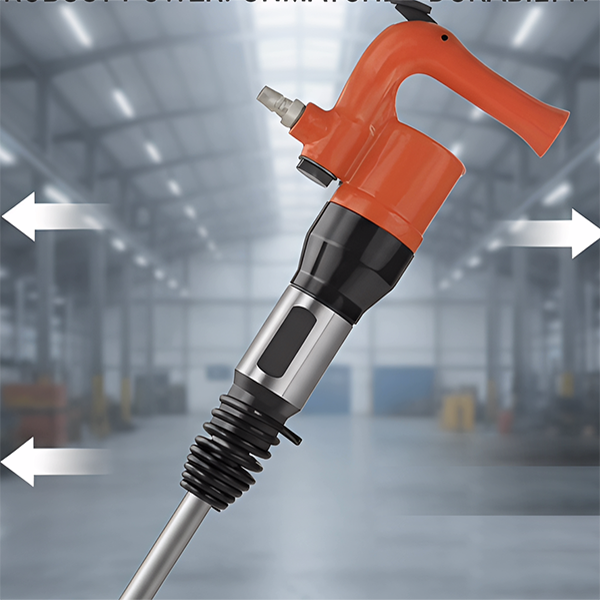
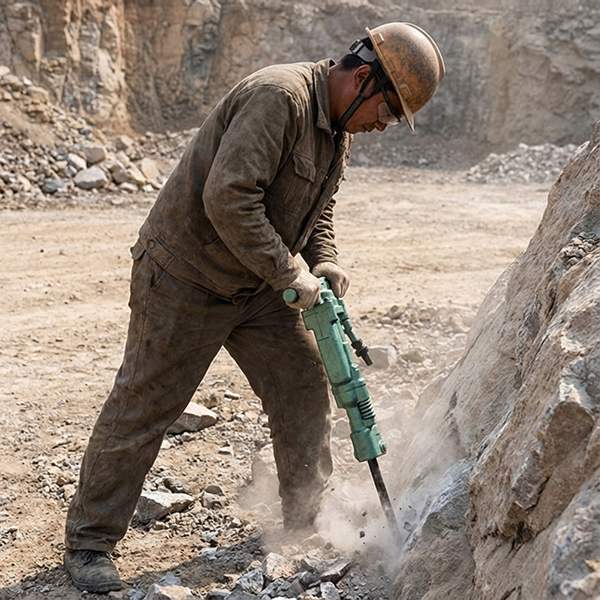
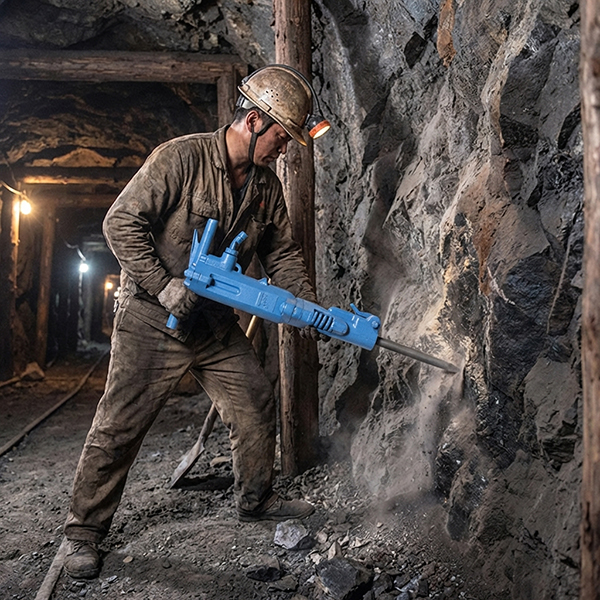
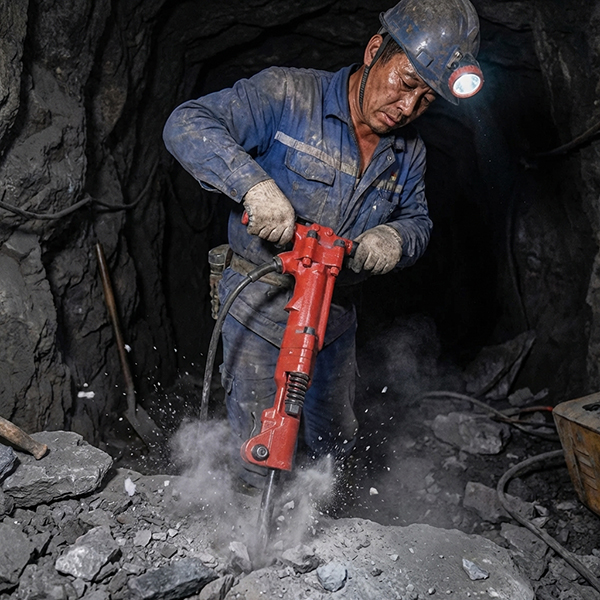
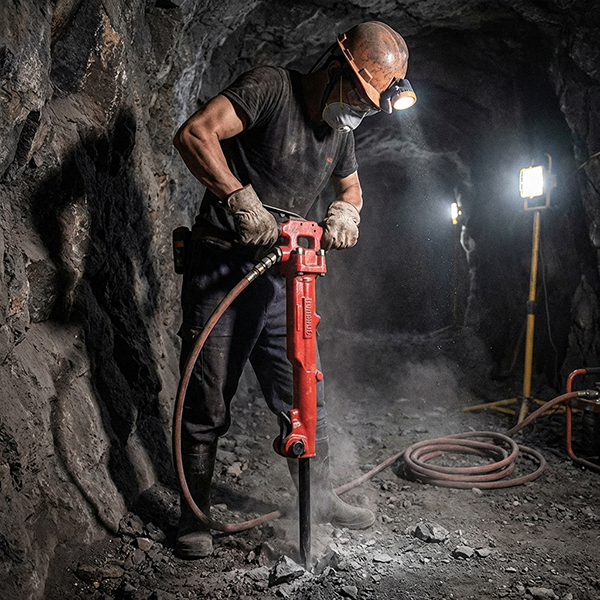
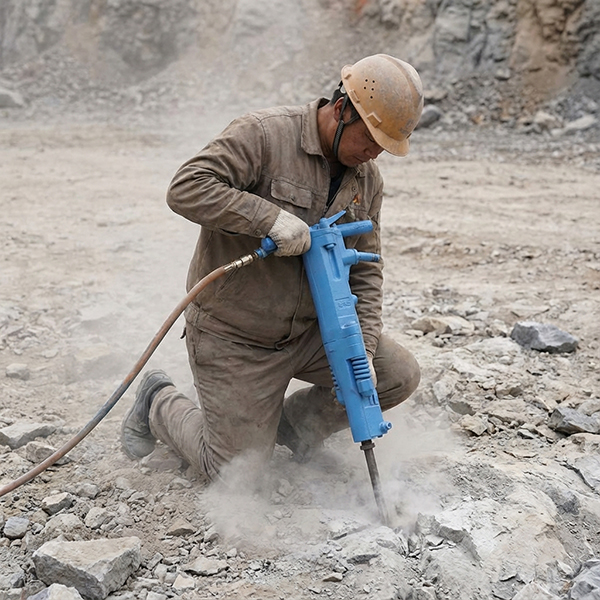
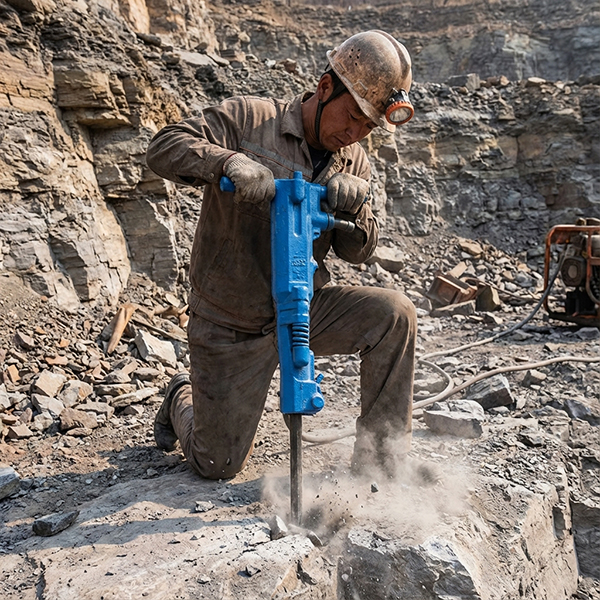
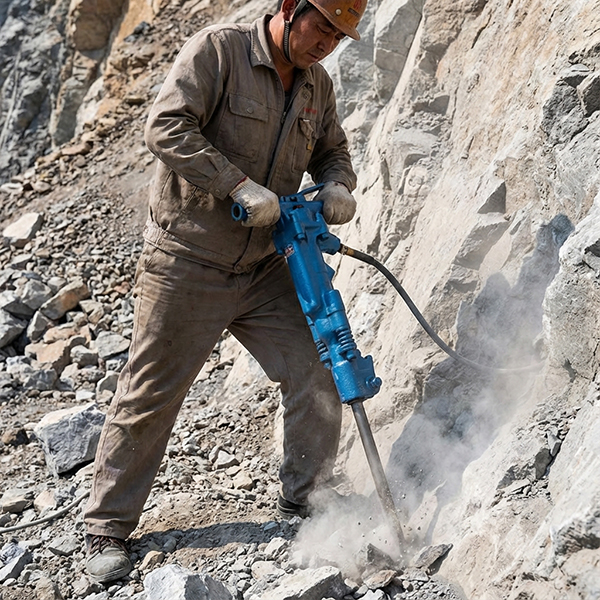
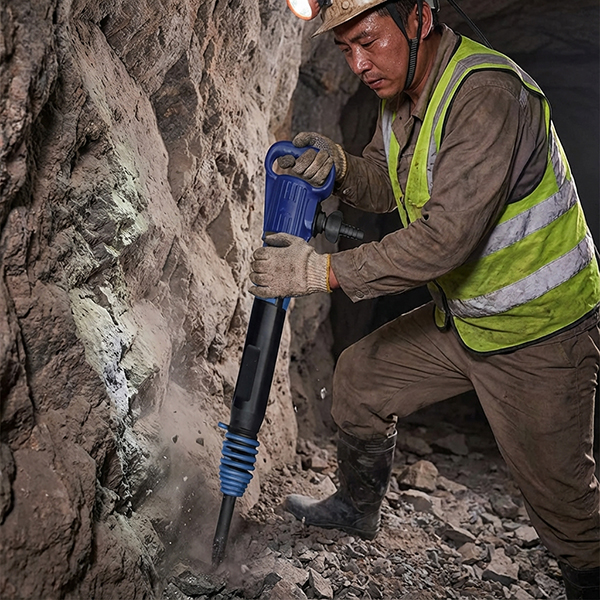
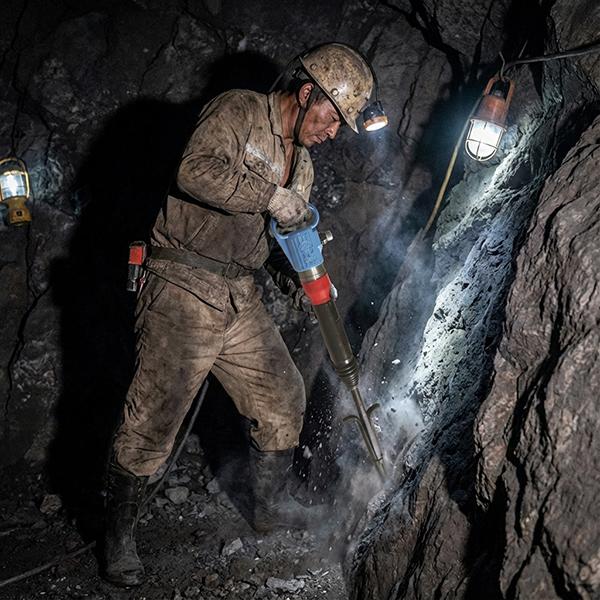
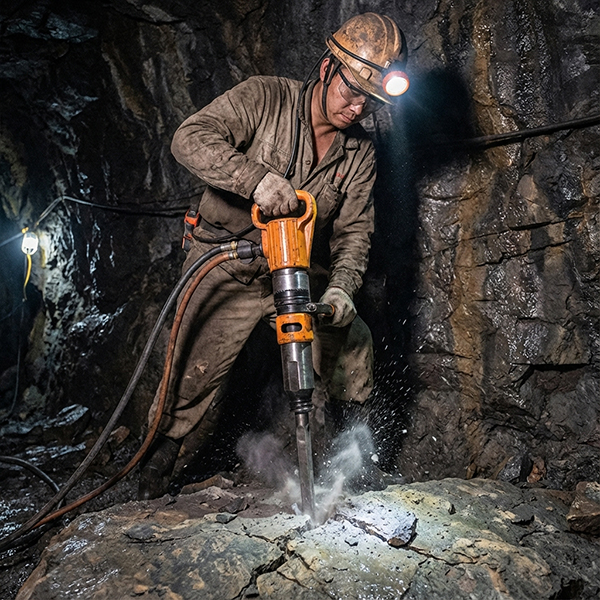
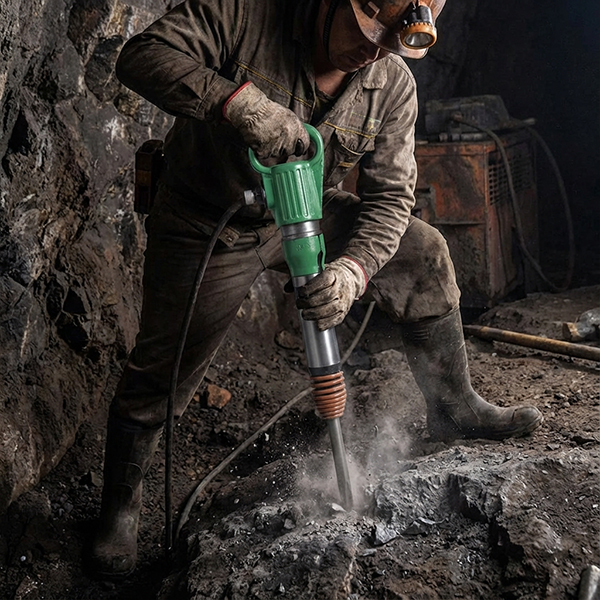
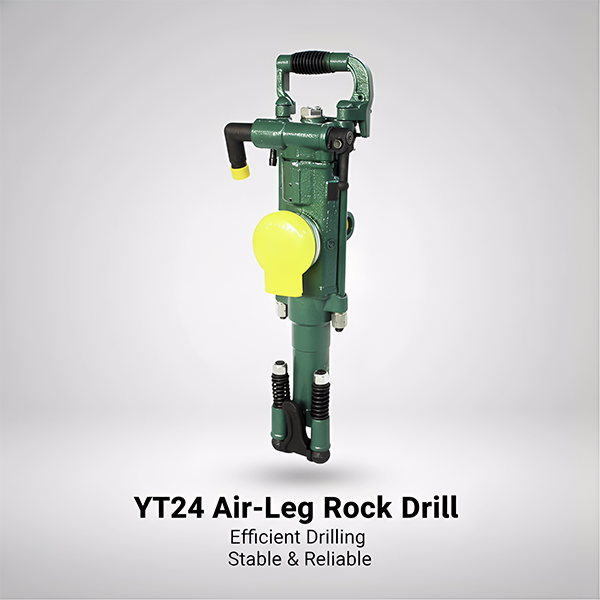
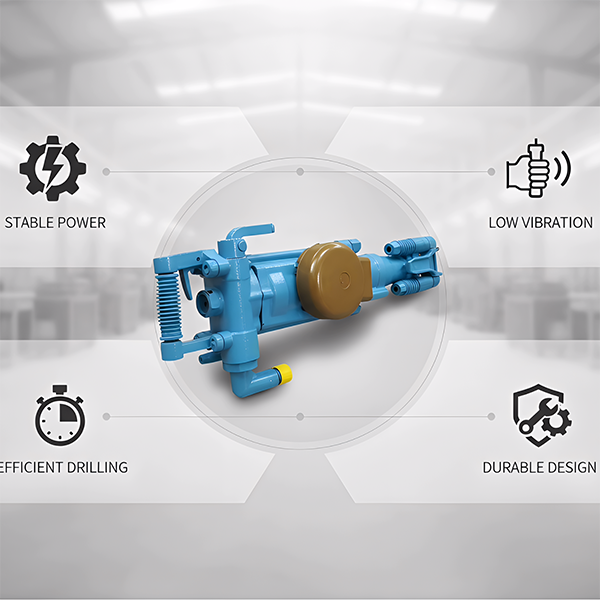
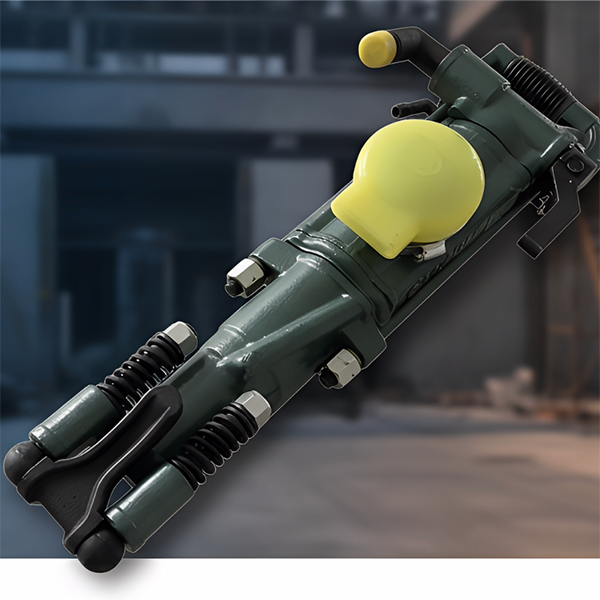
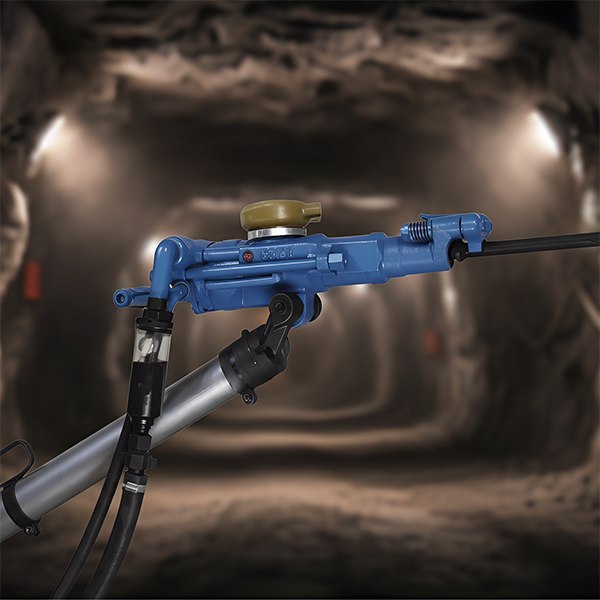
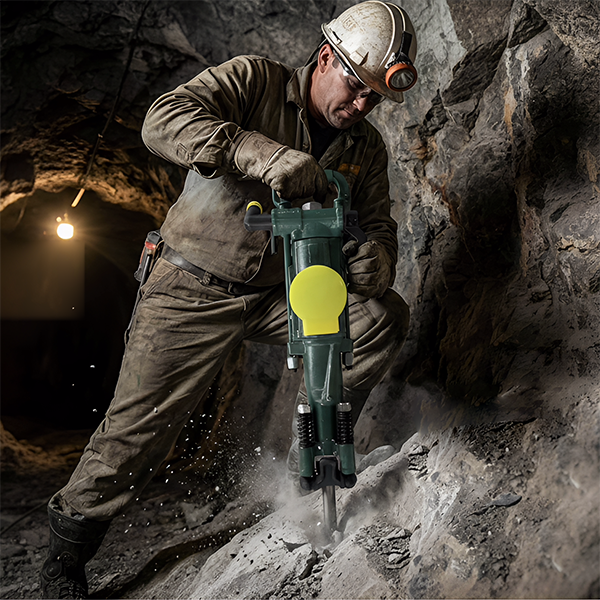
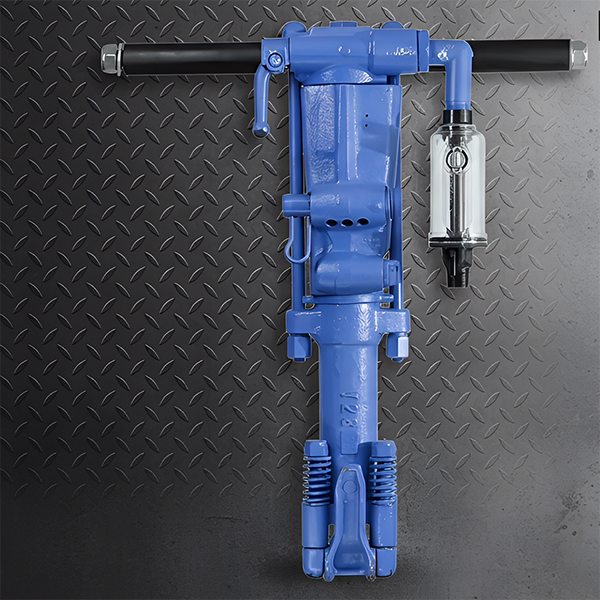
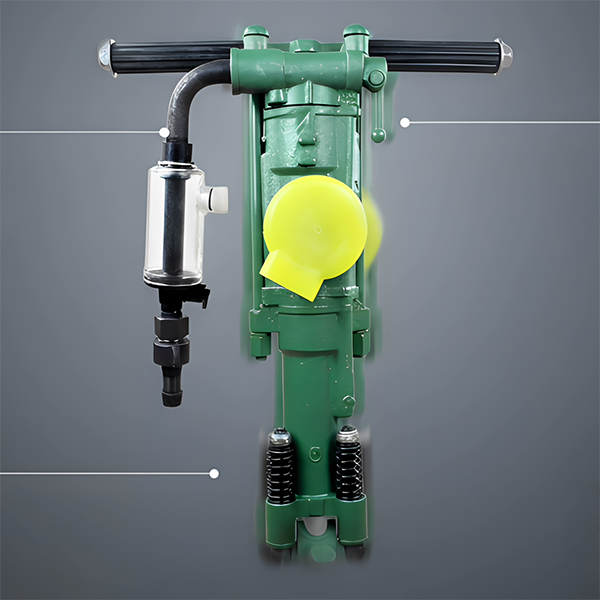
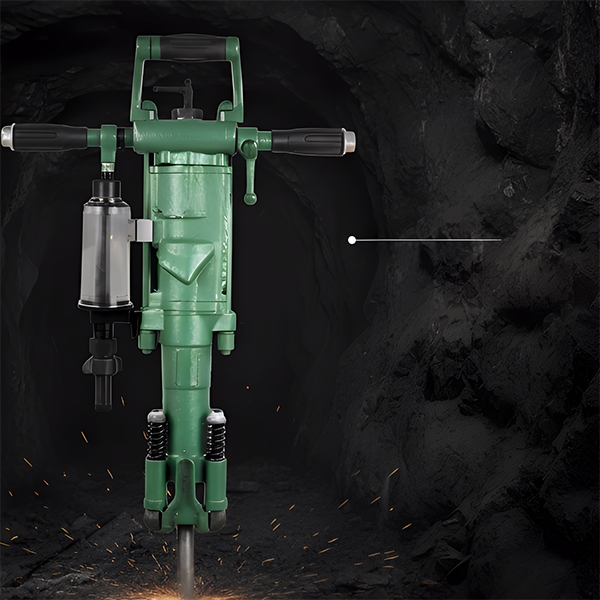
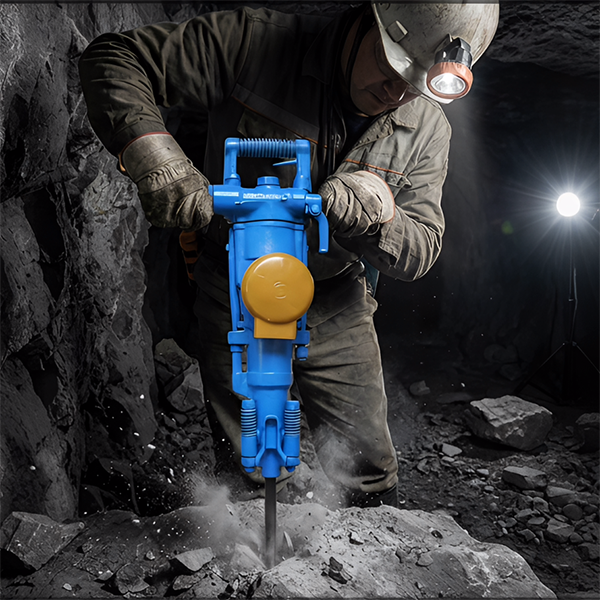
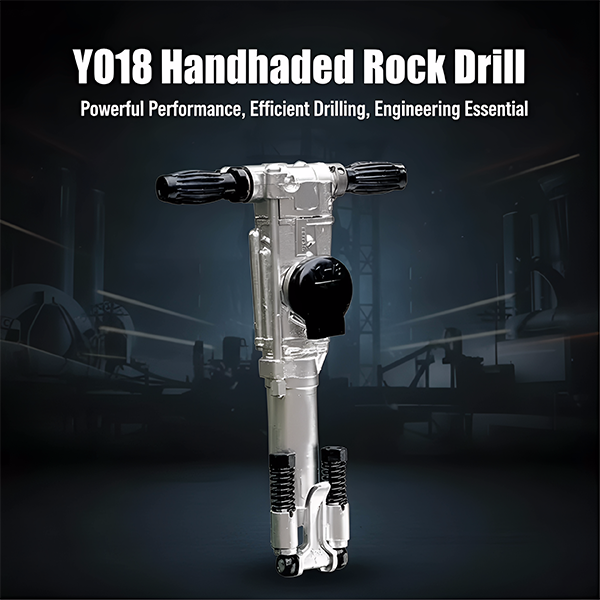
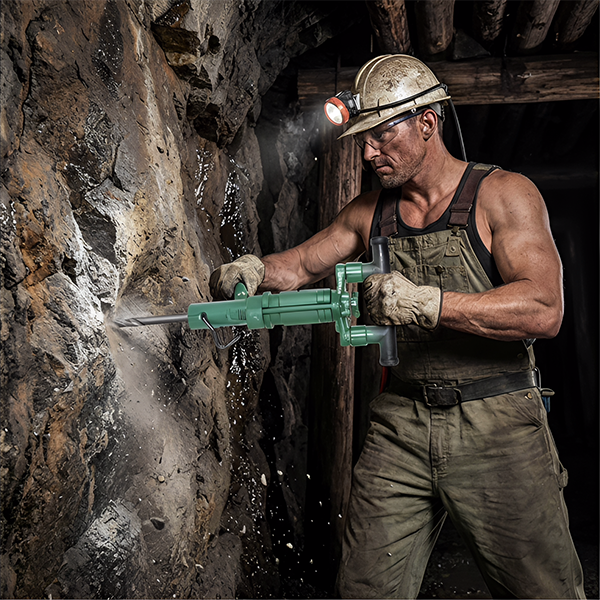
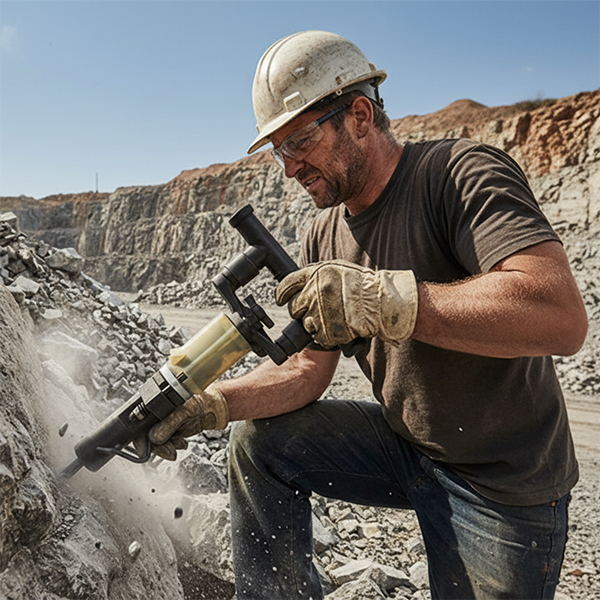
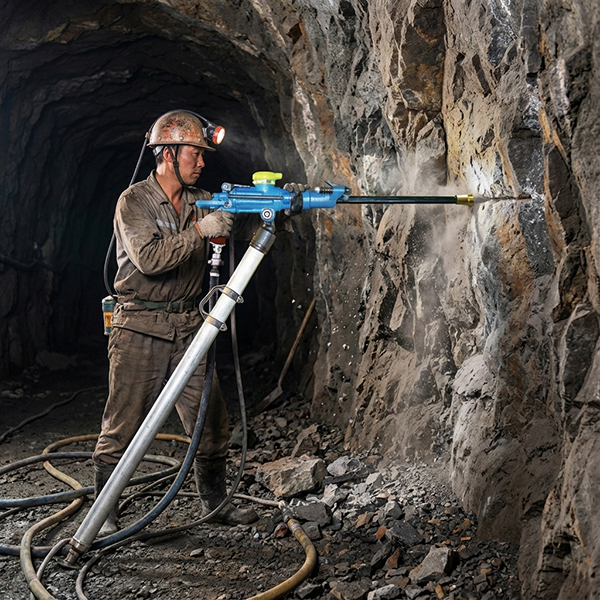
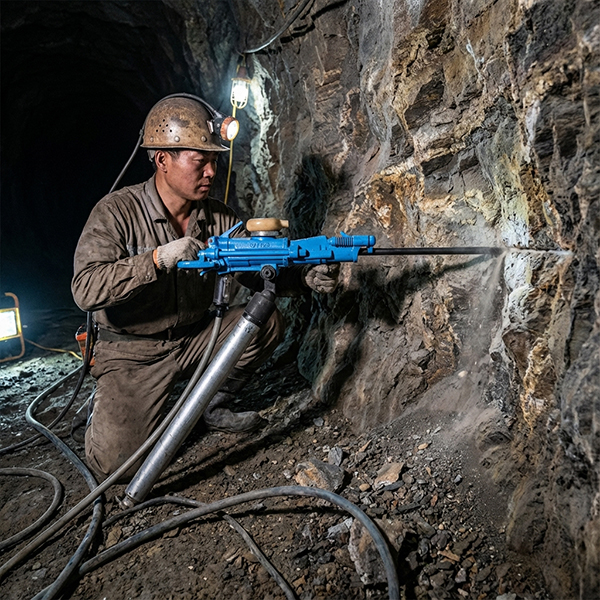
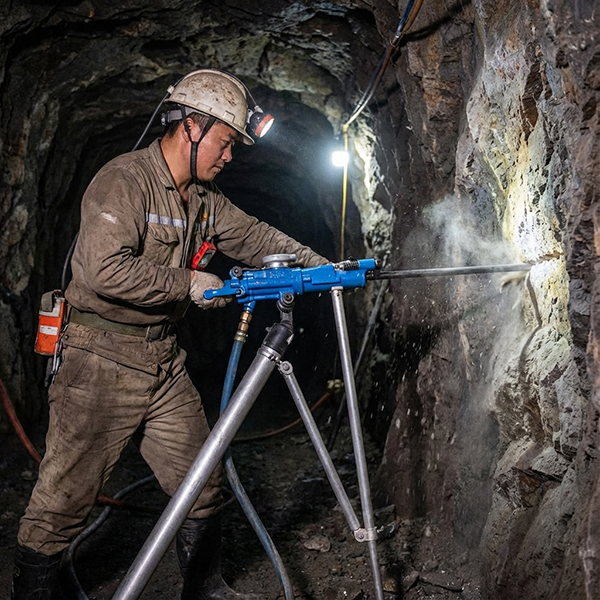
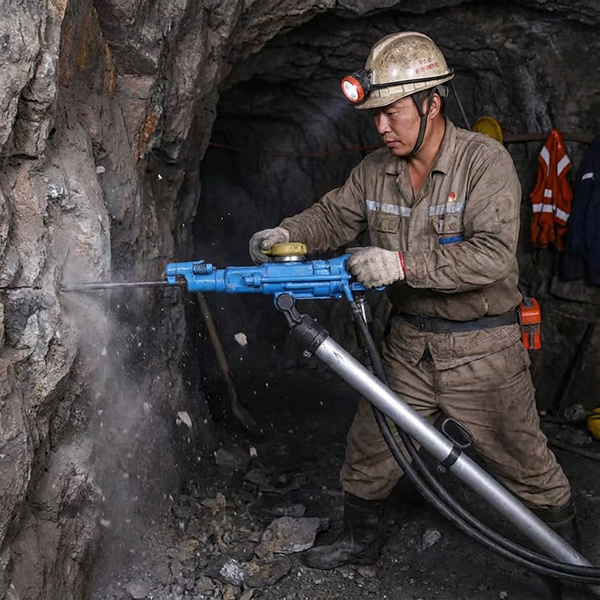
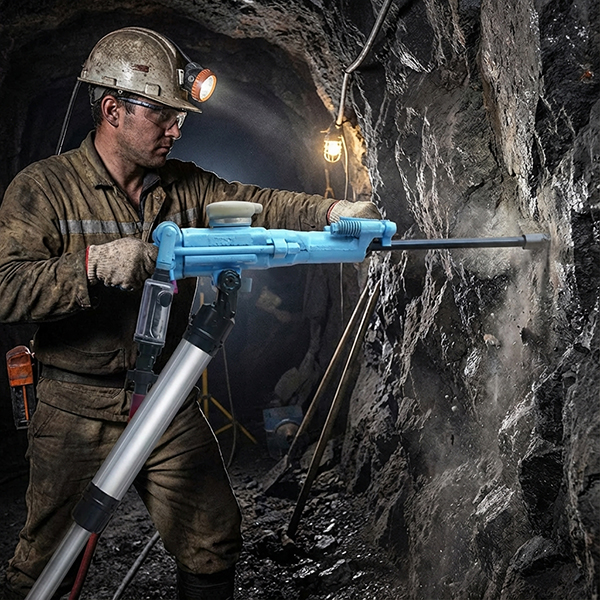
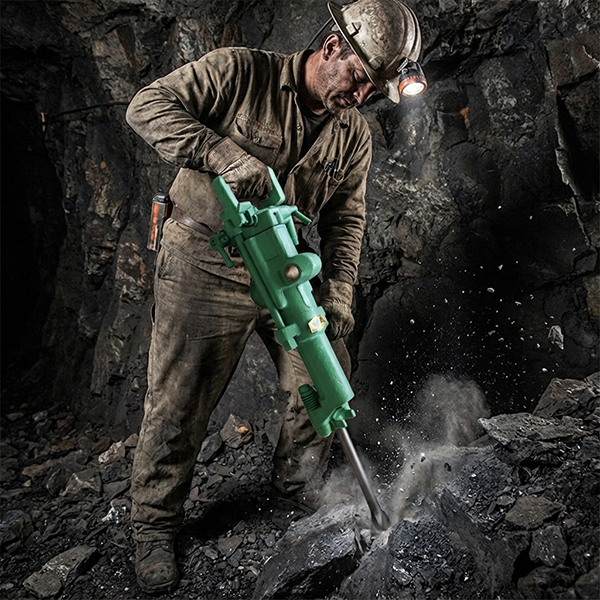
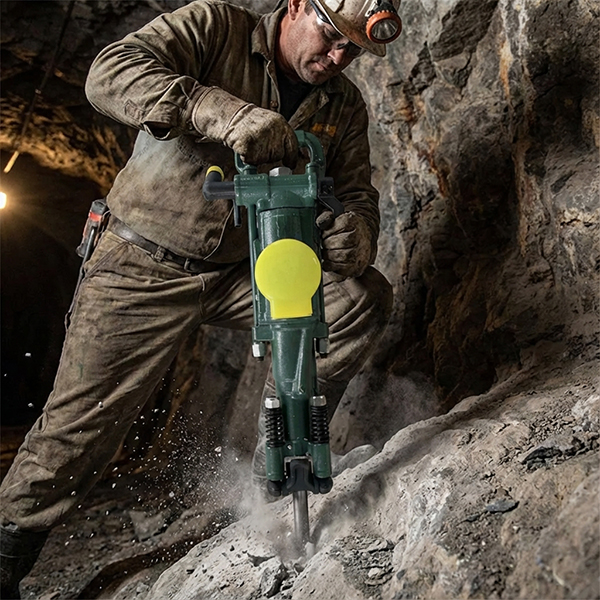
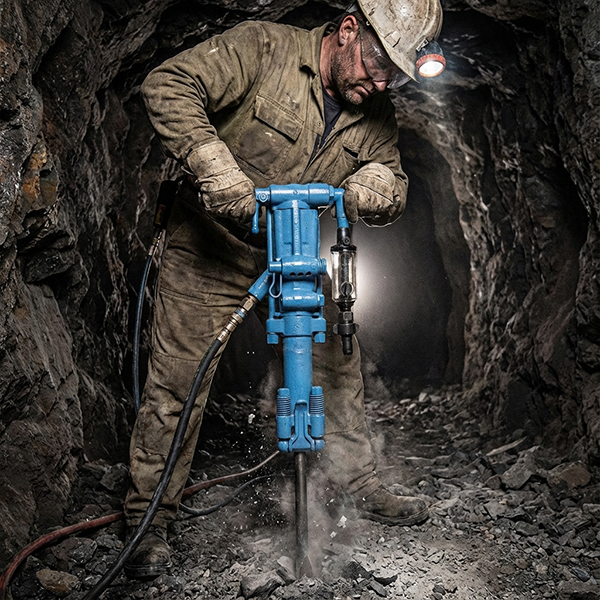
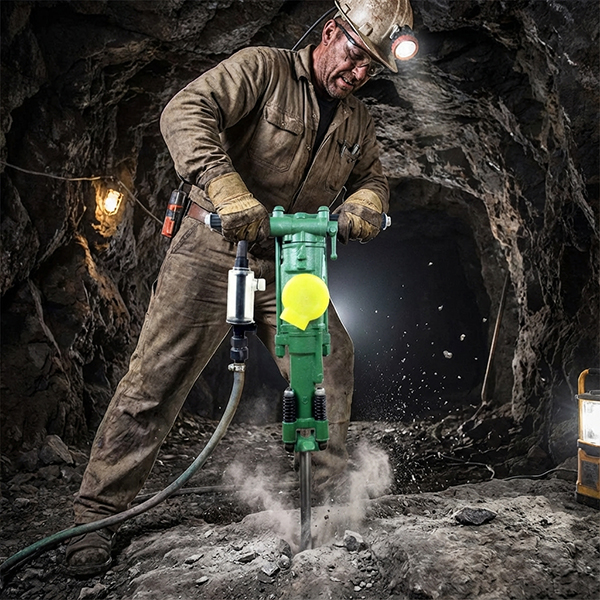
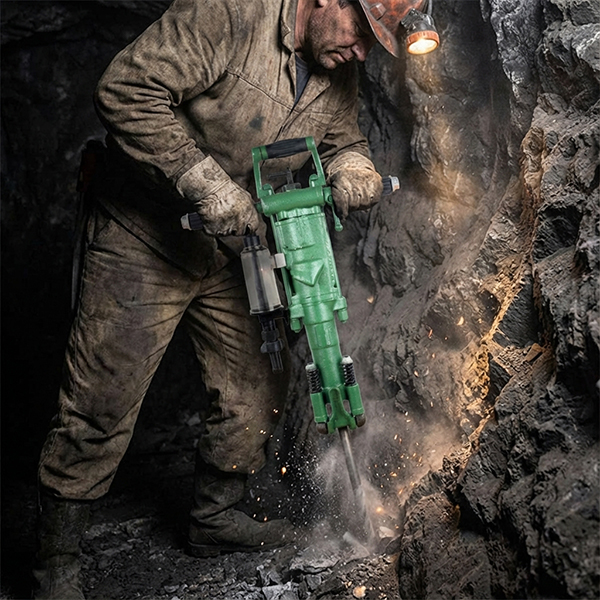
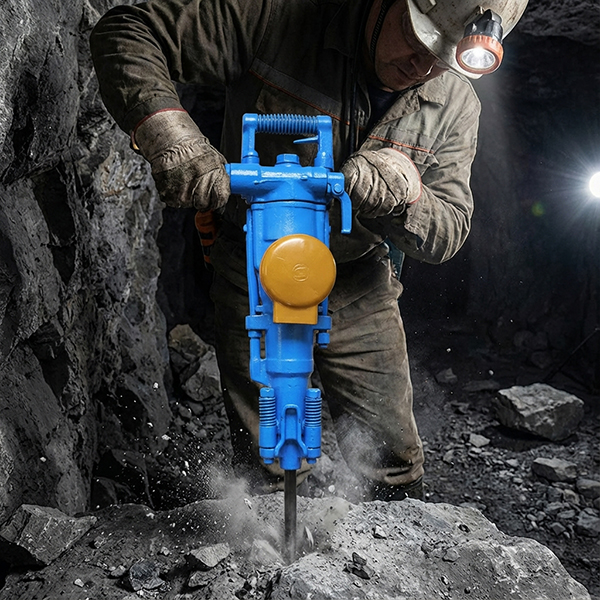
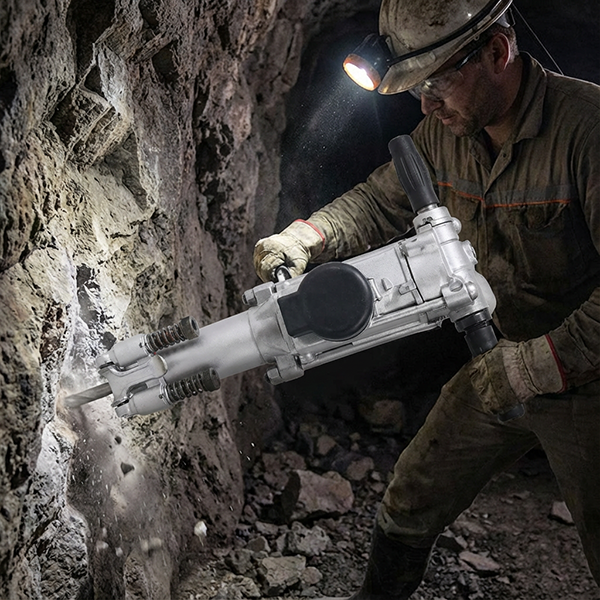
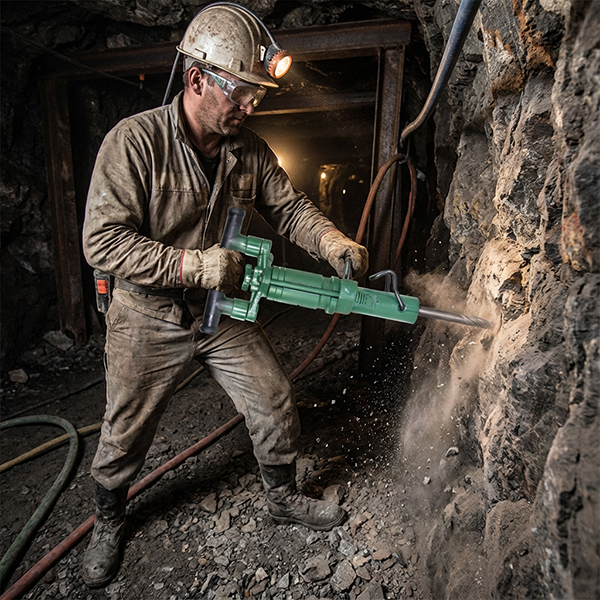
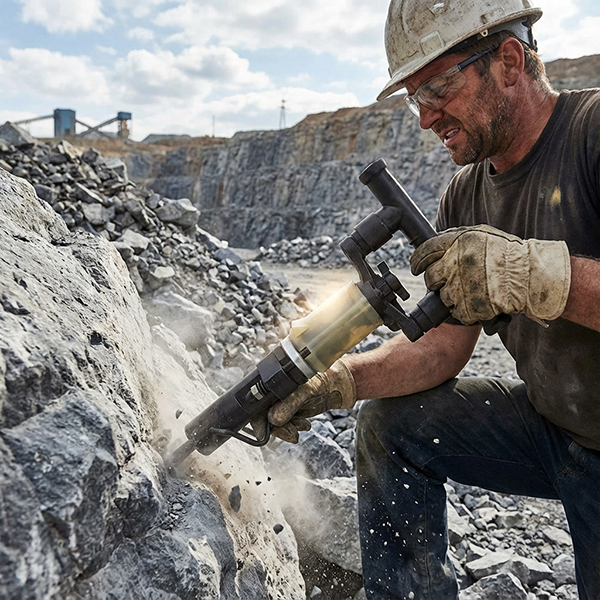
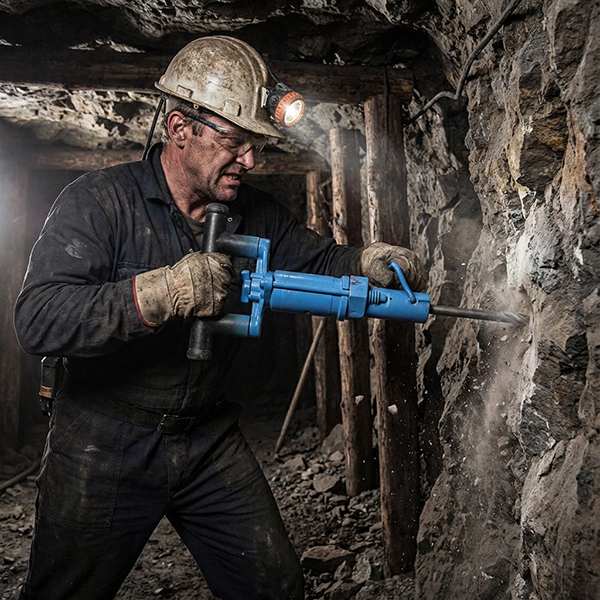
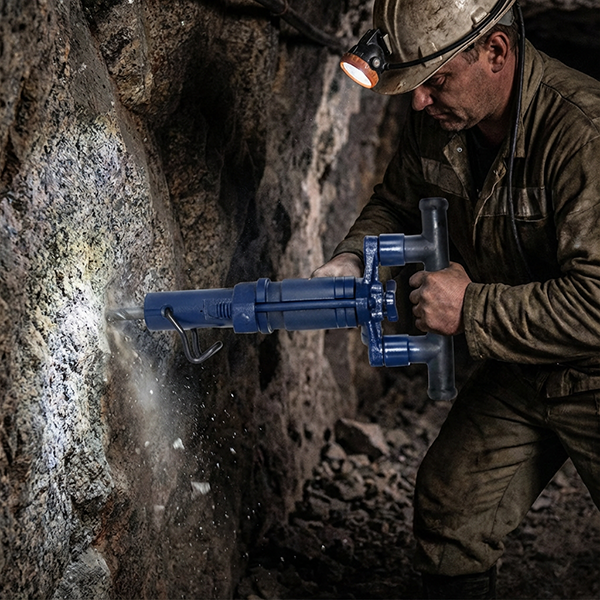
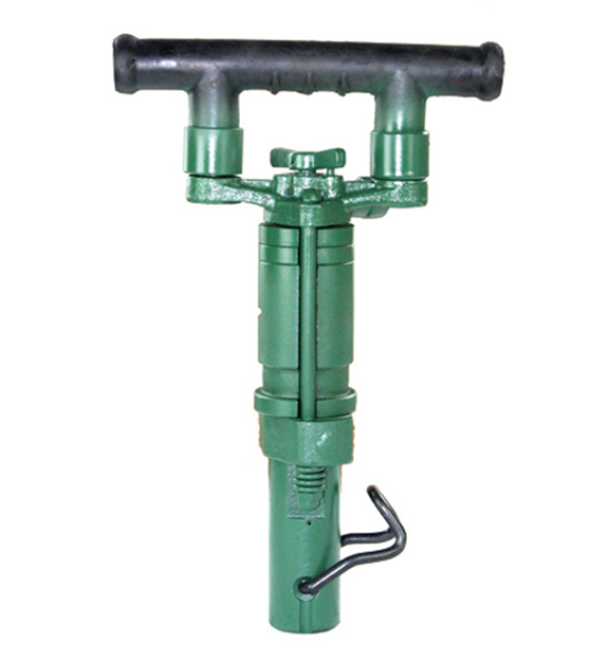
If you are looking for a hand held jack hammer that is still portable but has clearly more power and drilling speed than the ultra‑light models, the Y12 hand‑held rock drill is a very good middle choice. It is a Pneumatic jack hammer built for 20–30 mm blast and anchor holes in medium‑hard to hard rock, with a focus on higher penetration and slightly larger hole diameters.
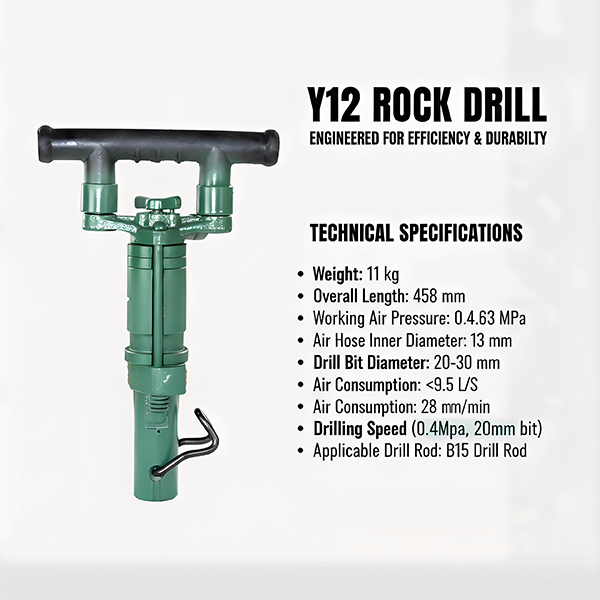
At 11 kg and 458 mm overall length, the Y12 is heavier and more robust than 6–7 kg tools, which gives you more impact energy at the bit and better stability when using 25–30 mm drill bits. It runs on compressed air in the 0.40–0.63 MPa range and uses standard B15 drill rod, so it fits easily into existing pneumatic rock drilling systems.
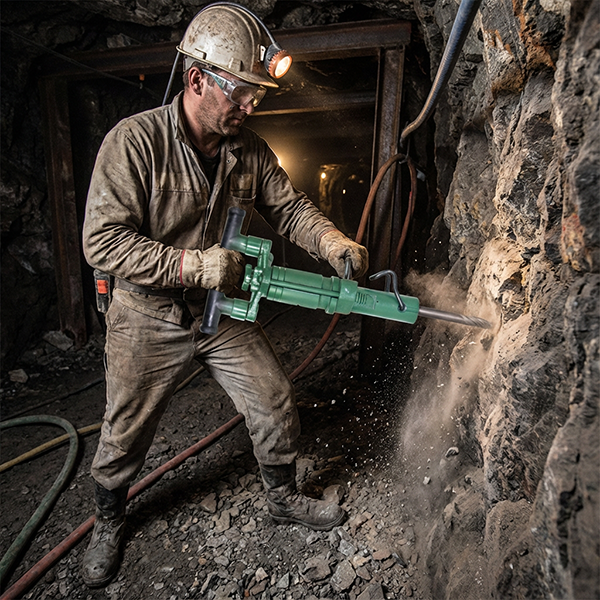
Key Data for the Y12 Hand Held Jack Hammer
Model: Y12 hand‑held rock drill
Type: Pneumatic jack hammer / hand held jack hammer
Weight: 11 kg
Full length: 458 mm
Operating air pressure: 0.40–0.63 MPa
Inner diameter of air pipe: 13 mm
Drill bit diameter: 20–30 mm
Air consumption: < 9.5 L/s (free air, at 0.40 MPa)
Rock drilling rate: ≈280 mm/min
Test condition: 0.40 MPa air pressure, 20 mm drill bit
Matched drill rod: B15 drill rod
Two parameters stand out:
Compared with lighter models, the Y12 increases the test drilling speed to about 280 mm/min at 0.4 MPa with a 20 mm bit, which is a clear step up.
At the same time, it keeps the air consumption under 9.5 L/s, so you don’t need a huge compressor to run this Pneumatic jack hammer.
How the Y12 Pneumatic Jack Hammer Works in Practice
Internally, the Y12 follows the same basic principle that you see in all modern pneumatic rock drills:
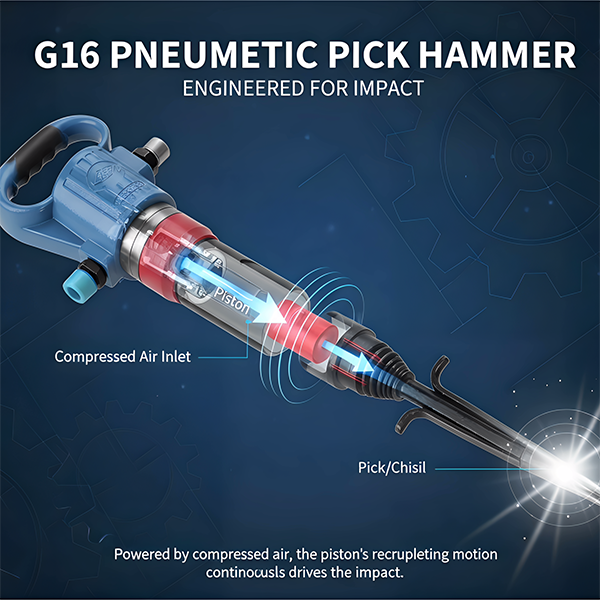
A piston in the cylinder makes high‑frequency back‑and‑forth movement, driven by compressed air at 0.40–0.63 MPa.
On each forward stroke, the piston hits the shank of the B15 drill rod, transferring impact energy to the drill bit.
The 20–30 mm bit cuts into the rock, forming small indentations.
After each blow, the drill rod is forced to rotate a certain angle, so the next blow hits fresh rock, not the old indentation.
Rock between these impacts is broken and chipped away.
Compressed air flows through the flushing channel to blow rock dust and chips out of the hole, keeping the bit free to cut.
This combination of impact + rotation + air flushing is exactly what your rock drill theory describes: the piston’s single‑blow energy and frequency determine the basic drilling power, while the bit rotation angle and flushing determine how effectively that energy actually breaks the rock.
The Y12 is designed so that, at a working pressure around 0.45–0.55 MPa, it can deliver:
More impact energy than a 6–7 kg hand held jack hammer
Enough torque to turn 25–30 mm bits without stalling too easily
A respectable 280 mm/min testing penetration with a 20 mm bit at 0.4 MPa
This makes it a good “workhorse” Pneumatic jack hammer for users who need more than just small‑diameter, shallow blasting holes.
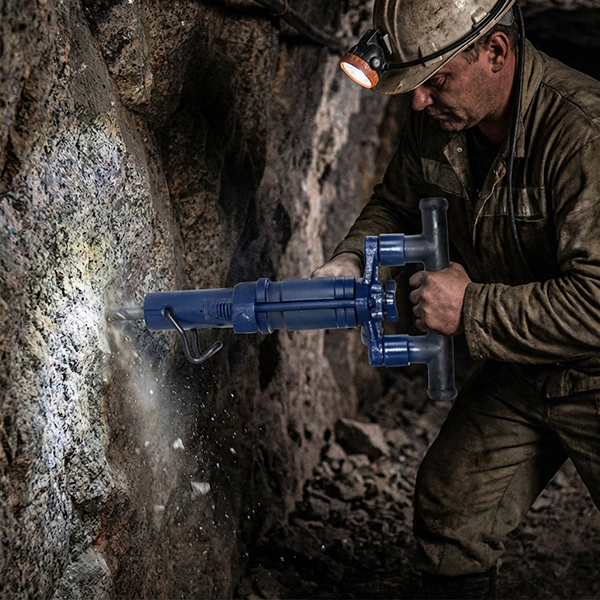
Typical Jobs for the Y12 Hand‑Held Rock Drill
Looking at its weight (11 kg), bit range (20–30 mm) and drilling rate, the Y12 is well suited to:
Small and medium blast holes (20–30 mm)
Face blasting in small tunnels
Benching in small quarries
Secondary blasting and splitting in stone operations
Support and anchor holes
Rock bolts and anchor rods in underground works
Small diameter support holes in slopes or retaining structures
Medium‑hard to hard rock
Pneumatic rock drills in your data are widely used for rock with hardness around f = 8–18.
With proper bits and a 0.4–0.6 MPa air supply, the Y12 can comfortably work in similar rock hardness.
Sites where flexibility still matters
At 11 kg, the Y12 is heavier than 6 kg models but still firmly in the “hand‑held jack hammer” category.
It’s easier to move around and set up than a full leg‑type or rail‑type rock drill, especially on uneven ground or in small underground headings.
If you feel that ultra‑light hand held jack hammers are not strong enough for your daily work, but you don’t want to step all the way up to a 25–30 kg leg drill, the Y12 is the kind of “middle ground” tool that often makes sense.
Questions Customers Often Ask About the Y12 Pneumatic Jack Hammer
Here are some practical questions that usually come up when people look at a Y12 hand‑held rock drill, with answers based on the product data and the general rock drill knowledge you provided.
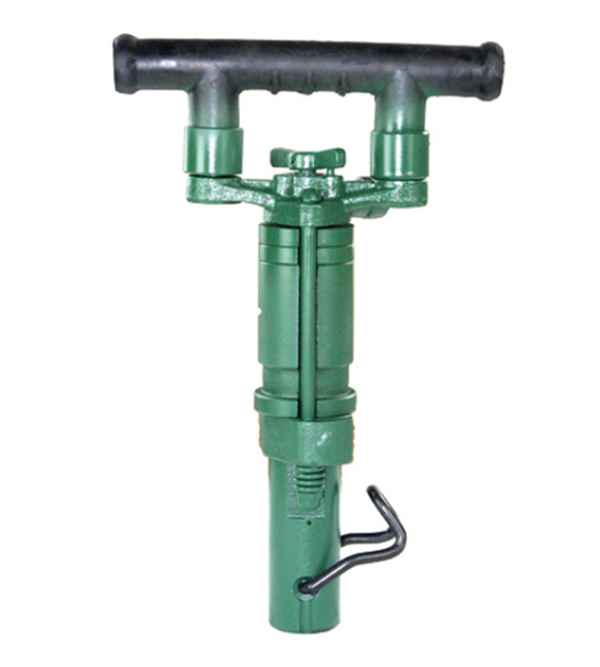
1. How much drilling performance can I expect from the Y12?
The catalog figure for the Y12 hand held jack hammer is:
Rock drilling rate ≈280 mm/min
Test condition: 0.40 MPa air pressure and 20 mm drill bit
In the field, your actual penetration will depend on:
Rock hardness and abrasiveness
Bit diameter (drilling with a 30 mm bit will be slower than with 20–22 mm)
Real working pressure at the machine (after hose pressure loss)
Operator technique and feed force
From your general technical notes, we know that:
Rock drilling speed is roughly proportional to air pressure within the allowed range.
Keeping the pressure at the drill around 0.45–0.55 MPa usually gives a good balance of speed and wear.
So if you can maintain around 0.45–0.5 MPa at the Y12 inlet, seeing real penetration in the 200–300 mm/min range on medium‑hard rock with 20–25 mm bits is realistic. The 280 mm/min benchmark at 0.4 MPa shows that, for its air consumption, this Pneumatic jack hammer is quite efficient.
2. What air compressor is suitable for the Y12?
The Y12 specification states:
Air consumption: < 9.5 L/s at 0.40 MPa
That is about 0.57 m³/min free air.
However, in real projects:
Hoses (13 mm inner diameter) and fittings cause pressure drops.
One compressor may feed more than one Pneumatic jack hammer or other tools.
You need some safety margin so that pressure at the drill doesn’t fall below 0.40 MPa when drilling.
For one Y12 hand held jack hammer, many users choose a compressor with at least 1.0–1.5 m³/min capacity at about 0.5–0.6 MPa. This matches your general guidance that proper working pressure for rock drills should be around 0.45–0.55 MPa, not less than 0.4 MPa.
If you plan to run two or more Y12 jack hammers at the same time, size the compressor accordingly (for example, 2.0–3.0 m³/min for two or three units, depending on other air users).
3. Is 11 kg too heavy for a hand held jack hammer?
In your classification, “hand‑held rock drills” are usually considered to be below about 30 kg and used for relatively shallow holes. At 11 kg, the Y12 is comfortably inside this category.
Compared with:
A 6 kg jack hammer:
The Y12 is heavier, but that extra mass gives you more impact capacity and better control when using larger bits (up to 30 mm).
A 25–30 kg leg‑type pneumatic rock drill:
The Y12 is much easier to carry and reposition, and you don’t need an air leg or feed device.
For normal horizontal and slightly upward or downward drilling, most experienced operators have no problem handling an 11 kg hand held jack hammer over a shift, especially if they follow basic safety and posture guidelines. For long periods of overhead drilling, a lighter tool might be more comfortable, but the Y12 is a good compromise when you need both power and portability.
4. What drill rods and bits should I use with the Y12?
The Y12 is designed for:
B15 drill rod
Drill bit diameter 20–30 mm
This means:
You should use B15 shank drill rods of suitable length for your hole depth.
For fastest drilling and lowest load on the machine, a 20–22 mm bit is ideal.
If you need larger charges or larger bolts, you can move up to 25–30 mm bits; the Y12’s extra weight and impact capacity are exactly for this type of work.
Your rock drill knowledge also reminds us that:
Drill rods are usually made from high‑quality alloy steel, often hexagonal hollow steel.
The quality of the brazed hard metal tips on the bit will limit how much impact energy and frequency the bit can handle.
If you increase bit diameter and push the jack hammer hard at high pressure, using good bits and checking wear becomes more important.
So, matching the Y12 with the right B15 rods and 20–30 mm bits is key to getting the most out of this Pneumatic jack hammer.
5. What air pressure should I actually run at?
The Y12’s rated operating air pressure range is:
0.40–0.63 MPa
Your general technical data for pneumatic rock drills says:
Working wind pressure is best 0.45–0.55 MPa
It should not be lower than 0.40 MPa, otherwise drilling speed drops quickly
If it’s too high for too long, wear on internal parts increases
So in daily use:
Aim for about 0.45–0.55 MPa at the Y12 inlet while drilling, not just at the compressor.
If your compressor is set at 0.6 MPa, pressure at the drill might only be 0.45–0.5 MPa after the 13 mm hose and fittings, which is just about right.
Avoid running continuously at the absolute maximum 0.63 MPa unless necessary for short bursts, because it will increase piston, valve and bushing wear.
Correct air pressure gives you stable impact frequency, adequate torque to turn the 20–30 mm bit, and good air flushing without wasting energy.
6. What kind of maintenance does the Y12 Pneumatic jack hammer require?
The Y12 follows the same maintenance rules as other pneumatic rock drills in your documentation:
Use clean, dry air
Before the first use and at the start of each shift, blow out the air line to remove water and dirt that could damage the cylinder and valve surfaces.
Never run without oil
Install a small automatic oiler in the 13 mm air line.
Fill it with clean lubricating oil, not waste engine oil.
Adjust so there is always a light oil mist in the exhaust and a visible oil film on the B15 shank and front end of the machine.
Start gently
Open the air valve gradually, let the Y12 idle briefly at low speed, and listen for abnormal noises before applying full feed force.
Check and tighten bolts and fittings regularly
Vibrations from any jack hammer, especially a stronger one like the Y12, will slowly loosen fasteners.
Check long bolts, side bolts, and hose connections and re‑tighten if needed.
End‑of‑shift care
If water flushing is used, shut off water first and let the Pneumatic jack hammer run on air only for a short time to blow out moisture.
Before longer storage, dismantle key parts, clean, oil them and store in a dry environment.
Following these simple steps will help keep the Y12’s performance close to its test figures (280 mm/min at 0.4 MPa with a 20 mm bit) over a long service life.
Final Thoughts: Why Choose the Y12 Hand Held Jack Hammer?
The Y12 hand‑held rock drill is built around the same solid principles described in your rock drill theory:
It uses compressed air at 0.40–0.63 MPa as a safe, flexible power source.
It combines high‑frequency piston impact, controlled rotation and proper air flushing to break rock effectively.
It balances weight (11 kg), size (458 mm), and power to handle 20–30 mm holes with good speed.
In short, the Y12 Pneumatic jack hammer offers:
More power and higher drilling rate (≈280 mm/min at 0.4 MPa, 20 mm bit) than ultra‑light 6–7 kg models
The ability to use larger 25–30 mm bits without immediately overloading the tool
Air consumption below 9.5 L/s, making it compatible with common construction compressors
A familiar, serviceable design based on standard B15 drill rods and proven pneumatic technology
For users who want a hand held jack hammer that is not too heavy, but clearly more capable and versatile for 20–30 mm blast and anchor holes, the Y12 is a very practical option. With a correctly sized compressor, suitable B15 rods and bits, and the routine maintenance described above, it can be a reliable and efficient Pneumatic jack hammer in your day‑to‑day drilling work.