
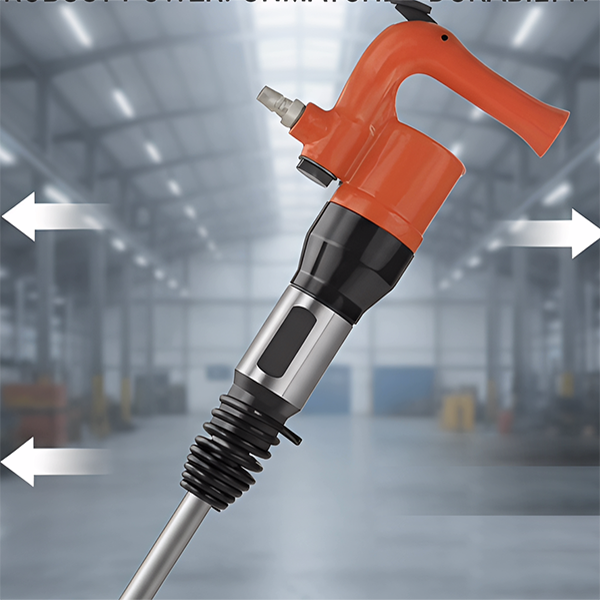
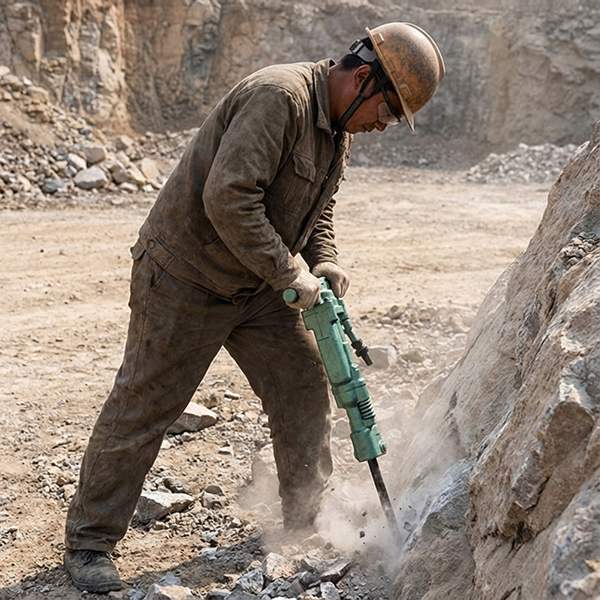
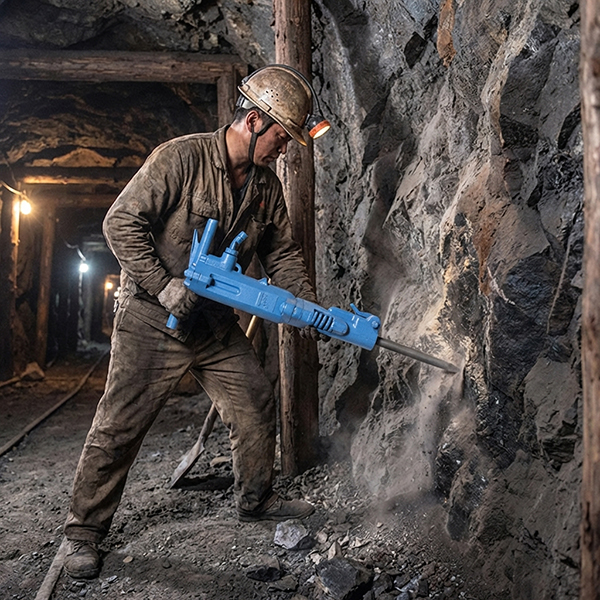
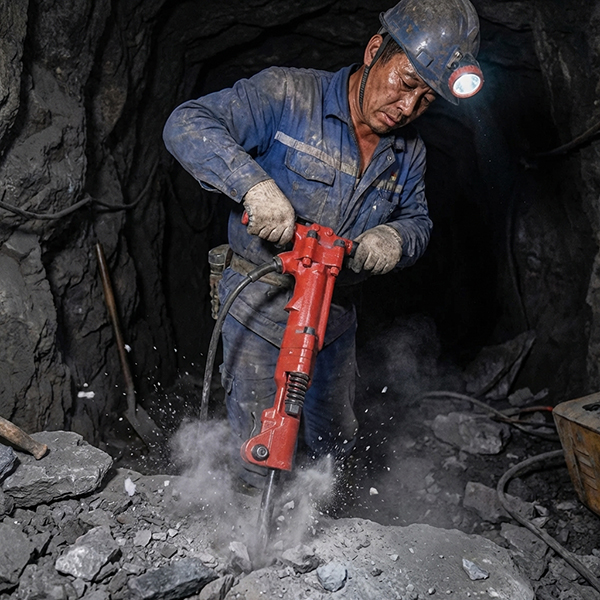
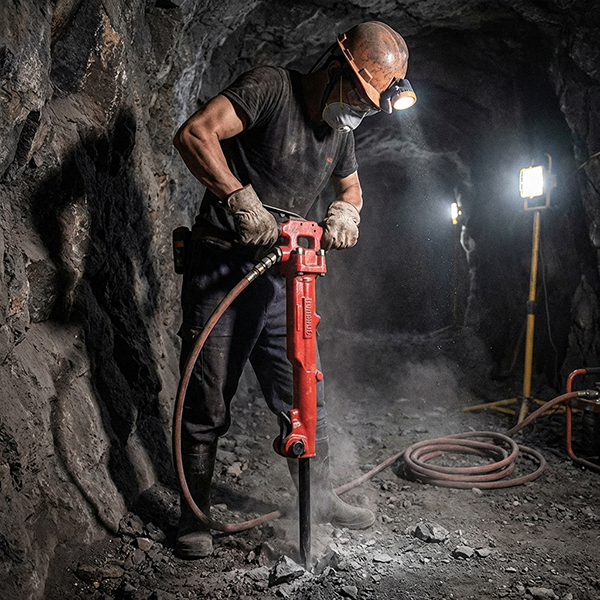
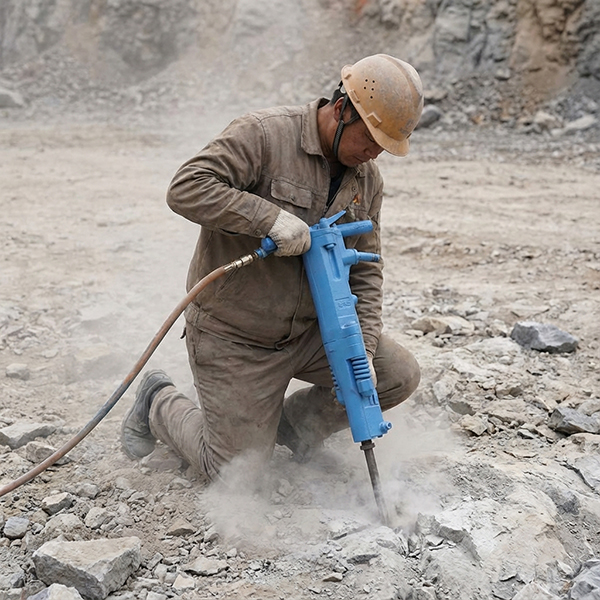
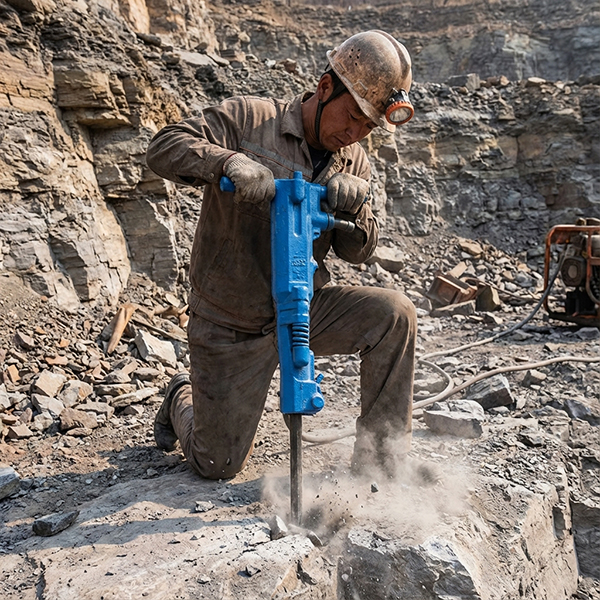
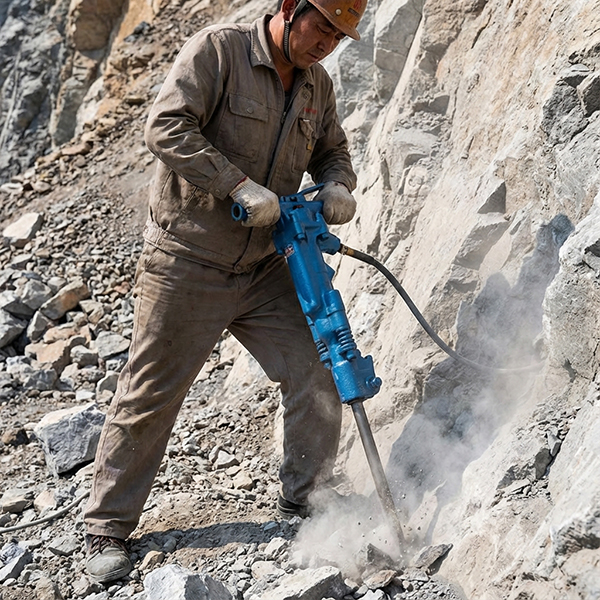
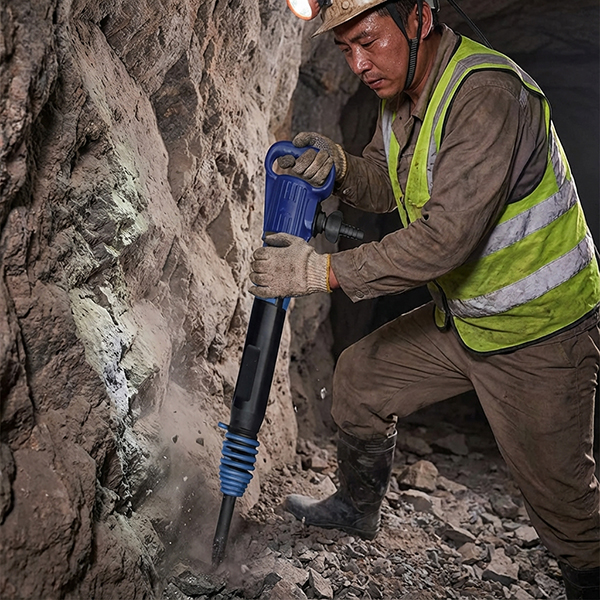
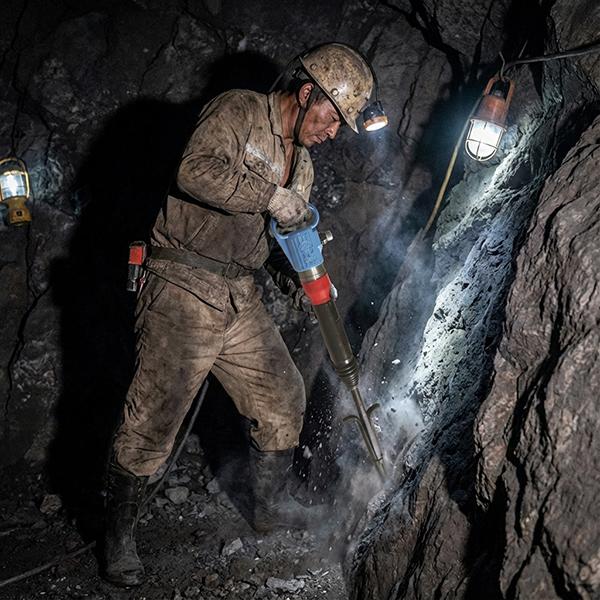
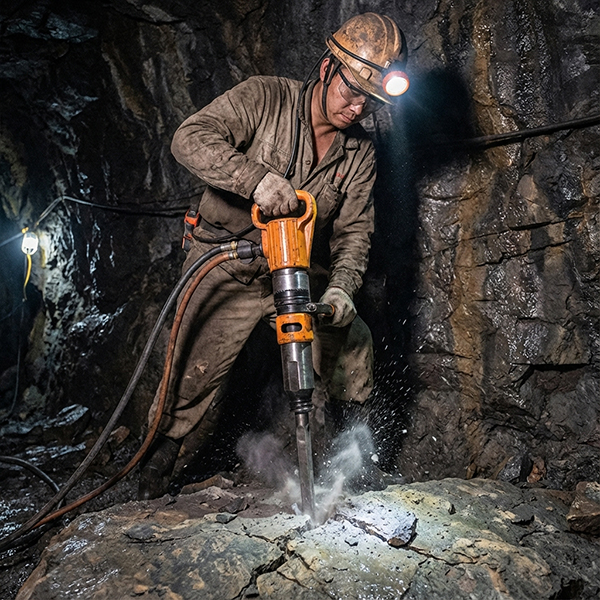
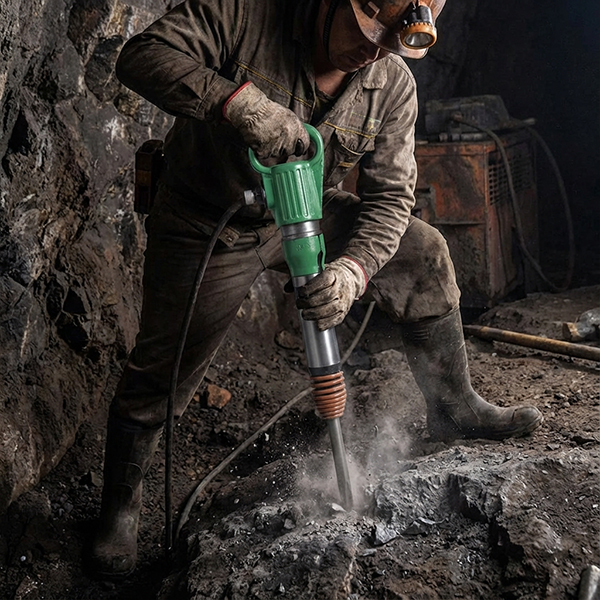
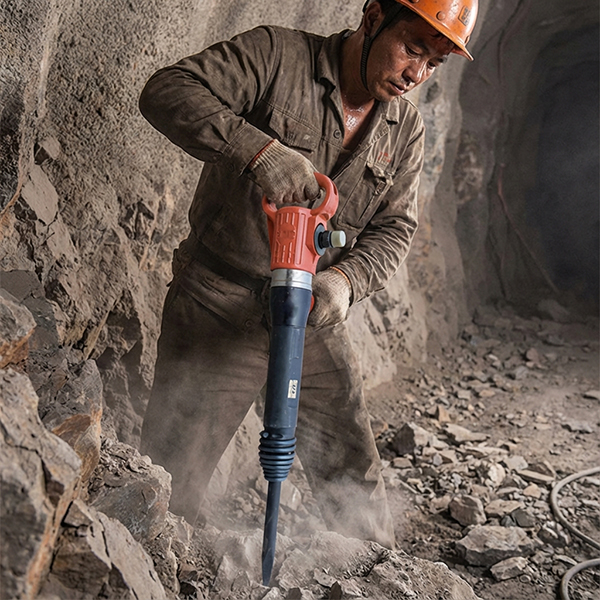
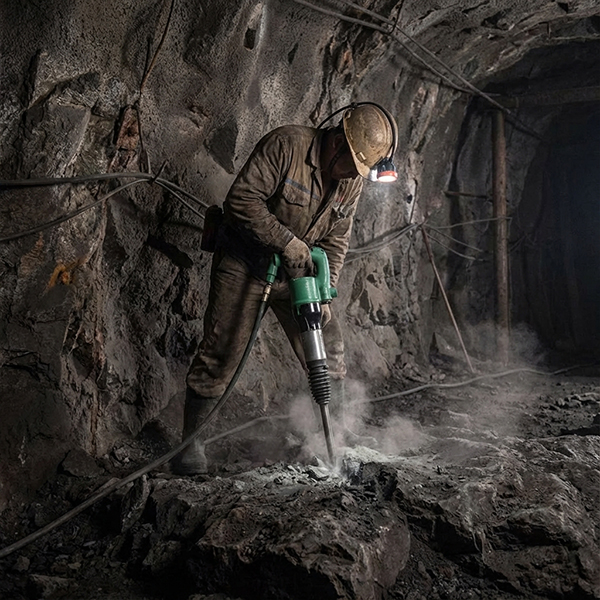
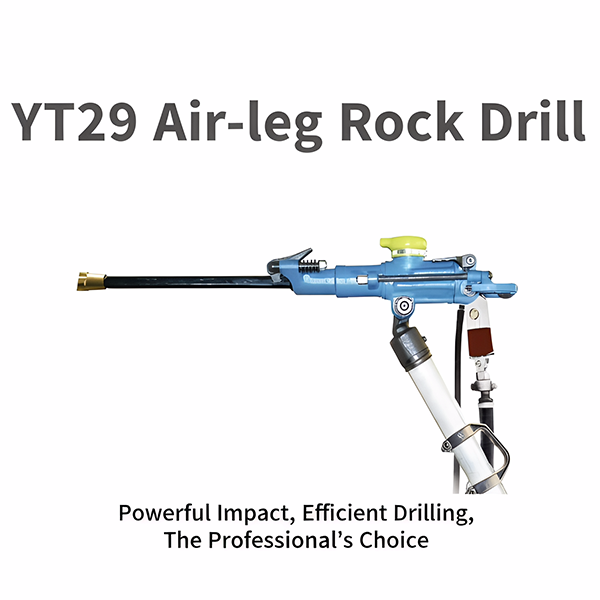
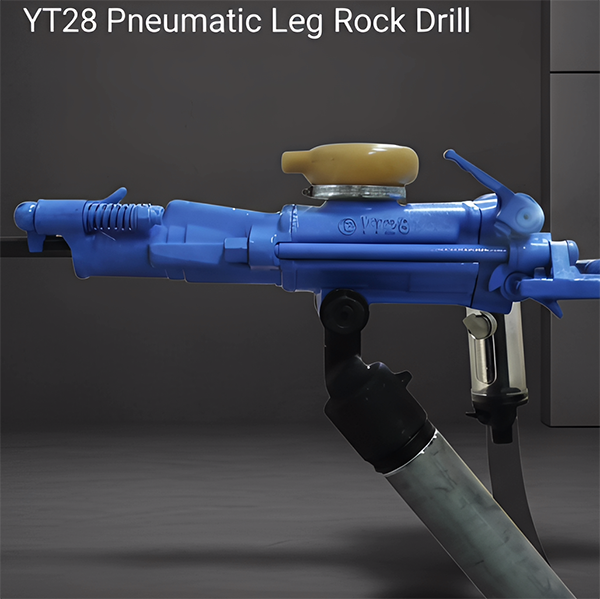
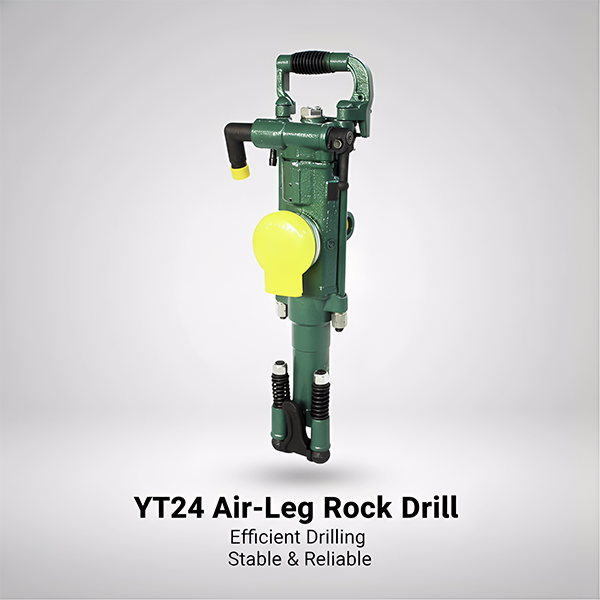
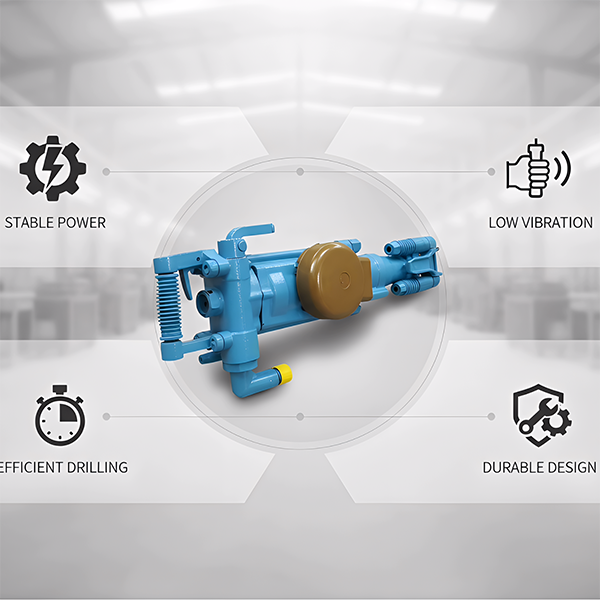
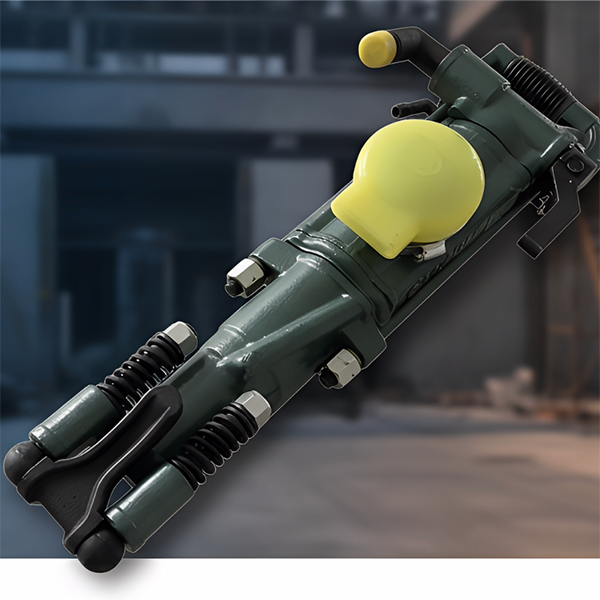
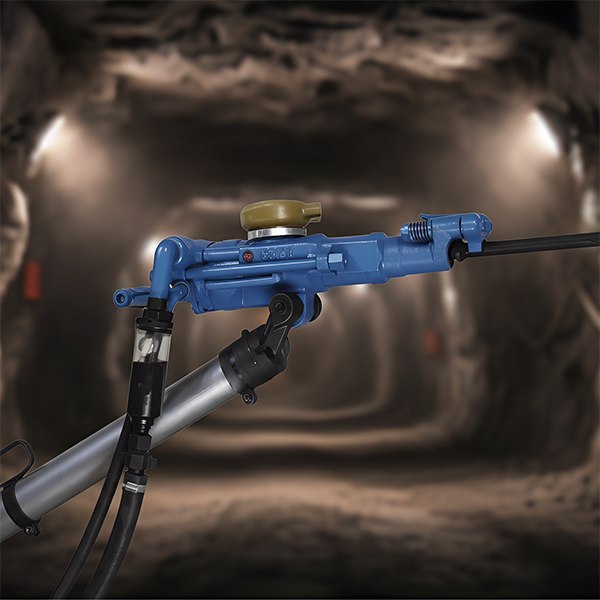
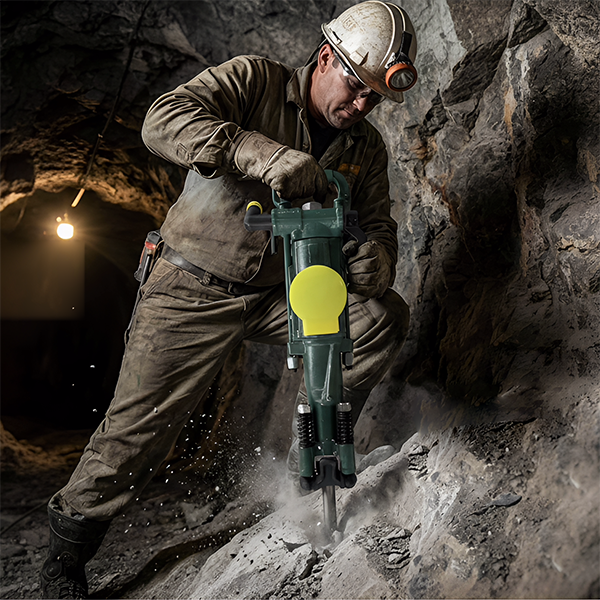
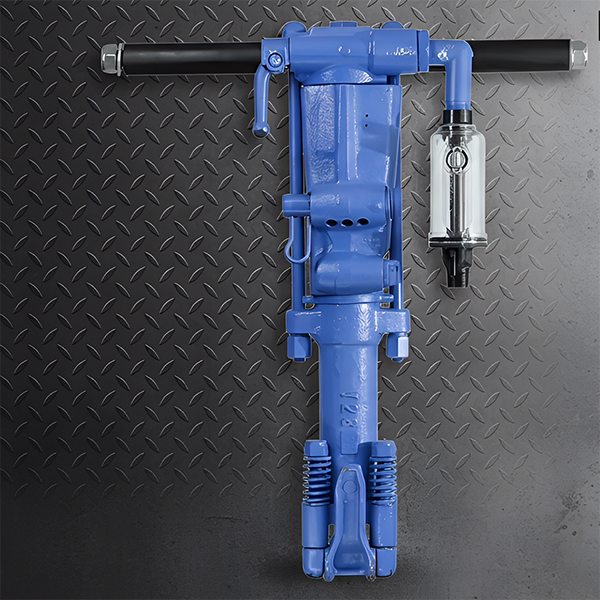
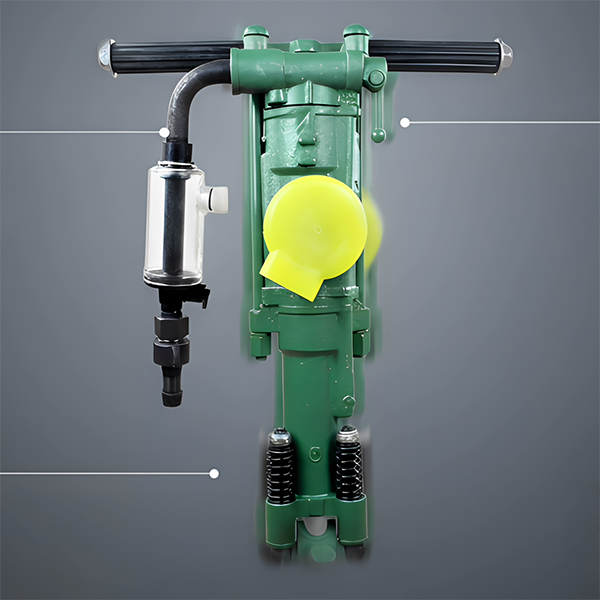
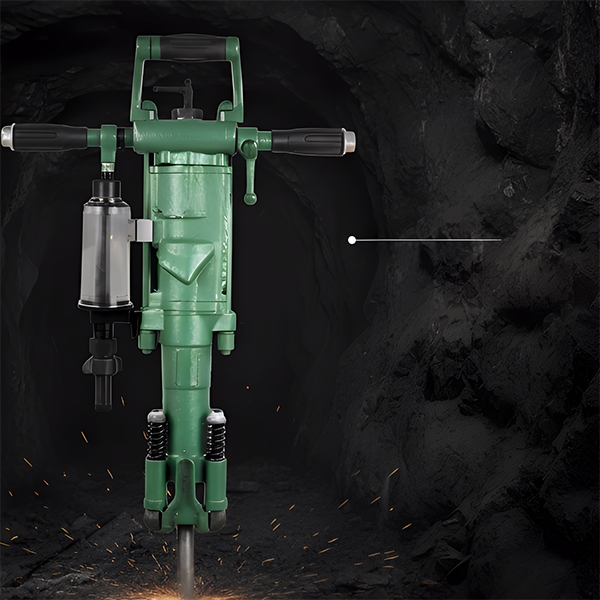
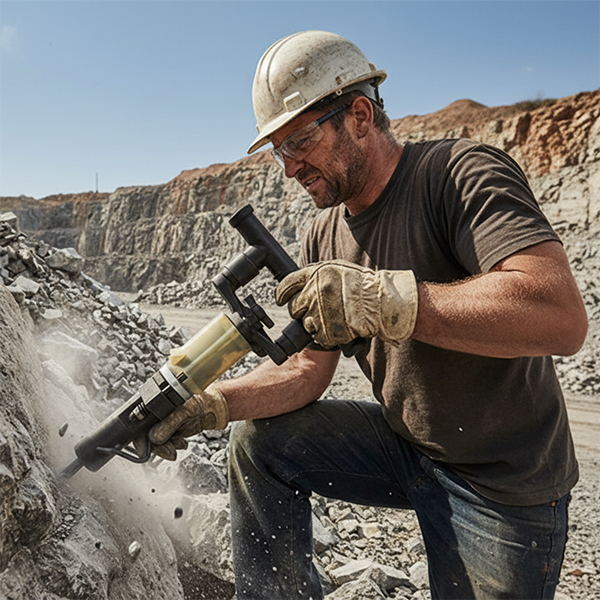
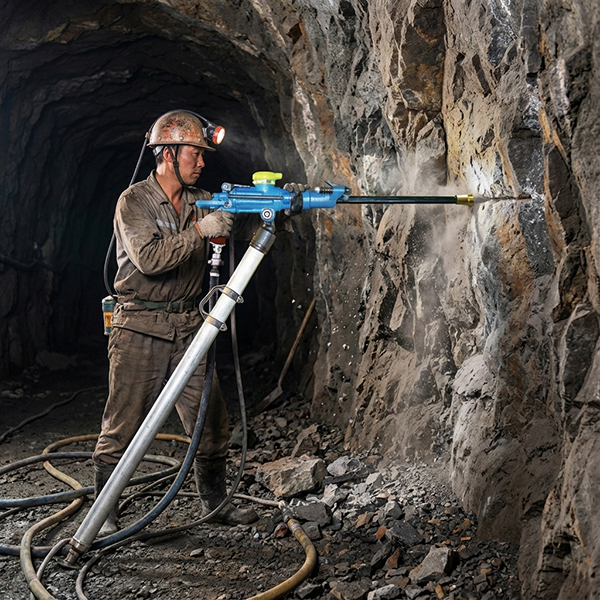
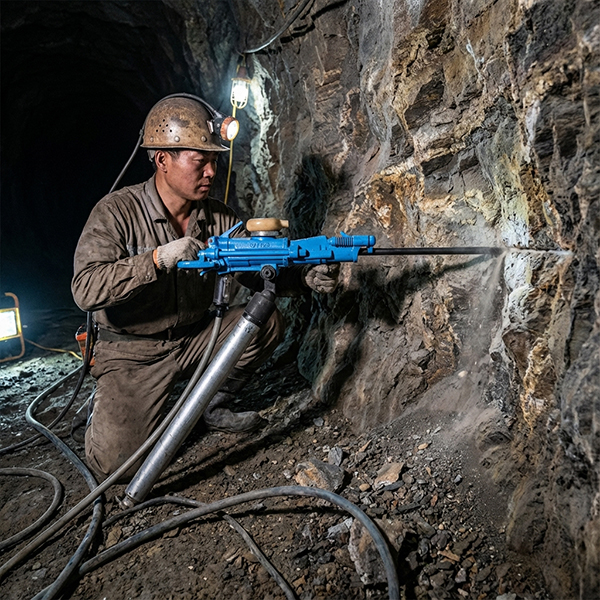
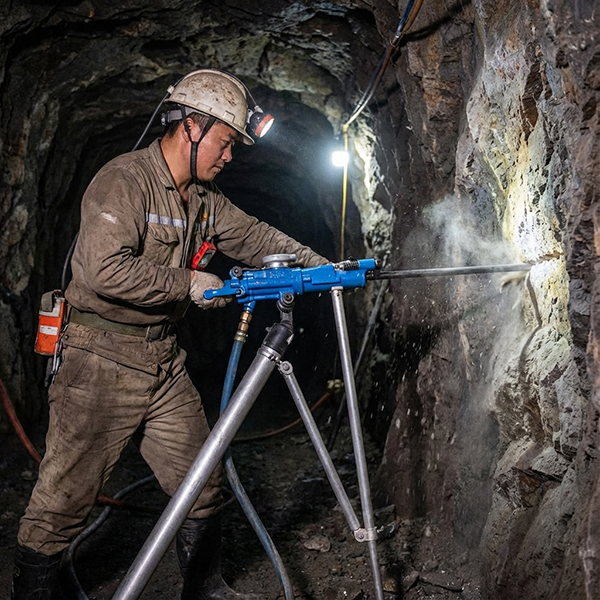
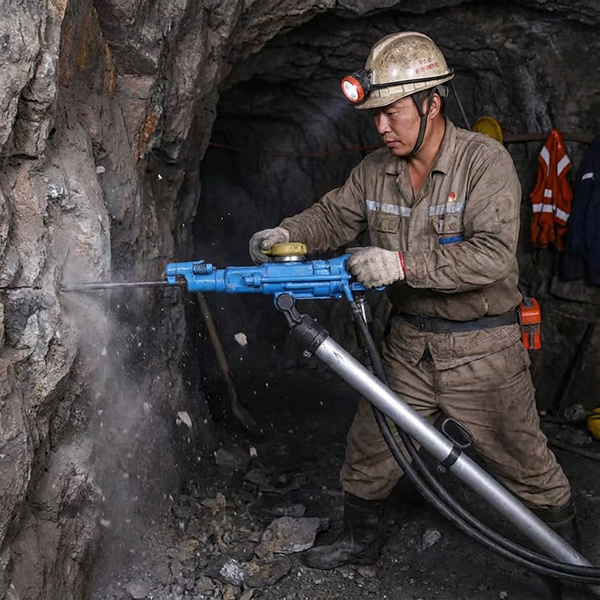
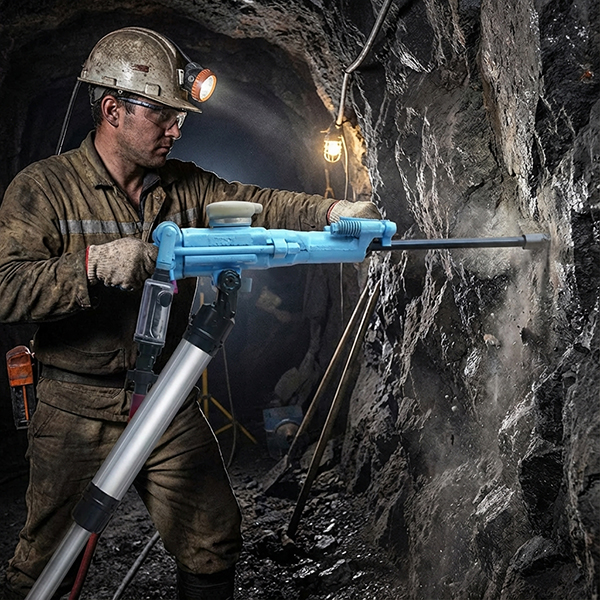
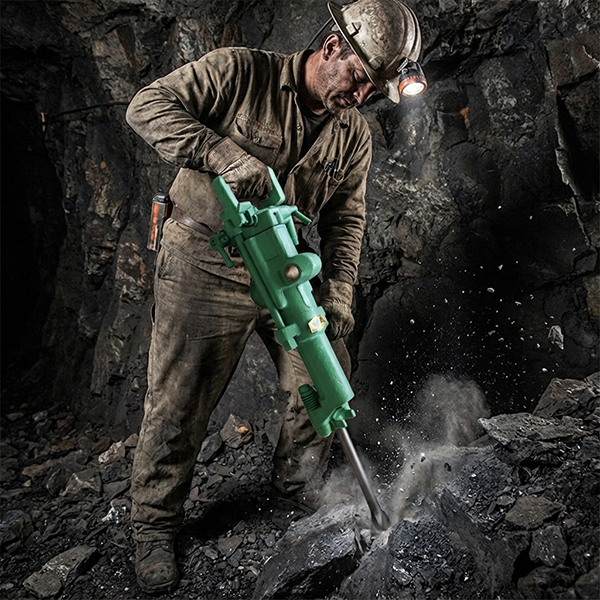
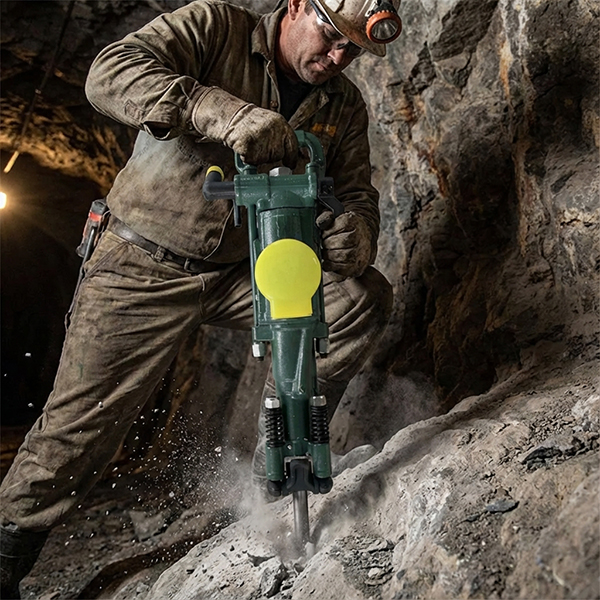
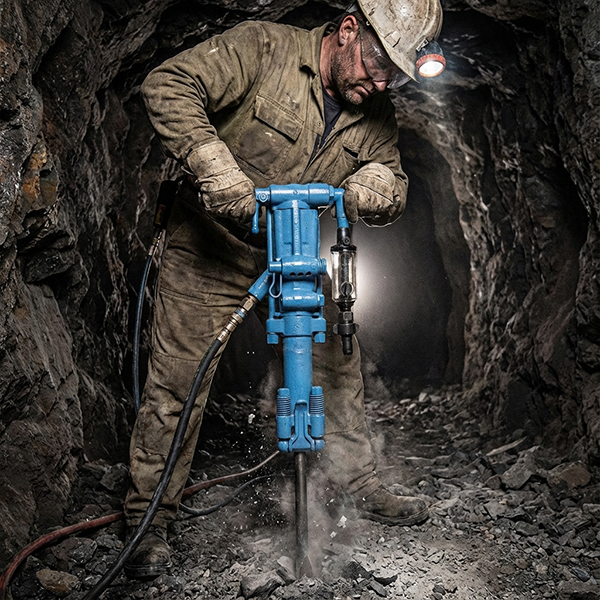
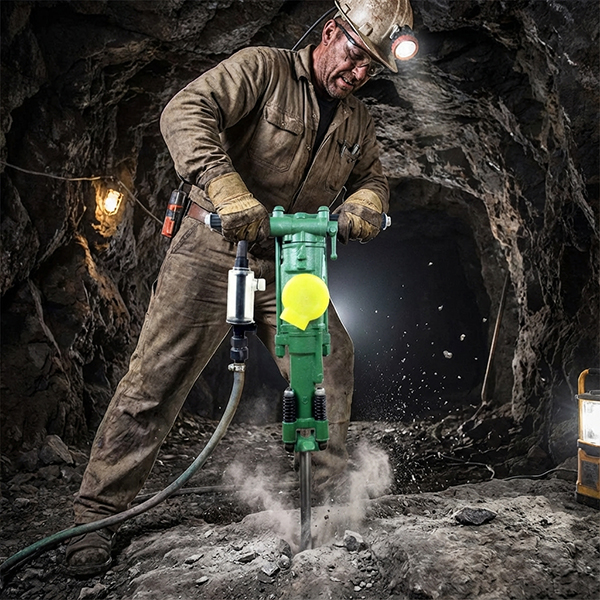
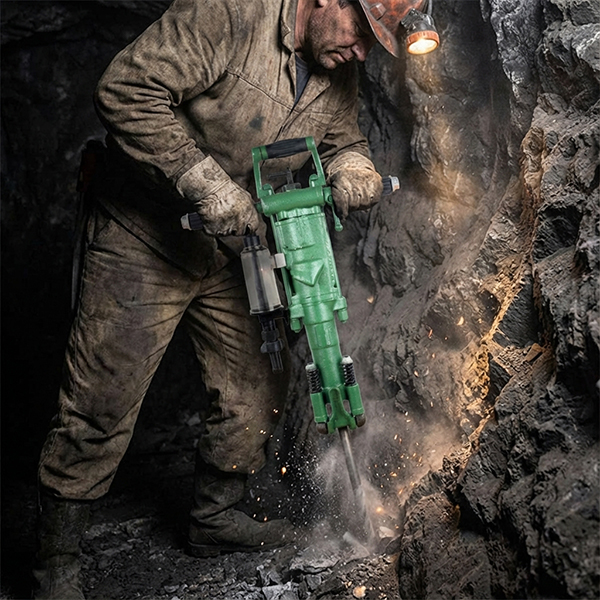
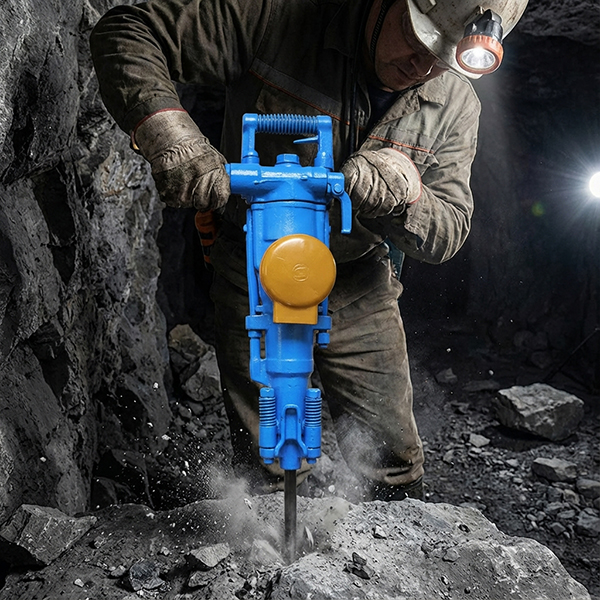
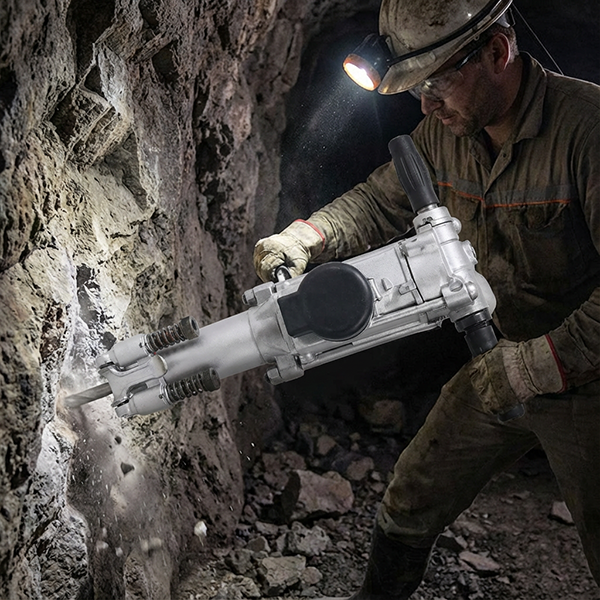
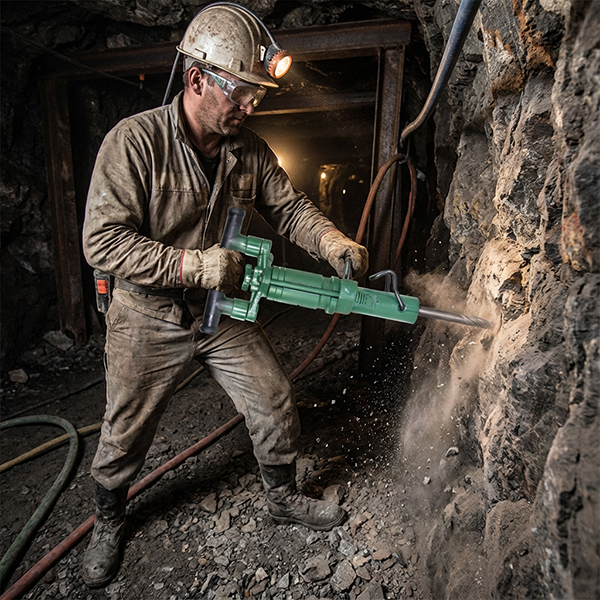
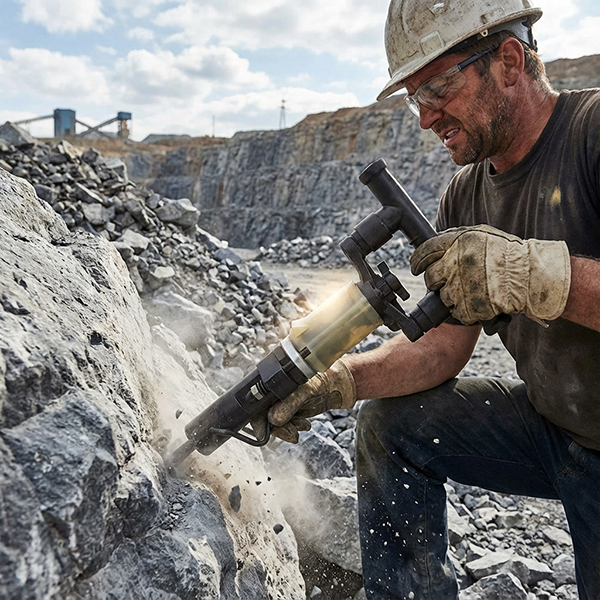
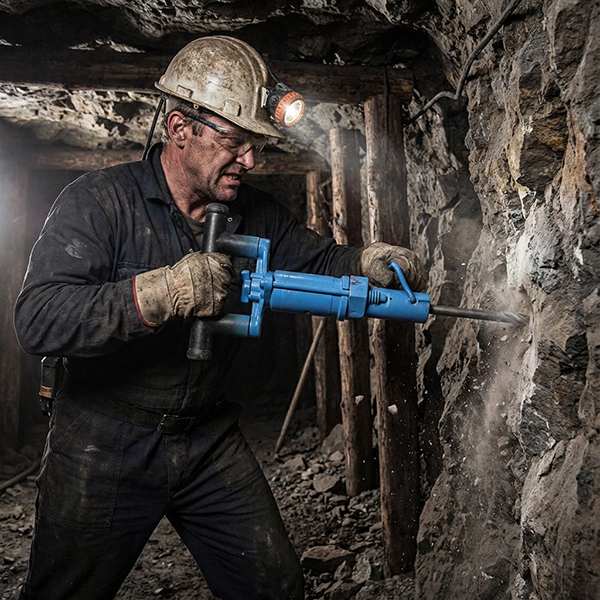
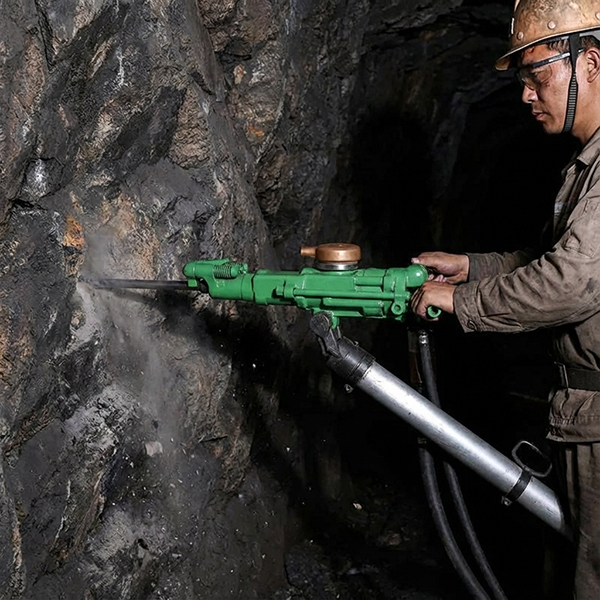
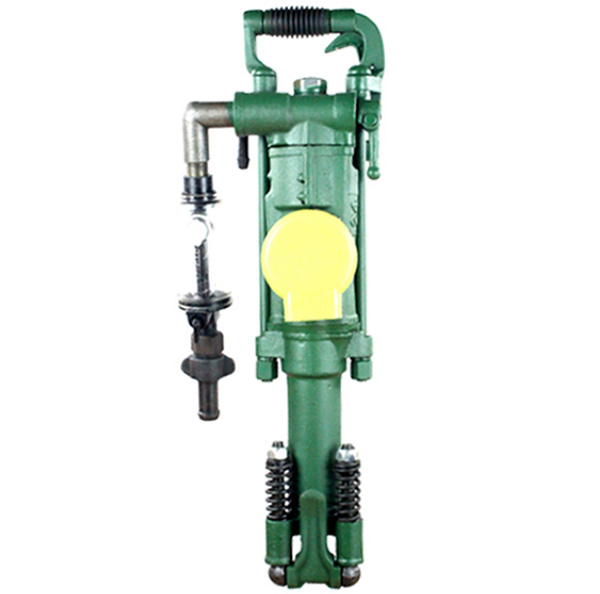
If you’re after a dependable, no‑drama Pneumatic jack hammer that crews actually like to run, the YT24 is a safe bet. It’s a 24 kg hand held jack hammer that pairs with an air‑leg, measures 678 mm long, and drives a 70 mm piston through a 70 mm stroke. Fed with clean air at 0.4–0.63 MPa (4–6.42 kgf/cm²) through a 19 mm hose and flushed by a 13 mm water line, it steadily drills 34–42 mm holes using standard 22/108±1 mm tapered‑hex steels. In real headings, that combination gives you reliable collaring, straight holes, and production depths commonly in the 1.5–5 m range.
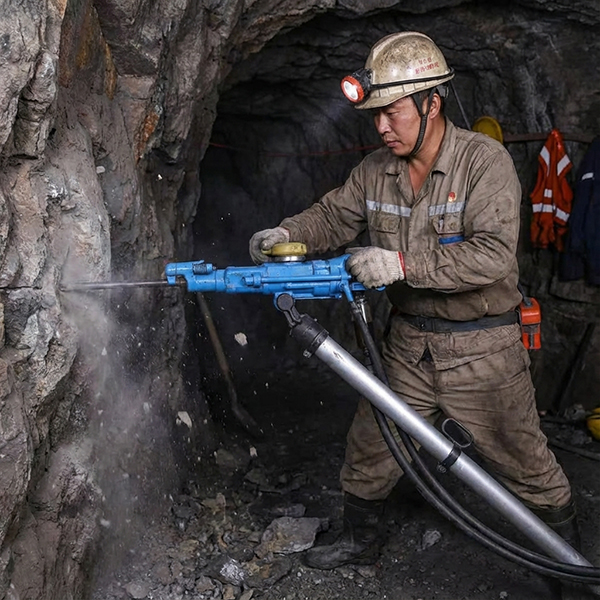
Key specs (the numbers you plan around)
Weight: 24 kg; overall length: 678 mm
Cylinder / stroke: 70 mm / 70 mm
Operating air pressure: 0.4–0.63 MPa (4–6.42 kgf/cm²); best practice ~0.45–0.55 MPa at the drill
Bit shank: 22/108±1 mm (tapered hex standard)
Drill bit diameter: 34–42 mm
Inner diameter of air pipe: 19 mm (keep it full‑bore)
Inner diameter of water pipe: 13 mm (adequate flushing without overpowering air)
Why these specs matter underground
Balanced hit and speed: a 70 × 70 mm cylinder/stroke is a proven recipe for medium‑hard to hard rock; modern air‑leg drills in this class typically run in the 1,600–3,500 blows/min zone, which suits 34–42 mm bits.
Stable rotation: the YT24 uses the widely adopted internal ratchet (inner pawl) rotation mechanism; per‑blow indexing in the typical 16°–38° range keeps the bit landing on fresh rock and limits energy loss on cuttings.
Enough torque to stay moving: field norms list YT24 torque at >130 kgf·cm; that’s the difference between steady progress and a stalled steel when the hole rubs tight or hits a joint.
Standardized interface: 22/108±1 mm shanks and 34–42 mm bits are available everywhere—no oddball tooling to chase.
Safer, simpler power: as a Pneumatic jack hammer, it’s robust in wet headings, easy to service, and forgiving when operators rotate between tasks.
Where the YT24 hand held jack hammer shines
Mining drifts, tunnel faces, and general rock excavation in f≈8–18 ground
Blast patterns built around 34–42 mm holes, with typical hole depth 1.5–5 m on the air‑leg
Sites that prefer simple pneumatics over electrical or hydraulic packs for frontline work
Set‑up, technique, and small habits that pay off
Air and water sequence: connect lines, crack air first, then water; at shutdown, close water first, then idle a few seconds on light air to dry internals.
Keep pressures honest: target ~0.45–0.55 MPa at the drill, within the 0.4–0.63 MPa rating. Running too low loses speed; too high just eats parts.
Hoses matter: stick to the 19 mm air hose and 13 mm water line. Blow out grit before hookup; dirty lines score cylinders and valves.
Oil is life: run an in‑line oiler and watch for a light oil mist at the exhaust plus a thin film on the shank tail. No oil, no drilling—don’t run dry.
Control leg thrust: if rotation slows, back the leg off a touch. Over‑thrust stalls rotation and risks stuck steels.
Water below air: always keep water pressure lower than air pressure to prevent backflow that strips lubrication.
Customer questions (and straight answers)
Q1: Is the YT24 a hand held jack hammer or strictly an air‑leg drill?
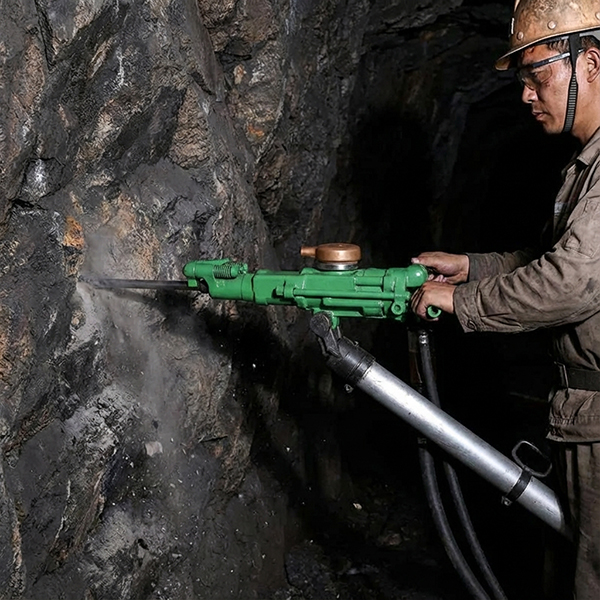
Both. It’s designed for air‑leg production drilling, but you can run it as a hand held jack hammer for collaring, squaring the face, or tight spaces. The air‑leg carries the push‑load for longer holes.
Q2: What compressor should I plan for this Pneumatic jack hammer?
Size your compressor so the drill still sees ~0.5 MPa at the machine after line losses. Use the specified 19 mm air hose, keep runs as short/straight as possible, and leave headroom for flushing and other air users.
Q3: What hole sizes and depths are realistic?
34–42 mm bits are the sweet spot. In typical rock and with consistent flushing, expect 1.5–5 m per hole on the air‑leg. Beyond ~3 m, penetration slows (normal for this class), so steady leg thrust and clean flushing matter more.
Q4: Why keep water pressure below air pressure?
To prevent water from pushing back into the cylinder and scrubbing oil off internal surfaces. With the YT24’s 13 mm water line, you’ll get plenty of flushing without overpowering the air circuit.
Q5: Which steels and bits fit?
Tapered hex 22/108±1 mm shanks. Choose chisel bits for faster rates in hard, uniform rock; choose cross bits for easier collaring and better tracking in jointed or fractured ground—always in the 34–42 mm range.
Q6: How does the YT24 compare to hydraulic drills?
A Pneumatic jack hammer is simpler, inherently safe in wet faces, and quick to service. Hydraulics can be quieter and more energy‑efficient, but for 34–42 mm holes to ~5 m, the YT24’s uptime, parts availability, and cost‑per‑hole are hard to beat.
Q7: Any techniques to avoid stuck steels or rotation stalls?
Keep flushing strong, verify the water needle is installed, control leg thrust so rotation stays lively, and don’t keep hammering if the steel stops turning—stop, clear, and resume.
Q8: What daily checks keep it reliable?
Oil feed, hose couplings, shank tail wear, and the long tie‑bolt nuts (they can loosen under vibration). Clean the flushing ports. Keep air dry and clean.
Q9: Can I run it at 0.63 MPa all day to go faster?
You can, but most crews see the best balance around 0.45–0.55 MPa—good speed without accelerating wear. The spec allows 0.4–0.63 MPa; stay inside it and watch your results.
Q10: What do the letters/numbers mean in YT24?
Y = rock drilling; T = air‑leg. “24” points to the weight/power class (this unit is 24 kg), a handy shorthand when lining up crews and gear.
Field notes from the spec sheet (what to remember)
Weight 24 kg means manageable handling with the leg carrying the push‑load
678 mm overall length keeps it compact on the face
70 × 70 mm cylinder/stroke is the proven combo for this hole size
0.4–0.63 MPa operating pressure ties directly to drilling speed and wear—hit the sweet spot
22/108±1 mm shank and 34–42 mm bits keep your tooling standard and available
19 mm air and 13 mm water lines are not optional—they’re the baseline for performance
What makes the YT24 a “keeper” in the rack
Predictable performance in the 34–42 mm class without tuning headaches
Internal ratchet rotation that keeps indexing consistent through changing ground
Enough torque (>130 kgf·cm class) to push through tight spots without excessive kickback
Parts and steels are standard; service routines are simple; operators learn it fast
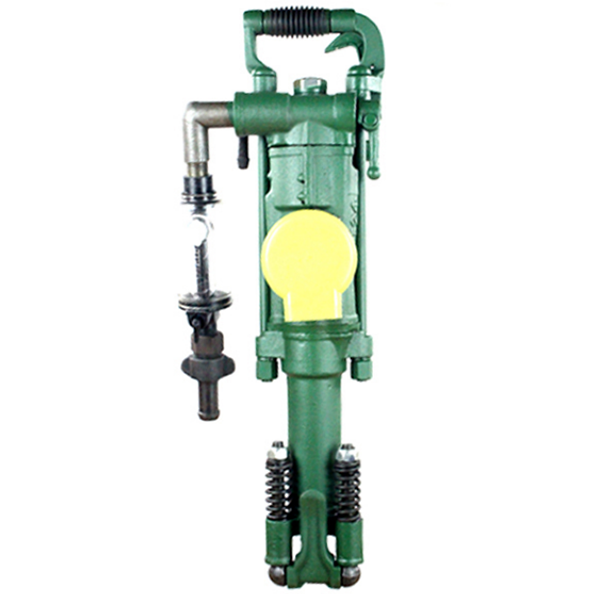
In plain terms The YT24 air‑leg rock drill is a straight‑shooting jack hammer for daily drilling: 24 kg, 678 mm long, 70 × 70 mm cylinder/stroke, 22/108±1 mm shank, 34–42 mm bits, and a working pressure window of 0.4–0.63 MPa with 19 mm air and 13 mm water lines. Treat it right—clean air, water below air pressure, steady oiling, sane leg thrust—and this hand held jack hammer will give you clean collars, steady penetration, and fewer surprises. For crews who want a durable Pneumatic jack hammer that just gets on with the job, YT24 is exactly that.