
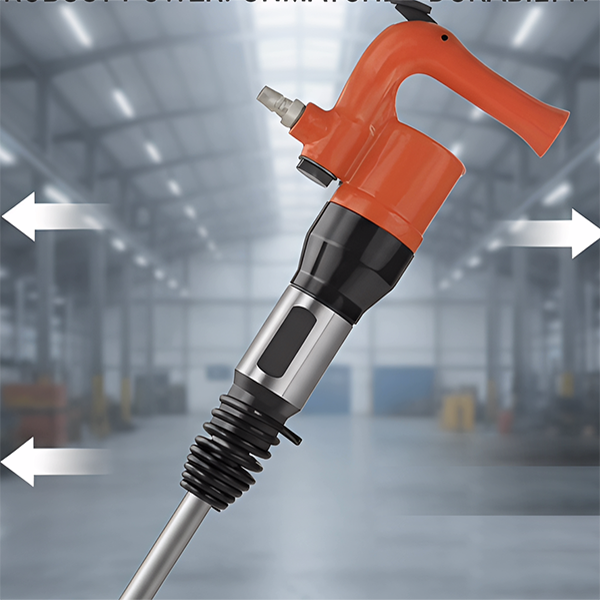
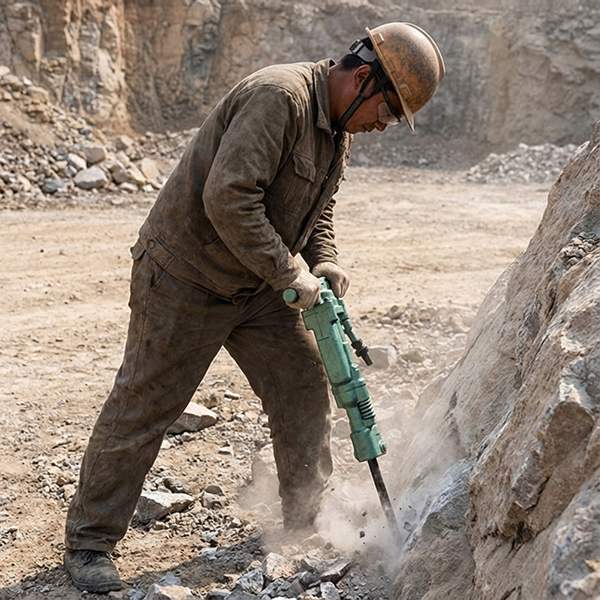
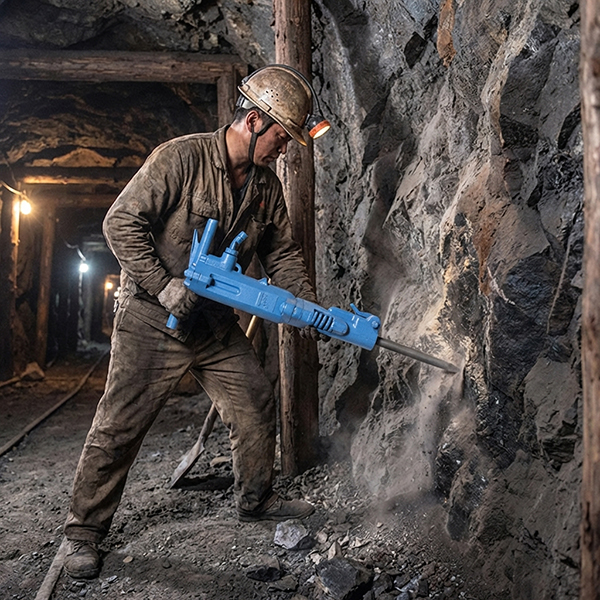
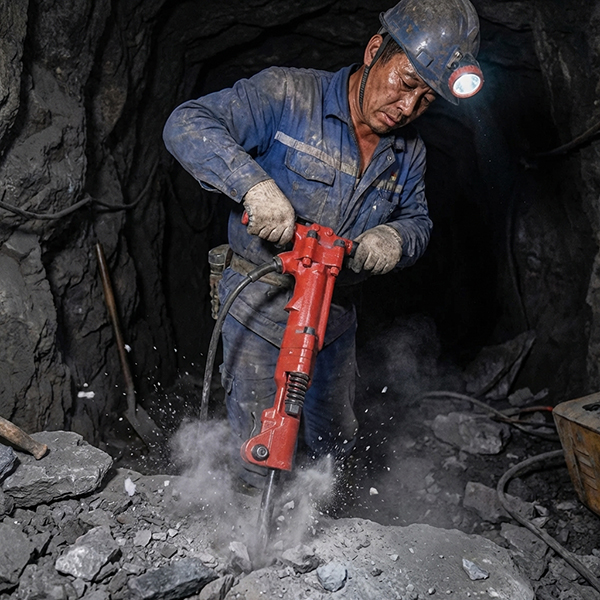
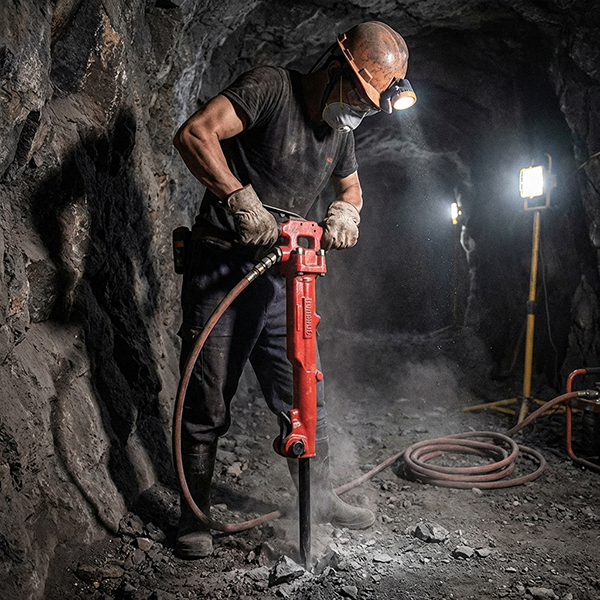
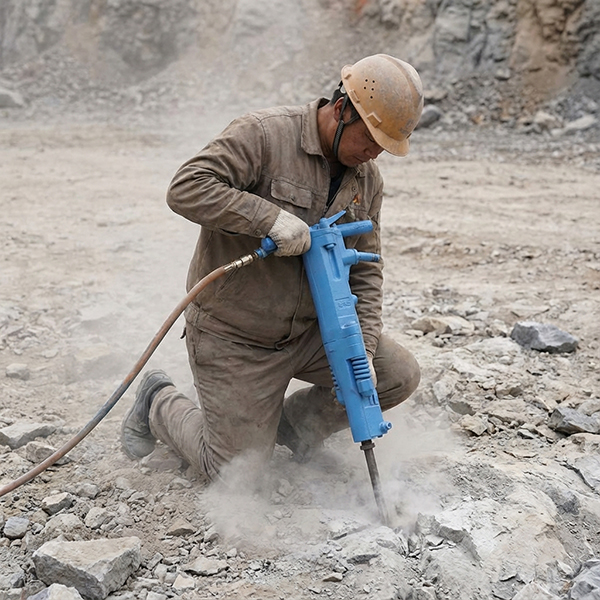
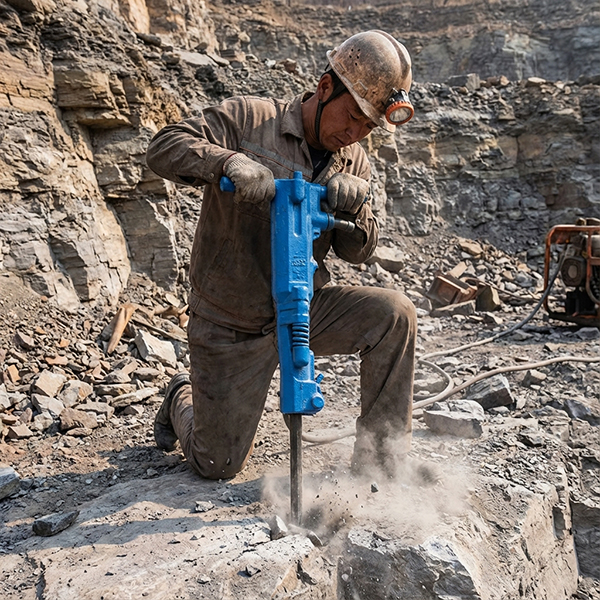
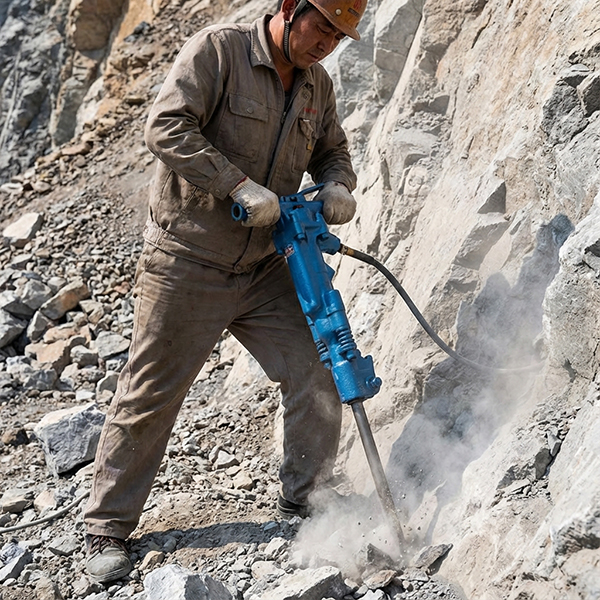
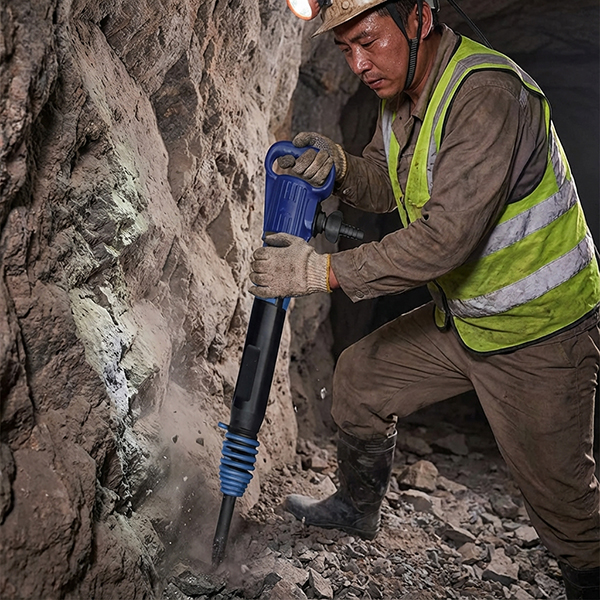
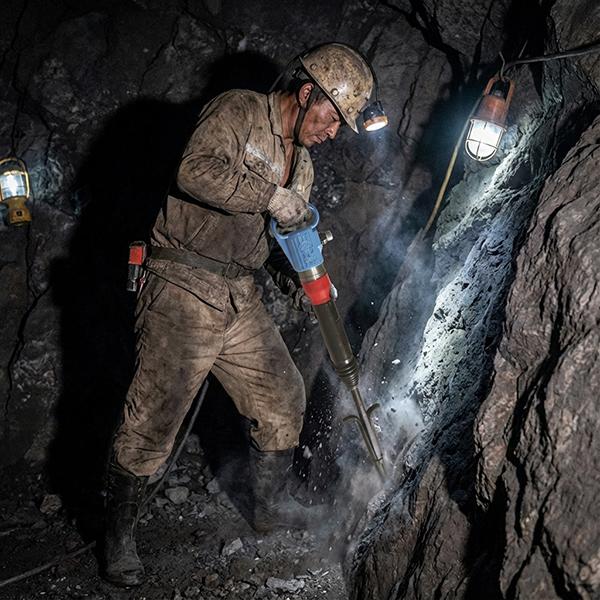
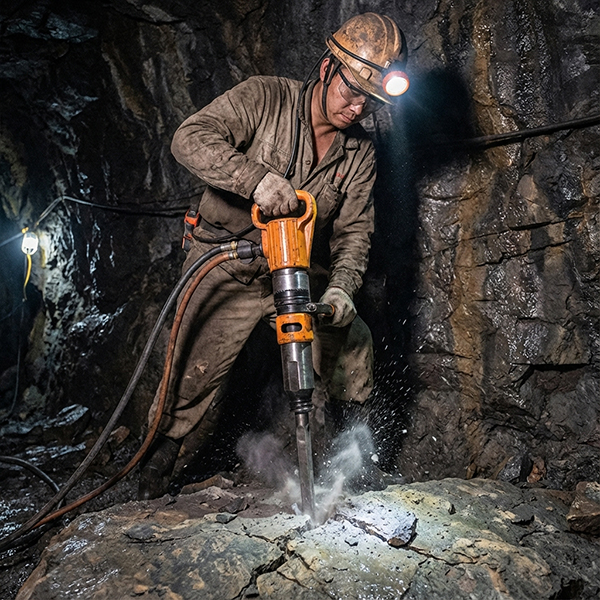
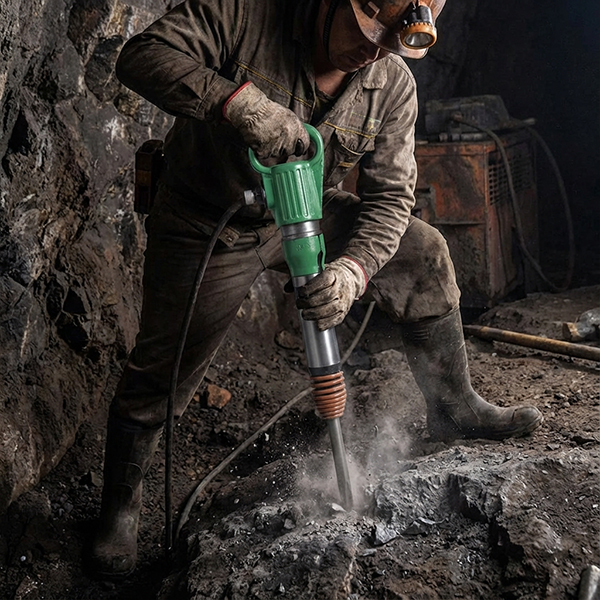
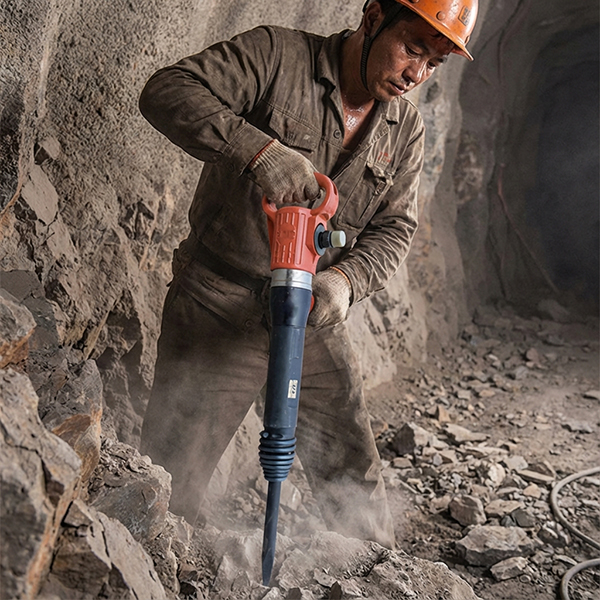
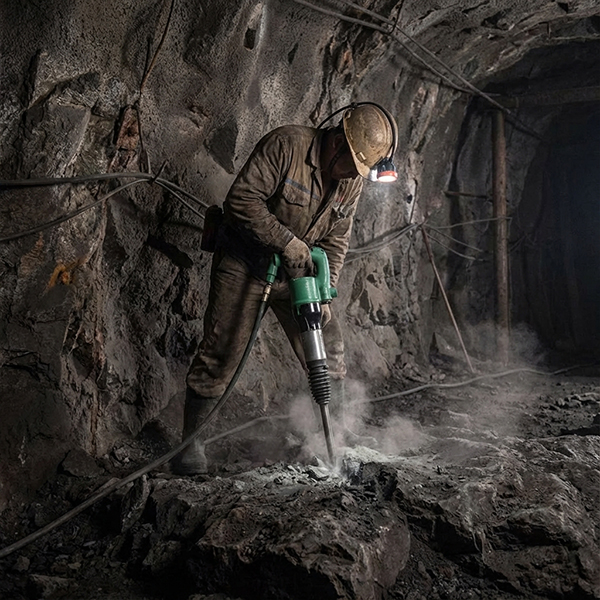
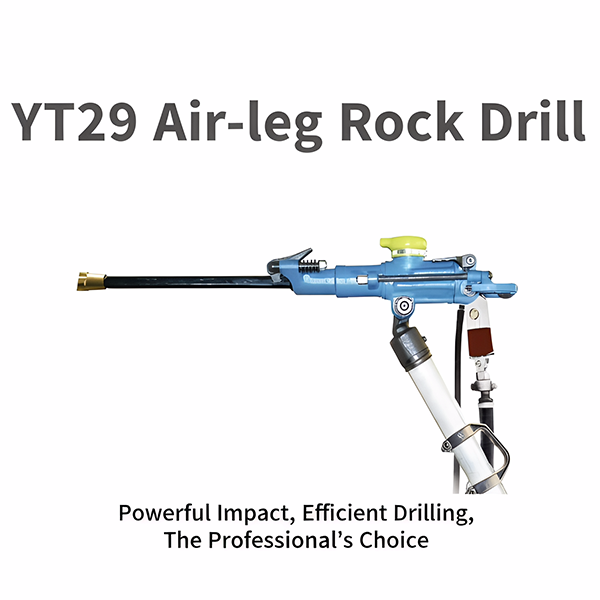
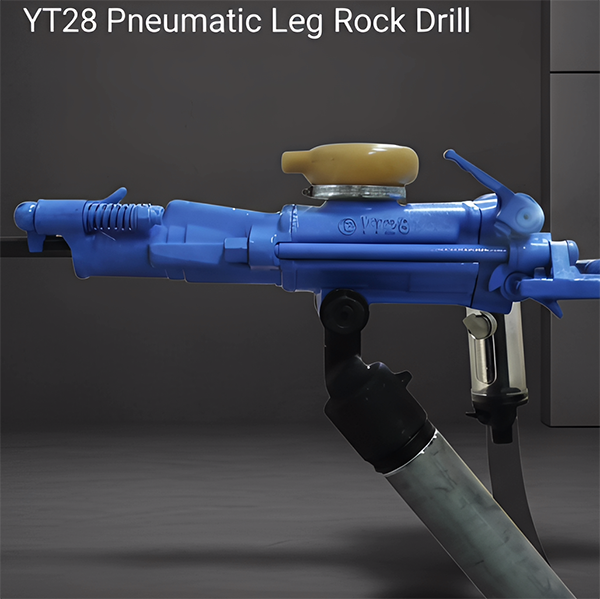
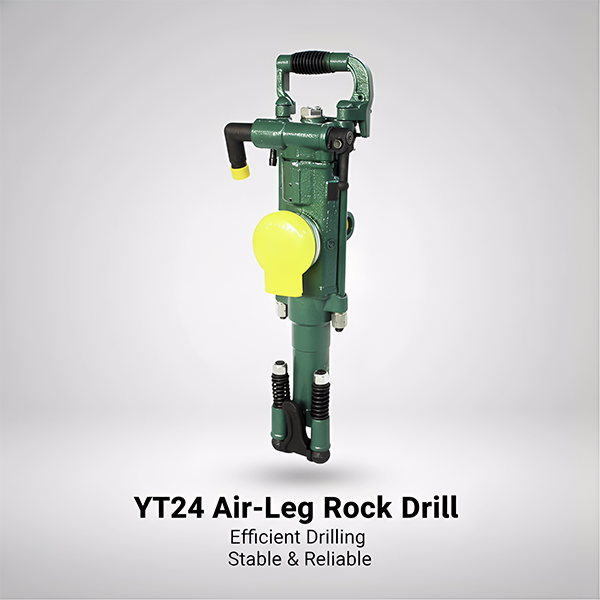
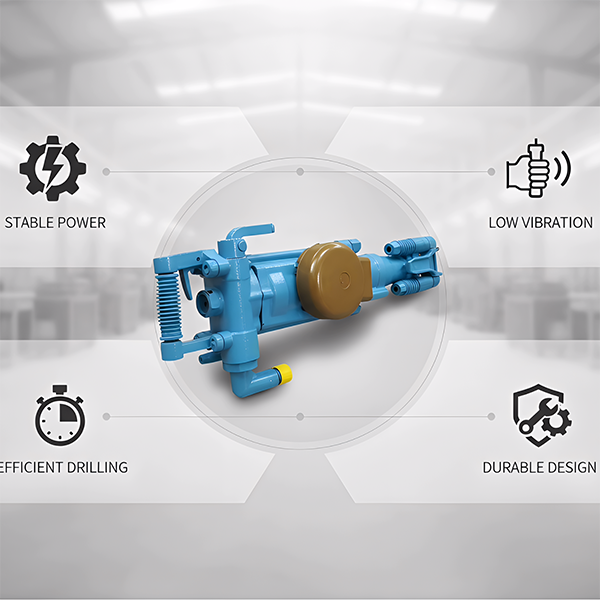
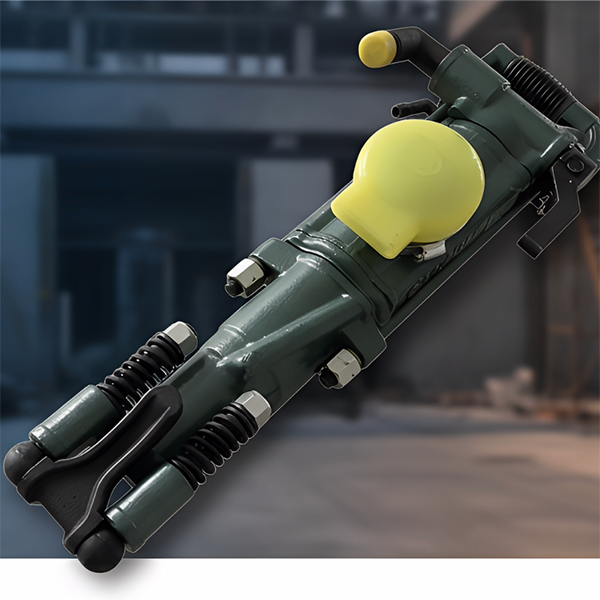
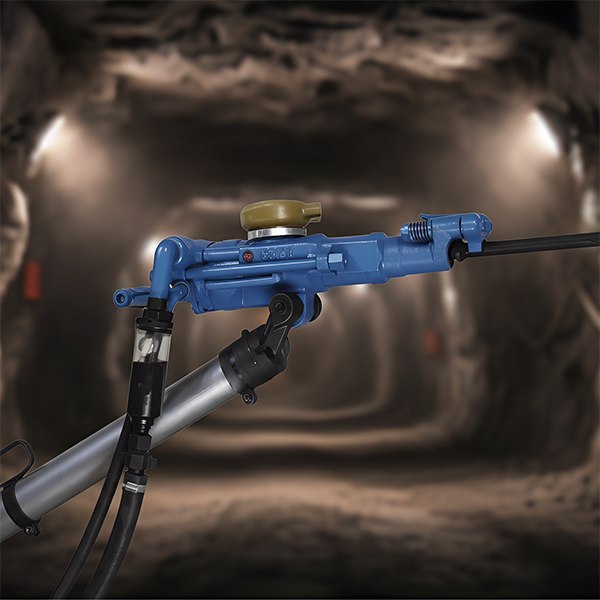
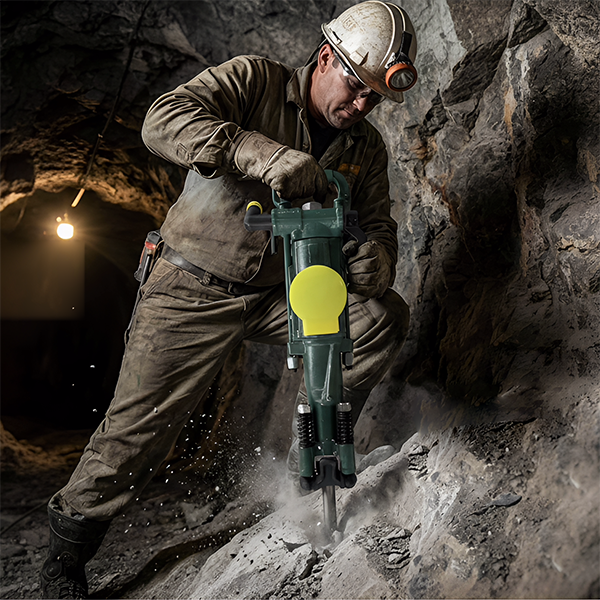
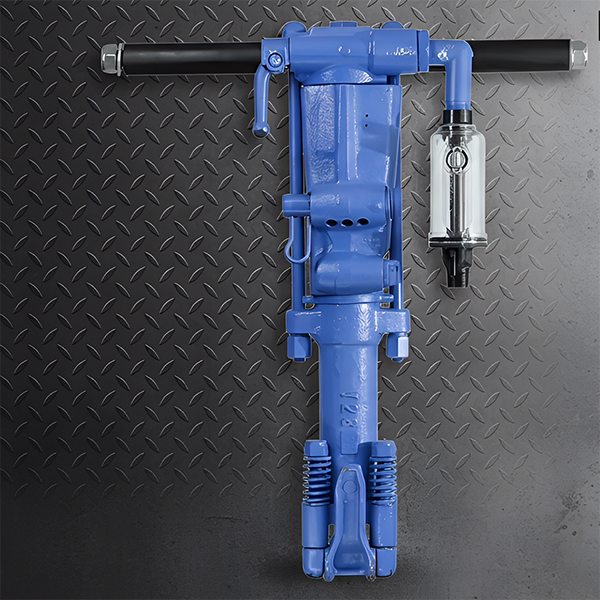
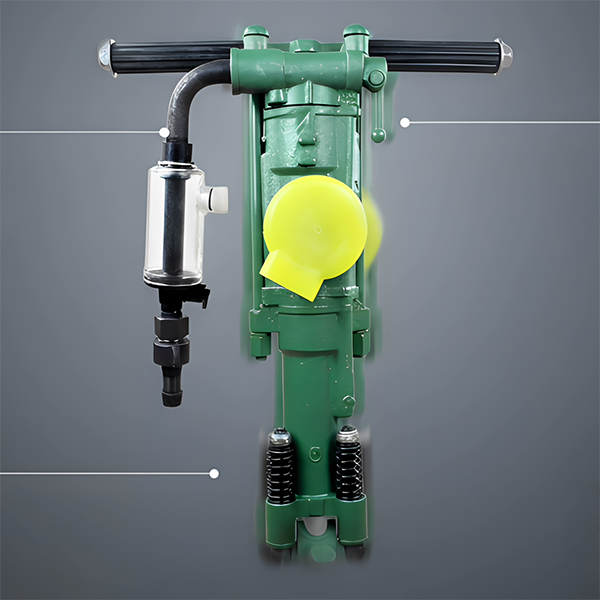
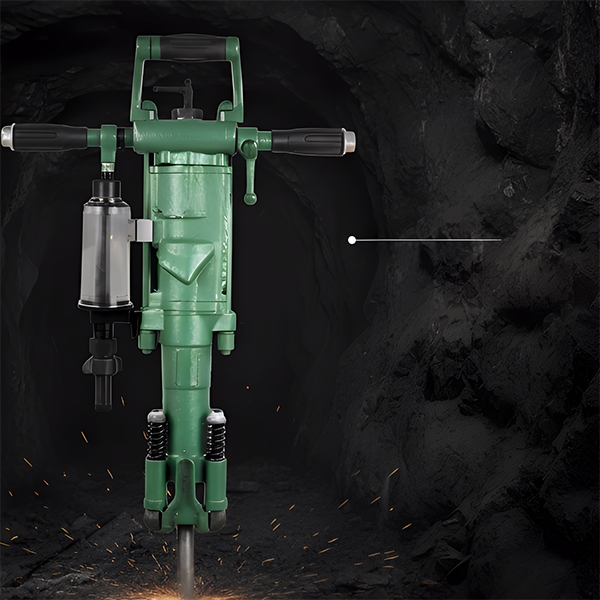
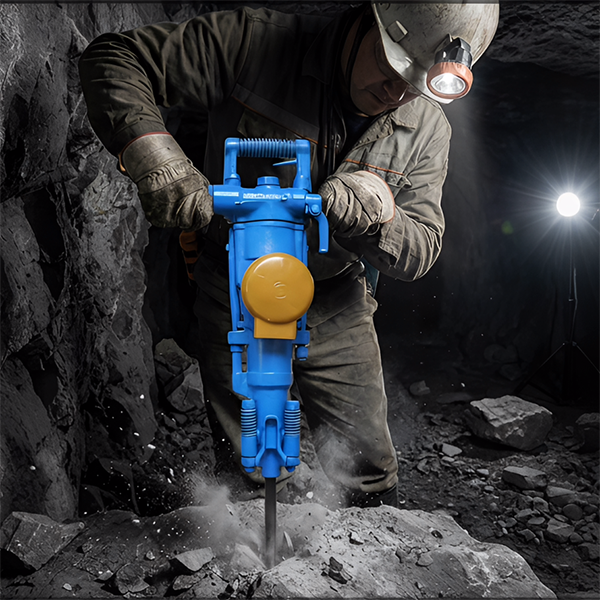
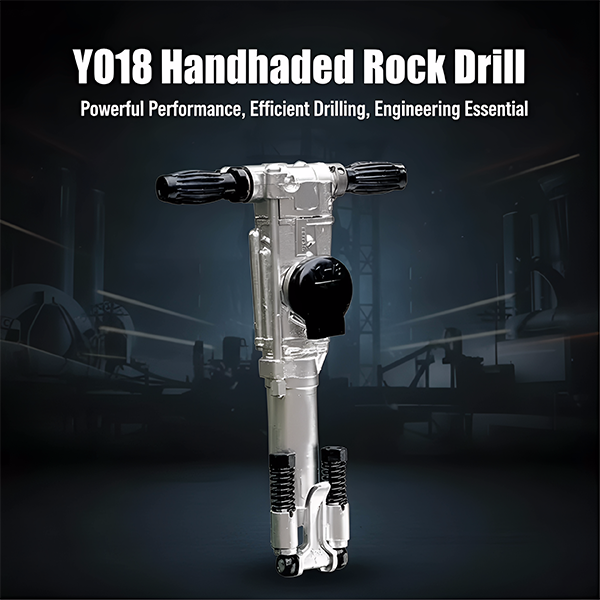
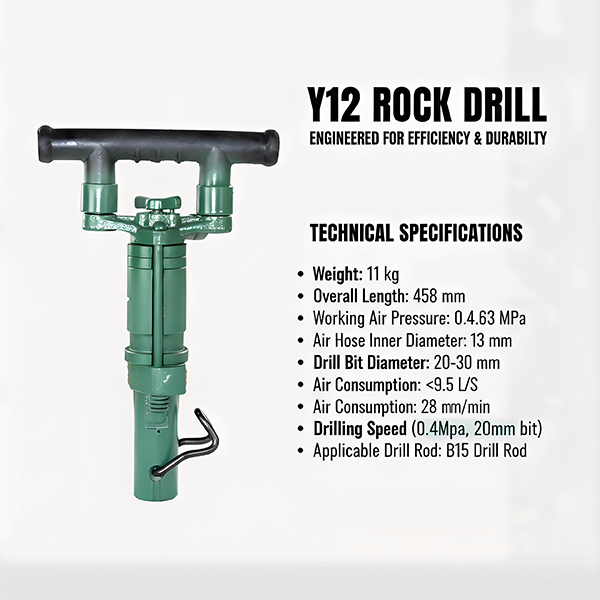
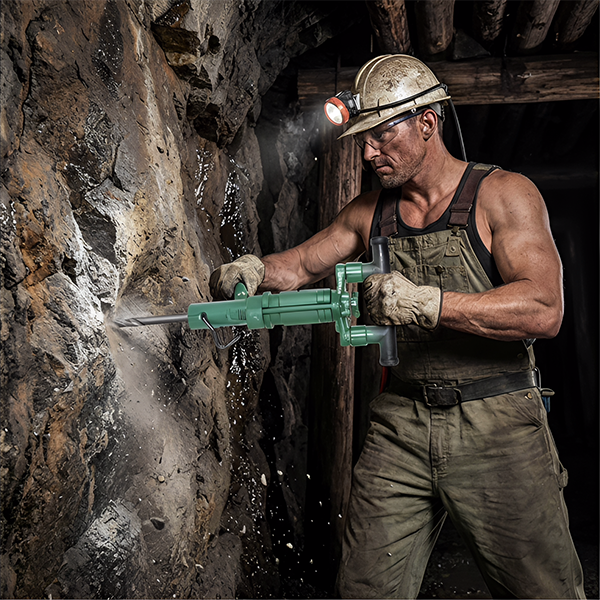
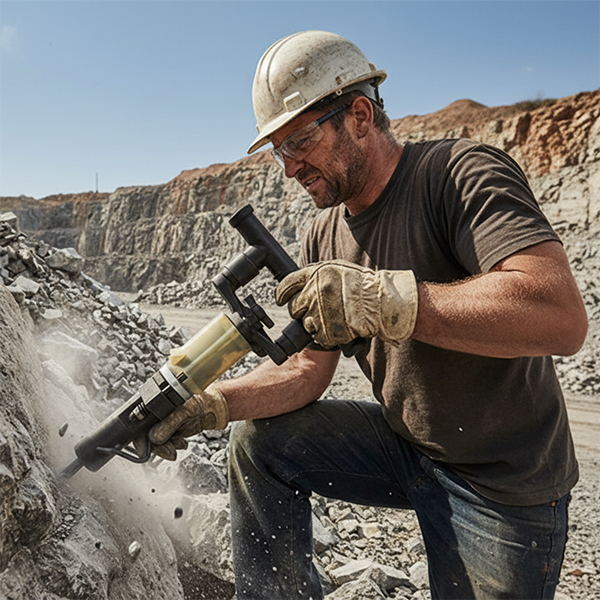
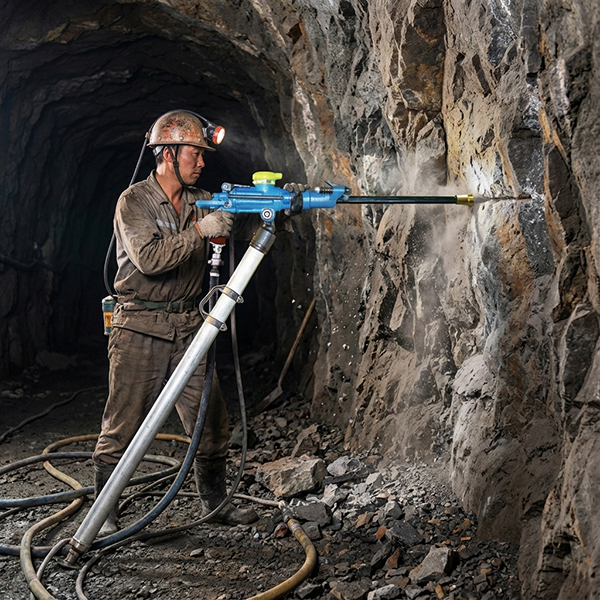
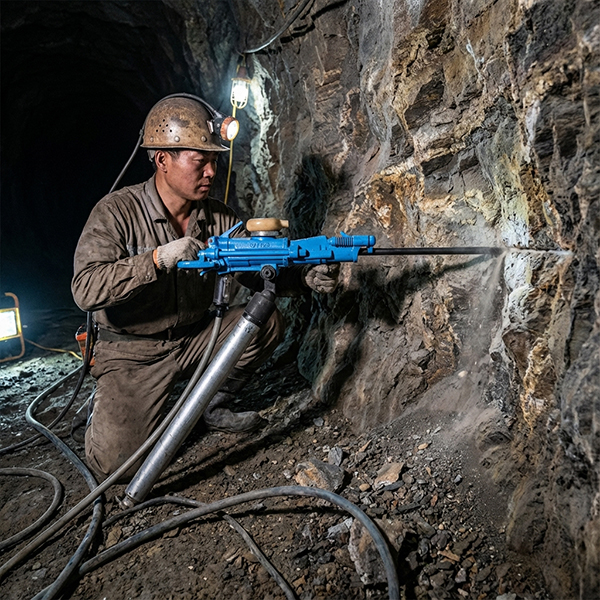
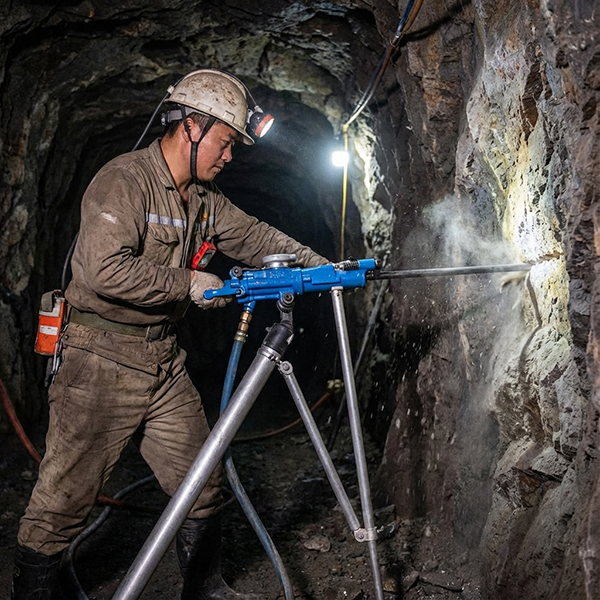
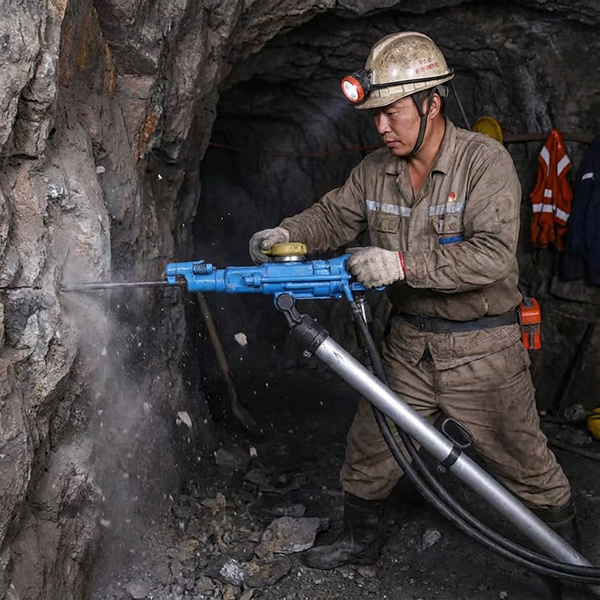
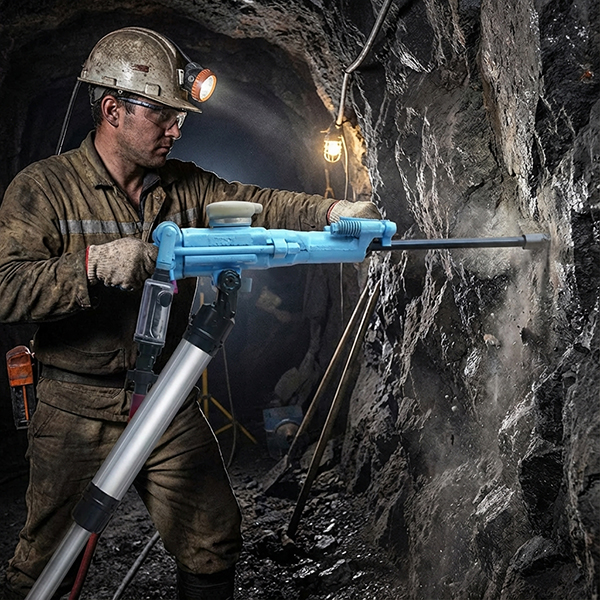
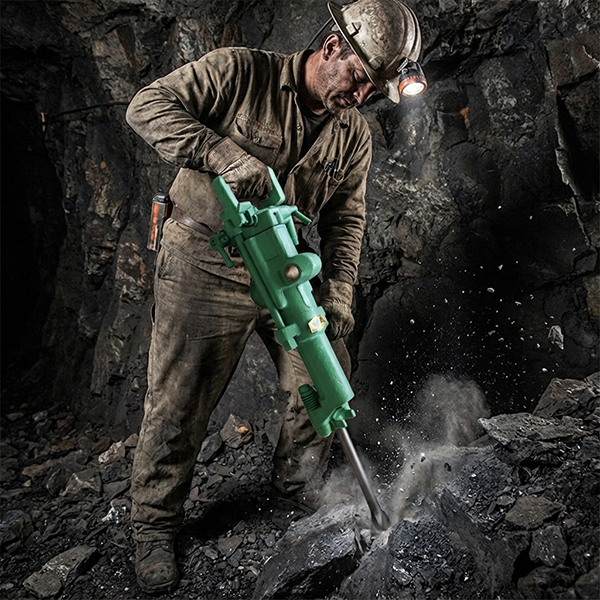
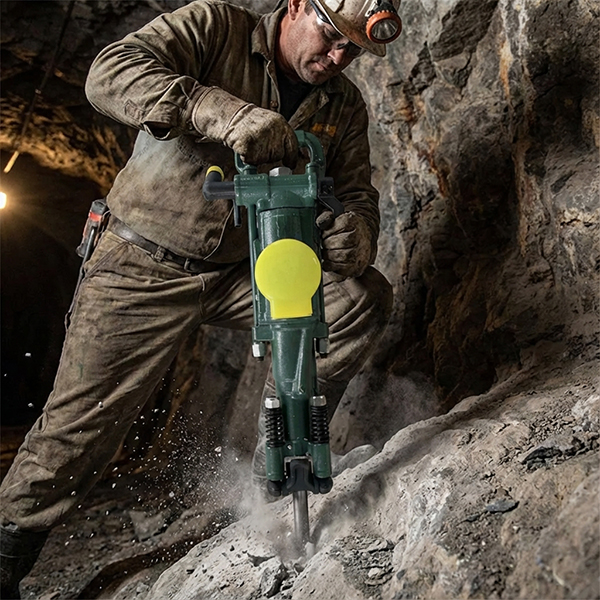
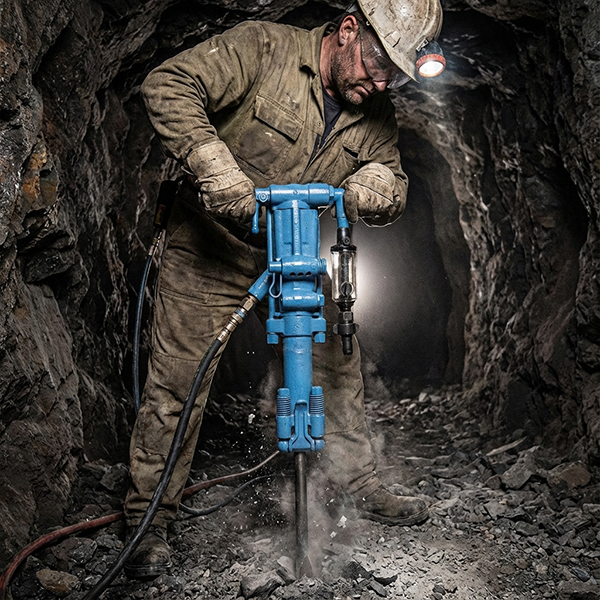
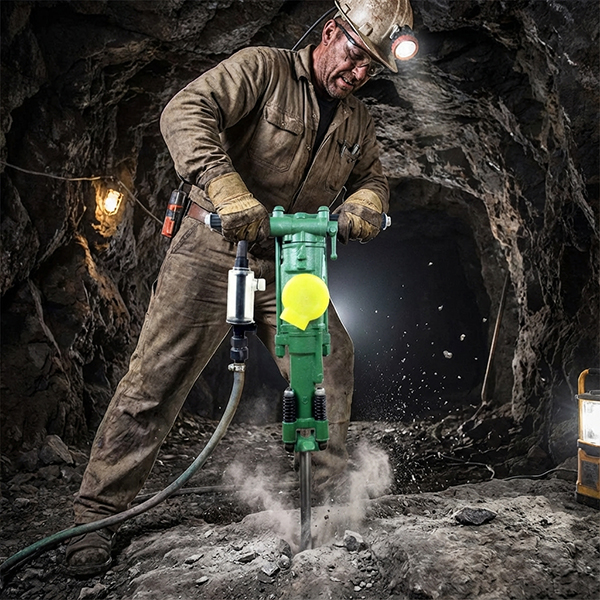
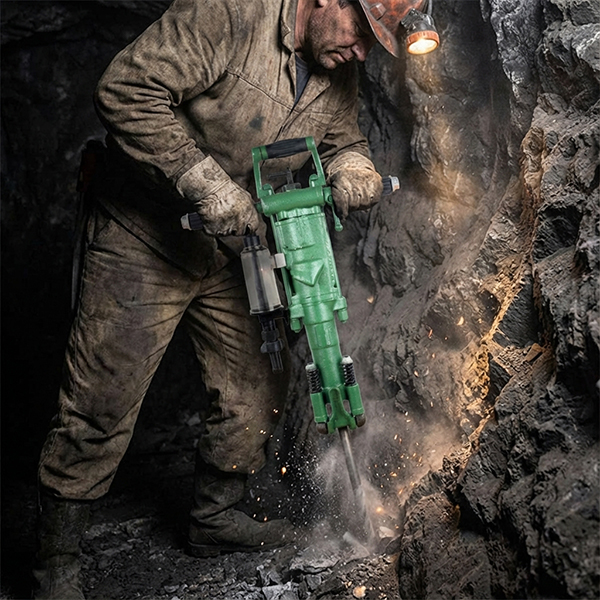
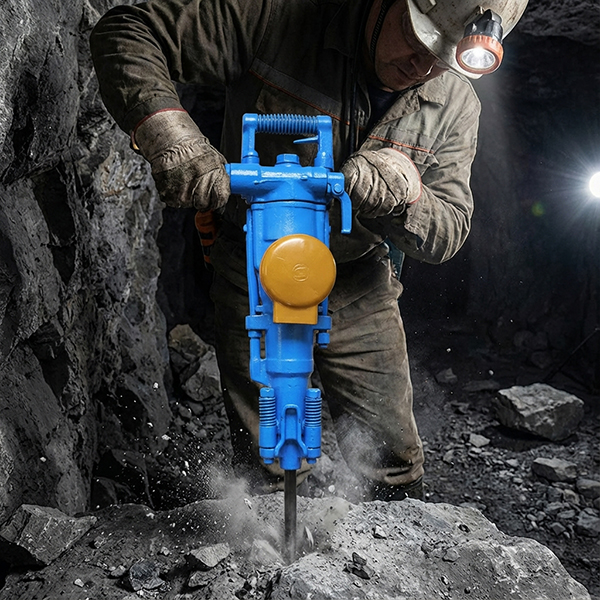
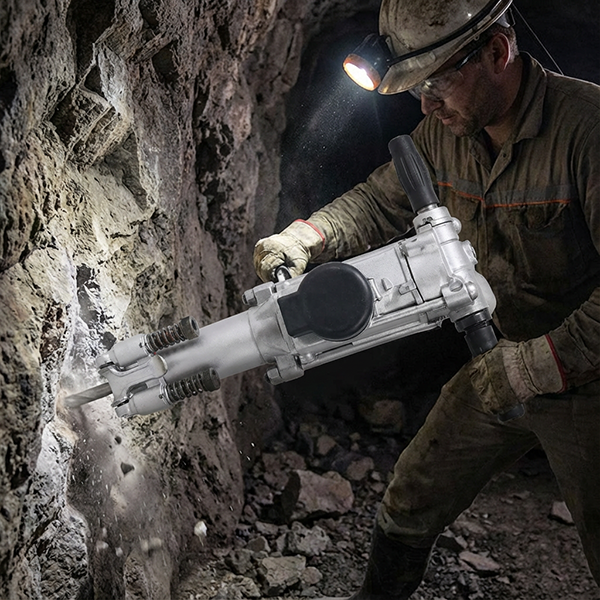
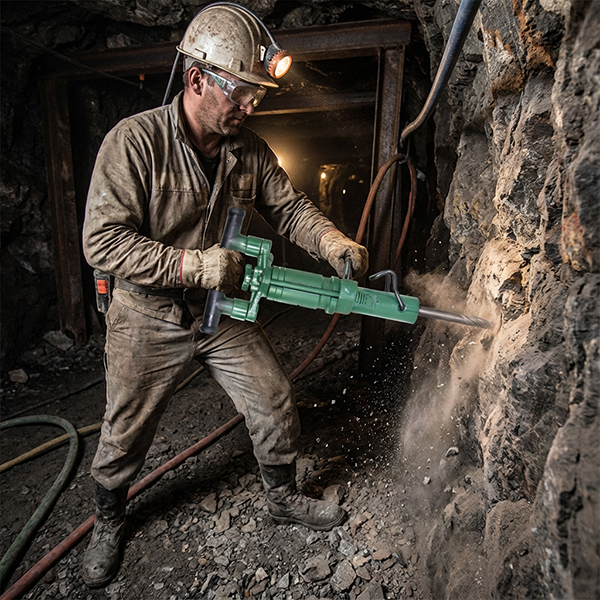
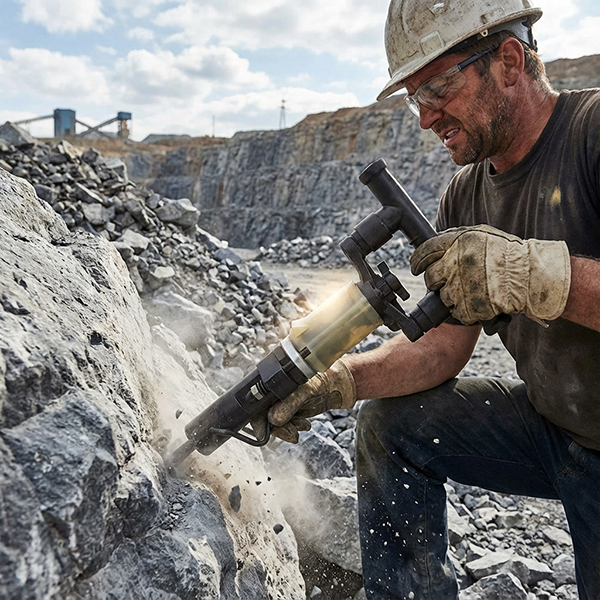
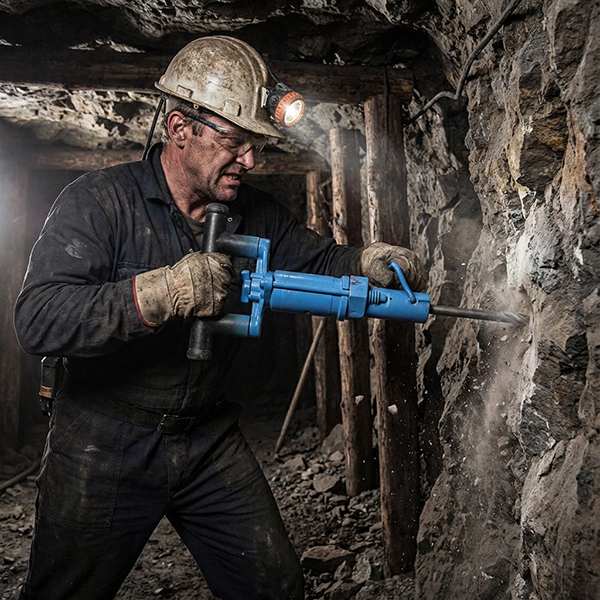
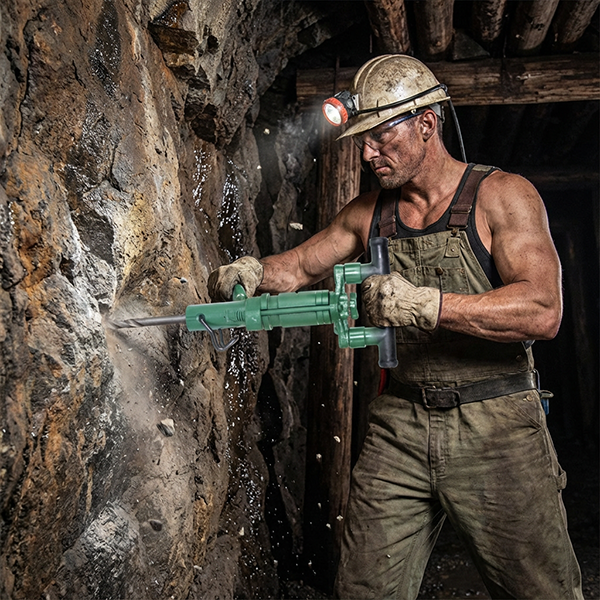
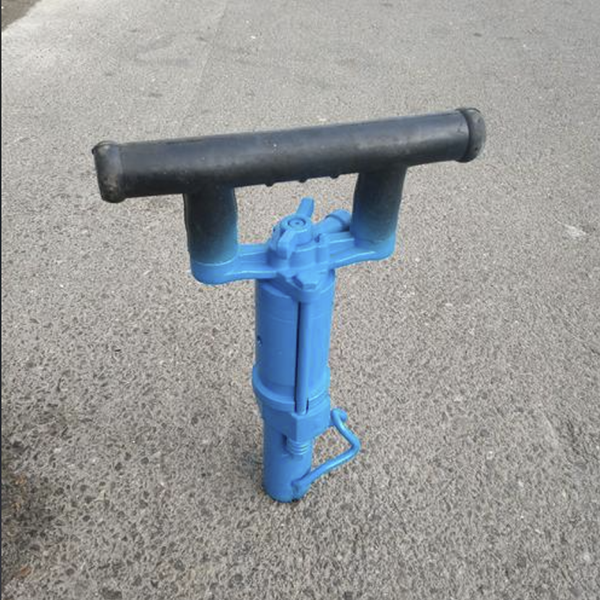
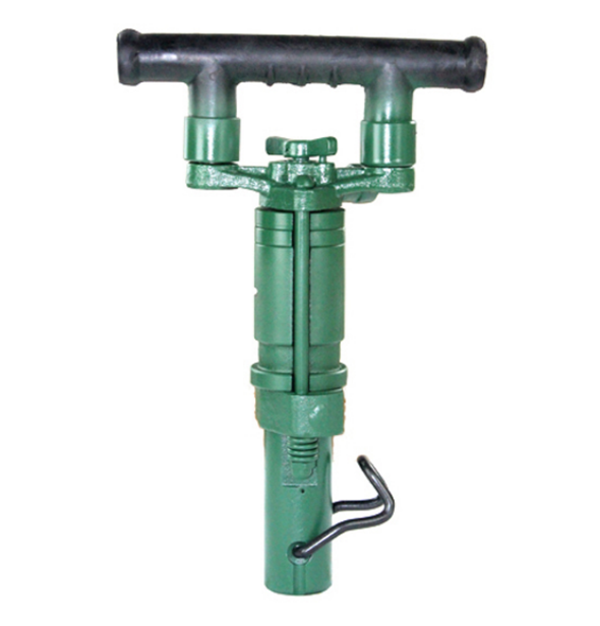
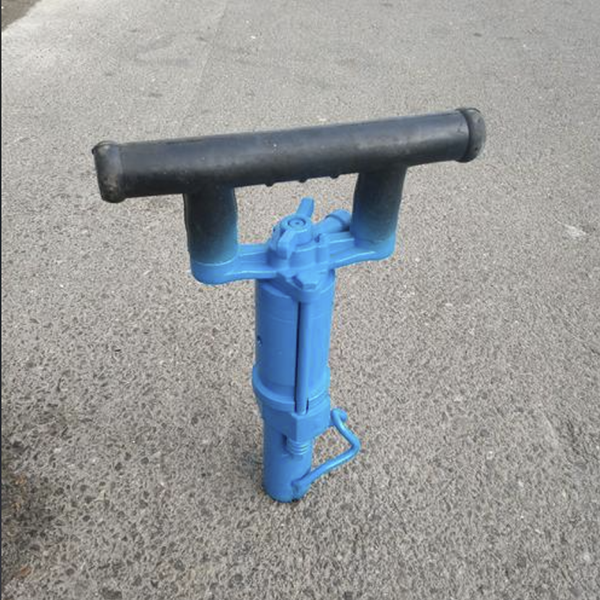
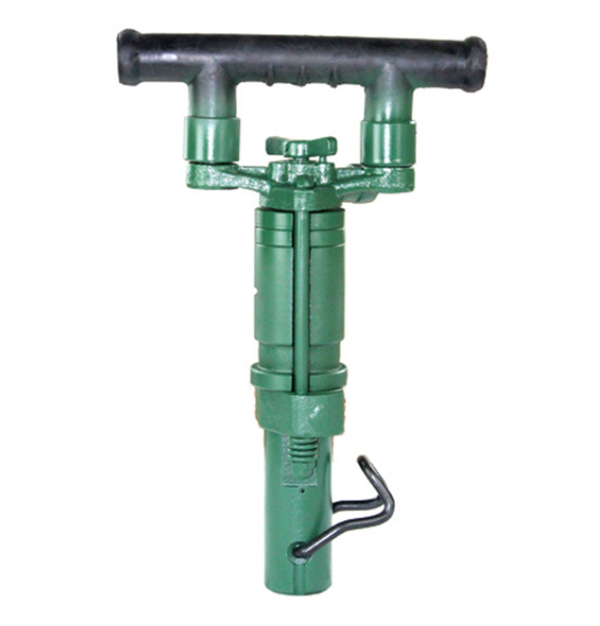
The Y8 hand‑held rock drill is a compact Pneumatic jack hammer designed for small‑diameter blast holes and anchor holes in medium‑hard and hard rock. If you need a hand held jack hammer that is easy to carry, simple to set up, and economical on air, the Y8 is a very practical choice.
With a weight of 6.8 kg and an overall length of 428 mm, the Y8 is slightly heavier than ultra‑light models, giving it a bit more stability in the hands, while still remaining truly portable for daily work in quarries, mines and construction sites. It works on compressed air in the 0.40–0.63 MPa range and uses the well‑proven impact + rotation drilling principle that you see in larger Pneumatic rock drills.
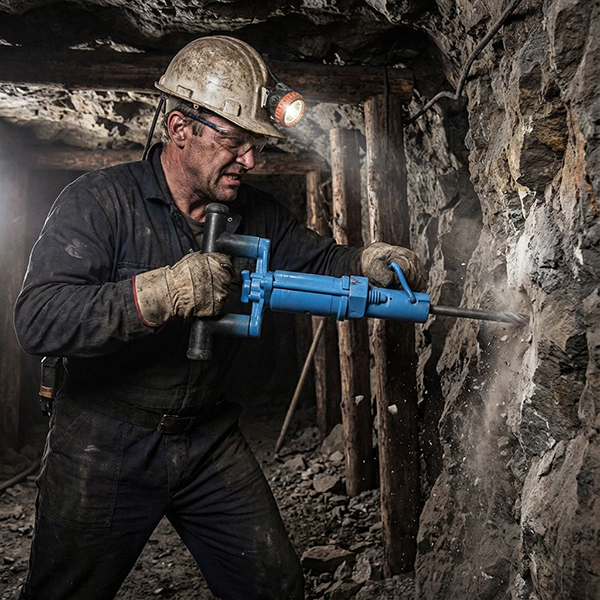
Key Technical Specifications of the Y8 Hand Held Jack Hammer
Model: Y8 hand‑held rock drill
Type: Pneumatic jack hammer / hand held jack hammer
Weight: 6.8 kg
Full length: 428 mm
Recommended operating air pressure: 0.40–0.63 MPa
Inner diameter of air pipe: 13 mm
Drill bit diameter: 20–24 mm
Air consumption: < 9.5 L/s (free air, at 0.40 MPa)
Rock drilling rate: ≈180 mm/min
Condition: 0.40 MPa air pressure, 20 mm drill bit
Matched drill rod: B15‑2.8‑4 drill rod
These parameters place the Y8 in the category of small hand held jack hammers designed for 20–24 mm holes, shallow to medium‑shallow depth, where flexibility and low air consumption matter more than deep‑hole capacity.
How the Y8 Pneumatic Jack Hammer Works
The Y8 uses the classic impact‑rotation rock drilling principle described in your technical notes:
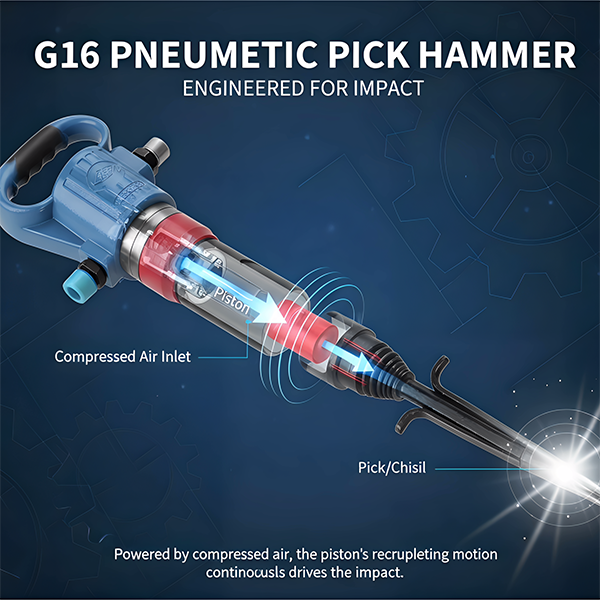
A piston inside the cylinder runs at high frequency, moving back and forth.
On each forward stroke, the piston hits the tail of the B15‑2.8‑4 drill rod, sending an impact wave through the rod to the drill bit.
The wedge‑shaped bit (20–24 mm) penetrates the rock surface, forming a small indentation.
As the piston returns, the drill rod is forced to rotate a small angle, so the next impact falls on a fresh piece of rock rather than the previous indentation.
Rock between two adjacent indentations is sheared and crushed into small chips.
At the same time, compressed air flows through the flushing channel, carrying rock dust and chips out of the hole, forming a clean, round blast hole.
Because the Y8 is a hand held jack hammer, the operator provides the feed force manually, pushing the machine against the rock while the internal mechanism takes care of impact and rotation. The working pressure range of 0.40–0.63 MPa matches the general recommendation for pneumatic rock drills (about 0.45–0.55 MPa at the machine), ensuring the piston gets enough energy to maintain good impact frequency and drilling speed.
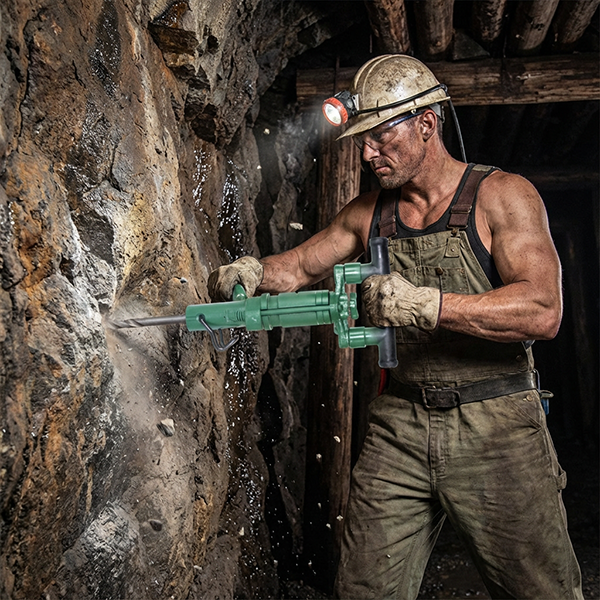
Where the Y8 Hand Held Jack Hammer Is Typically Used
Based on its dimensions and performance data, the Y8 is ideal for:
Small‑diameter blast holes (20–24 mm)
Used in small mines, auxiliary headings, trench blasting, slope trimming and stone splitting.Shallow to medium‑shallow holes
Hand‑held rock drills are generally used for shorter blast holes and support holes, where a big leg drill or hydraulic rig is not economical.Medium‑hard to hard rock
Pneumatic rock drills are commonly used on rock with hardness around f = 8–18. With a 20–24 mm bit and proper drilling practice, the Y8 can handle similar rock conditions.Tight, hard‑to‑reach areas
At 6.8 kg and only 428 mm long, this Pneumatic jack hammer fits in places where a 25–30 kg leg rock drill simply cannot be handled safely.
If your daily work requires frequent tool movement, many short holes and work in confined spaces, a small Y8 hand held jack hammer can often give better overall productivity than a heavier, more complicated machine.
Common Questions About the Y8 Pneumatic Jack Hammer
Below are some of the practical questions that buyers and operators often ask, answered using the Y8 data and the rock drill principles you provided.
1. How fast can the Y8 drill?
Under test conditions:
Air pressure: 0.40 MPa
Drill bit diameter: 20 mm
the Y8 achieves a rock drilling rate of about 180 mm/min.
In real field conditions, actual penetration will depend on:
Rock type and hardness
Bit diameter (24 mm bits will be slower than 20 mm)
Real pressure at the machine (after hose losses)
Bit condition and operator technique
With < 9.5 L/s air consumption at 0.4 MPa, the Y8 offers a reasonable penetration rate for a compact Pneumatic jack hammer. If you can keep the air pressure closer to 0.45–0.55 MPa at the machine, in line with general pneumatic rock drill recommendations, you can expect equal or slightly better performance than the catalog figure on medium‑hard rock.
2. What size air compressor do I need for the Y8?
The specification says:
Air consumption < 9.5 L/s at 0.40 MPa
This equals about 0.57 m³/min of free air.
In theory, if you run only one Y8 hand held jack hammer, a 0.8–1.0 m³/min compressor at 0.5–0.6 MPa can already meet the basic demand. In practice, you should allow for:
Pressure loss along the 13 mm air hose and fittings
Other pneumatic tools on the same compressor
Some safety margin for hot weather and continuous work
Many users choose a compressor giving at least 1.0–1.5 m³/min at around 0.5–0.6 MPa when using one or two small Pneumatic jack hammers like the Y8. This fits your general rule that rock drills work best with wind pressure kept around 0.45–0.55 MPa, not below 0.4 MPa.
3. Is the Y8 really suitable for hand‑held operation all day?
Yes. One of the main design goals for a hand held jack hammer is to keep weight and size under control while maintaining useful impact power.
Key points:
The Y8 weighs 6.8 kg, well below the 30 kg limit normally mentioned for hand‑held rock drills.
The full length of 428 mm makes it compact enough to be handled by one person, including overhead and wall drilling.
Compared with leg‑type jack hammers (often 23–30 kg plus the air leg), the Y8 is far easier to carry from hole to hole, especially on uneven ground or scaffolding.
Of course, as your safety guidelines suggest, operators should:
Use correct posture and keep a stable stance
Avoid long periods of high‑speed idle running
Take breaks to reduce fatigue and vibration exposure
But in terms of weight and balance, the Y8 is built as a genuine hand held jack hammer for daily use.
4. What drill rod and drill bit does the Y8 use?
The Y8 is specified for:
B15‑2.8‑4 drill rod
Drill bit diameter 20–24 mm
That means:
The shank type is B15, so your rods and bits must match this standard to ensure good power transmission and long service life.
For higher penetration and lower load on the machine, a 20 mm bit is recommended, which is also the size used for the 180 mm/min test rate at 0.4 MPa.
If you need slightly larger holes, you can move up to 24 mm bits, understanding that penetration speed will go down accordingly.
Using high‑quality drill rods and bits, with correct heat‑treated steel and hard metal inserts, is important. Your rock tool notes also remind us that welding and brazing quality of the hard alloy tips will limit how much impact energy the bit can stand.
5. How should I set the air pressure on site?
The Y8 is designed for:
Operating air pressure 0.40–0.63 MPa
And your general rock drill guidelines say:
Working wind pressure is best kept at 0.45–0.55 MPa
It should not be lower than 0.40 MPa, otherwise efficiency drops noticeably
Running at too high pressure for a long time will increase wear
In practice:
Check the pressure at the drill, not just at the compressor outlet. Long hoses and fittings can easily drop 0.05–0.10 MPa.
Aim for 0.45–0.55 MPa at the Y8 inlet while drilling.
Avoid continuous running at the upper limit of 0.63 MPa, unless you need short‑term maximum power and accept faster wear on parts.
Correct air pressure is essential not only for impact energy but also for stable torque. Too low pressure makes it easier for the drill bit to stall or get stuck in fractured rock.
6. What daily maintenance does this Pneumatic jack hammer need?
Your maintenance rules for pneumatic rock drills apply directly to the Y8 hand held jack hammer:
Use clean, dry compressed air
Before connecting the Y8, blow out the air hose to remove dirt and water.
Moisture and debris entering the cylinder and valve will shorten the life of the machine.
Always run with oil (never dry)
You see a fine oil mist in the exhaust, and
The shank of the B15‑2.8‑4 drill rod looks slightly oily during operation.
Install an in‑line automatic oiler in the air line.
Fill it with clean lubricating oil, not waste oil.
Adjust the oiler so that:
Start correctly
At the beginning of each shift, open the air slowly and let the jack hammer run at low speed for a short time to warm up and check for abnormal noise.
Tighten fasteners regularly
Vibration will slowly loosen nuts and screws.
Regularly check the main bolts and hose connections, especially on a compact 6.8 kg Pneumatic jack hammer that may be moved many times per day.
After work, remove moisture
Shut off any water supply first (if used), then run the drill briefly on air only to blow out remaining water and dust.
If the Y8 will not be used for a longer period, clean and oil the internal parts and store it in a dry place.
Following these basic steps will significantly extend the life of the Y8 and keep its drilling performance stable.
7. Can I use the Y8 in wet drilling mode?
The Y8 itself is a Pneumatic rock drill, and many customers use it with air flushing only. If you add water flushing, the main rule from your technical notes is:
Water pressure must always be lower than air pressure
Otherwise water may flow back into the drill, wash away its oil film and increase wear.
If you plan to use water:
Keep water pressure below whatever air pressure you are using (for example, at 0.4–0.5 MPa air, keep water lower than that).
After wet drilling, run the Pneumatic jack hammer briefly on air only to dry the inside, then oil it before storage.
Whether you choose dry or wet drilling, dust control and lubrication must both be considered.
Conclusion: Why the Y8 Hand Held Jack Hammer Is a Practical Choice
The Y8 hand‑held rock drill brings together the core design principles from your rock drill knowledge:
Uses compressed air (0.40–0.63 MPa) as a clean and safe power source
Employs high‑frequency impact and step‑by‑step rotation to break rock
Keeps size and weight under control for true hand‑held operation
Key advantages:
Compact and portable: only 6.8 kg, 428 mm long – easy to carry and reposition.
Designed for 20–24 mm holes: ideal for small blast holes and anchor holes.
Reasonable air demand: < 9.5 L/s at 0.40 MPa, so you don’t need an oversized compressor.
Proven performance: about 180 mm/min penetration with a 20 mm bit at 0.4 MPa in test conditions.
Simple, robust Pneumatic design: easy to operate, maintain and repair.
If your priority is a lightweight, reliable hand held jack hammer for daily work on small‑diameter holes, the Y8 Pneumatic jack hammer is a solid, no‑nonsense choice. With a suitable compressor, quality B15‑2.8‑4 drill rods and regular lubrication, it can give you stable, economical drilling performance in quarries, mines and construction projects.