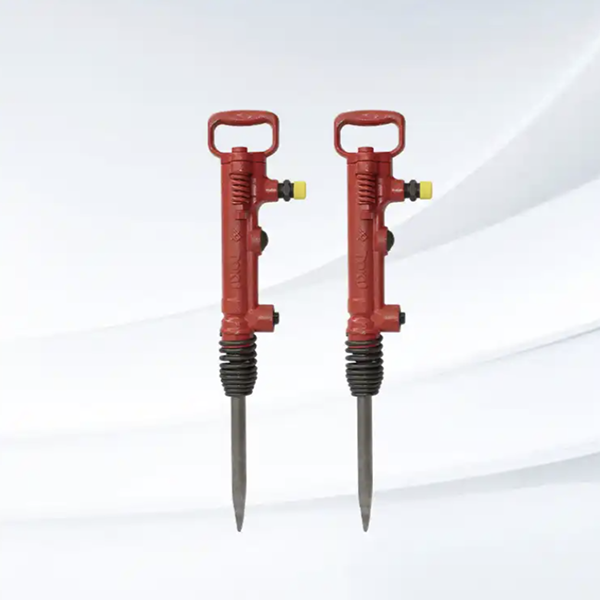

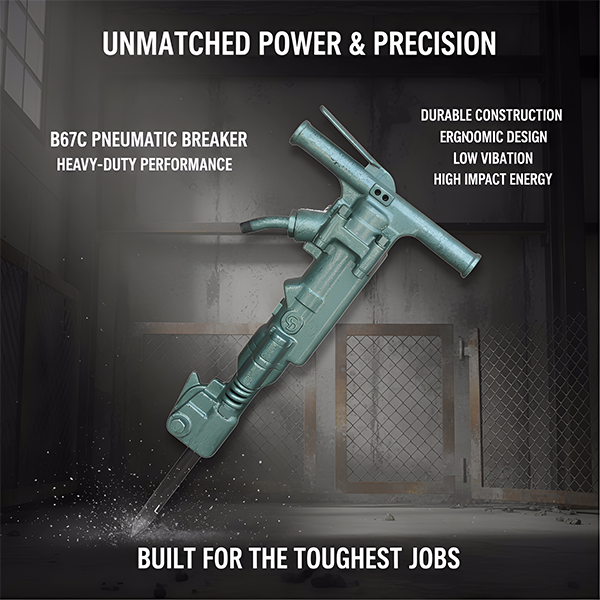
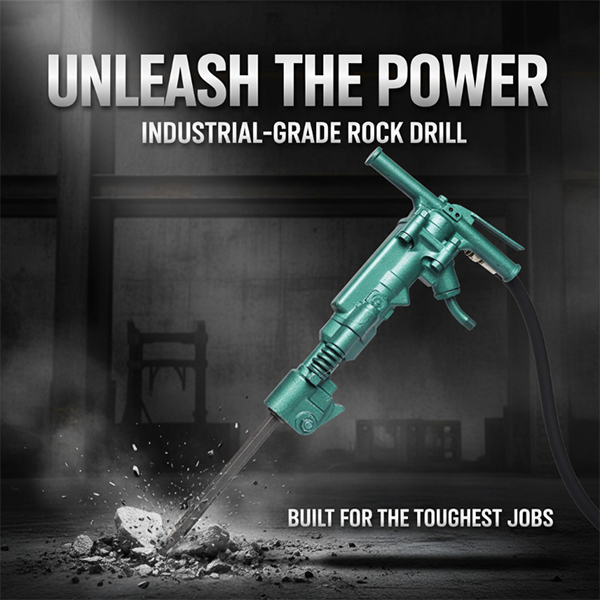


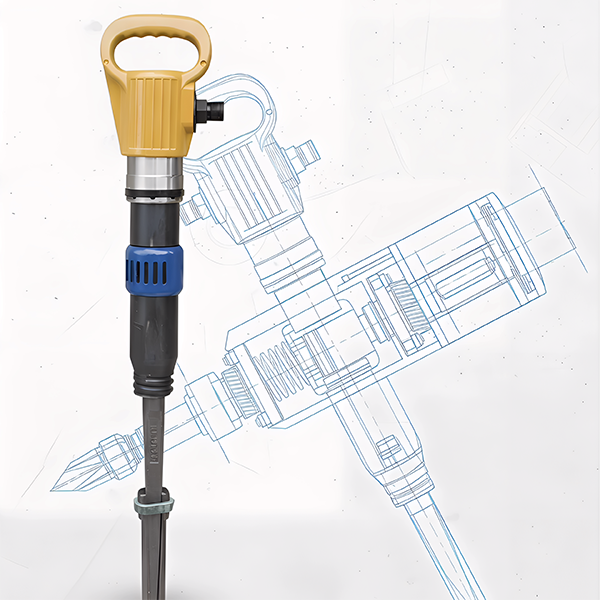
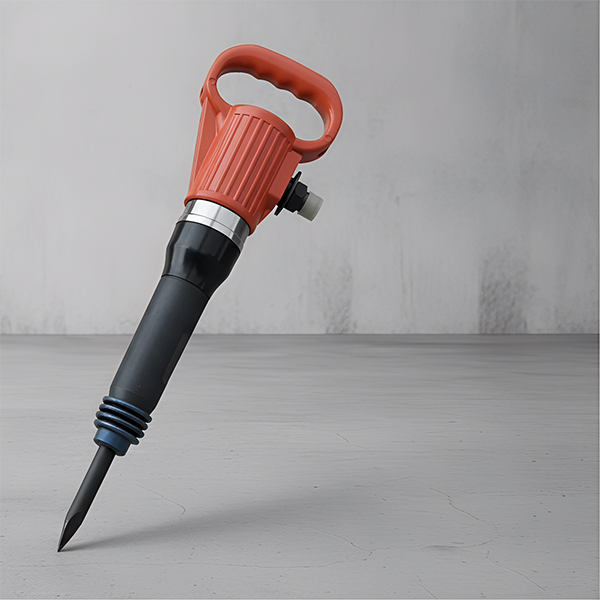
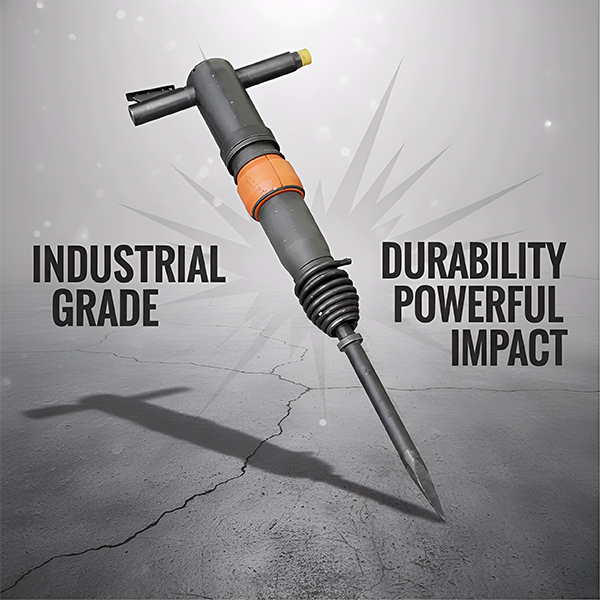
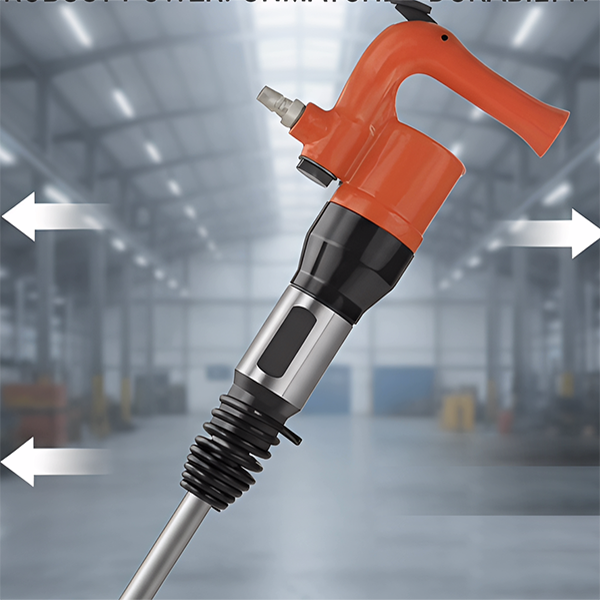
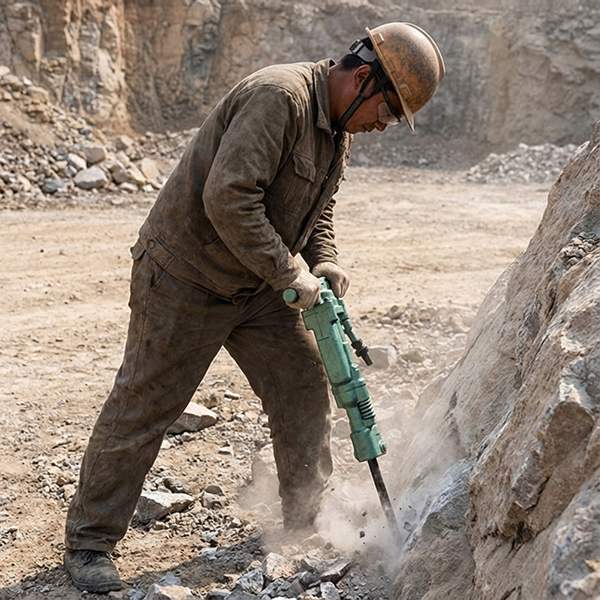
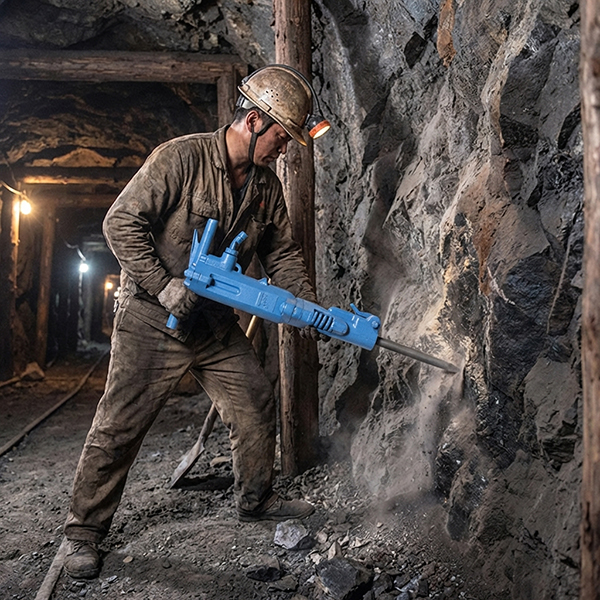
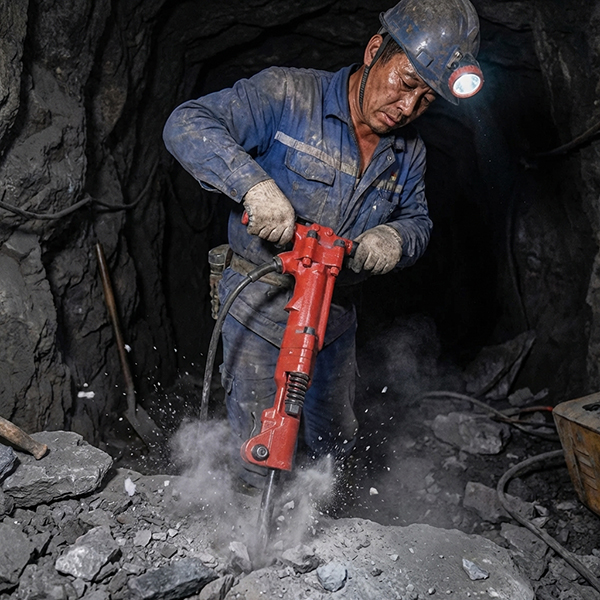
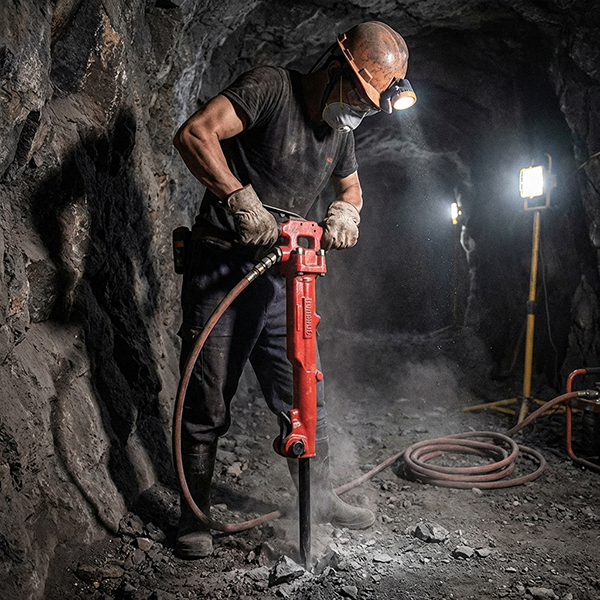
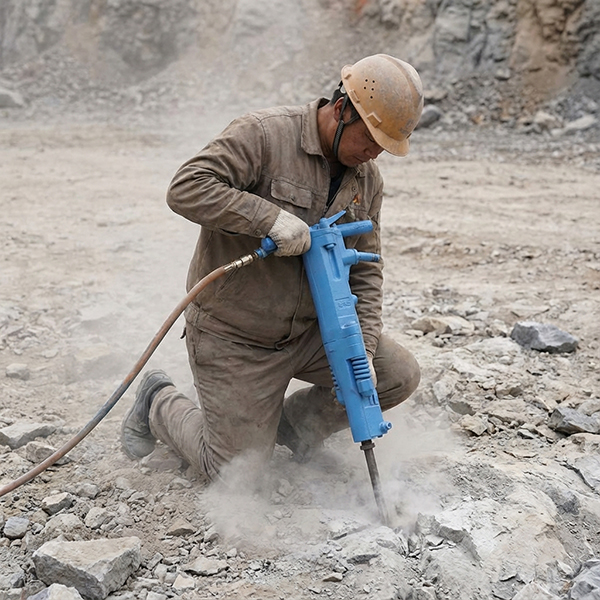
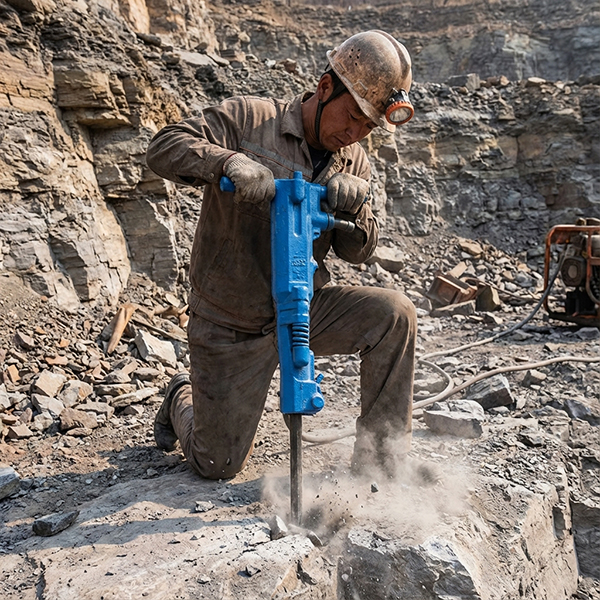
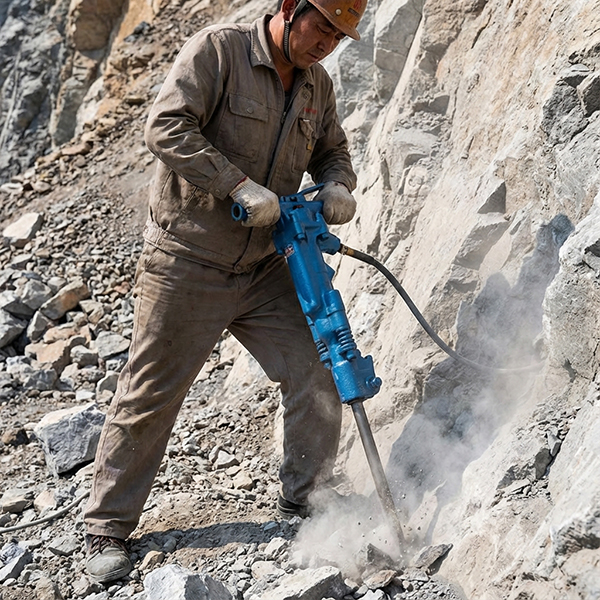
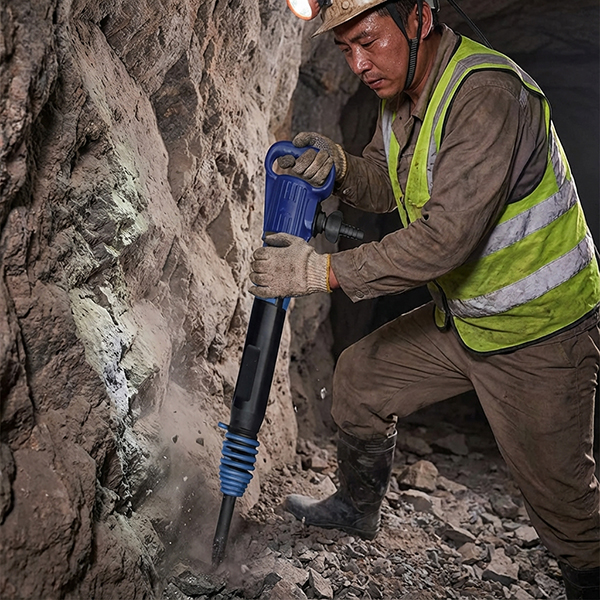
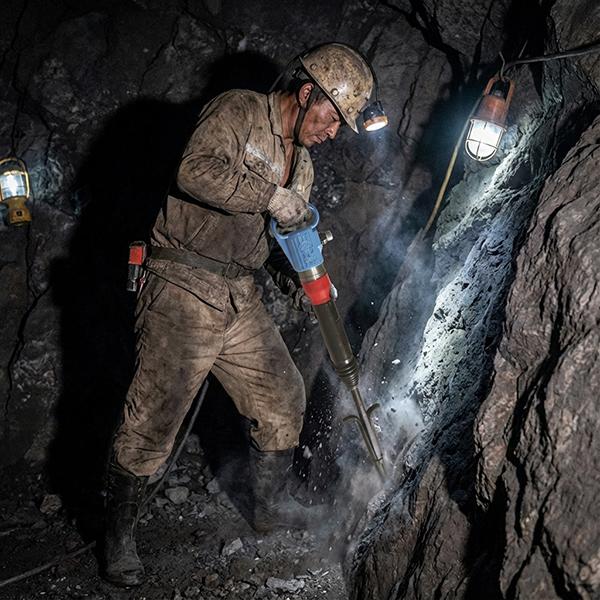
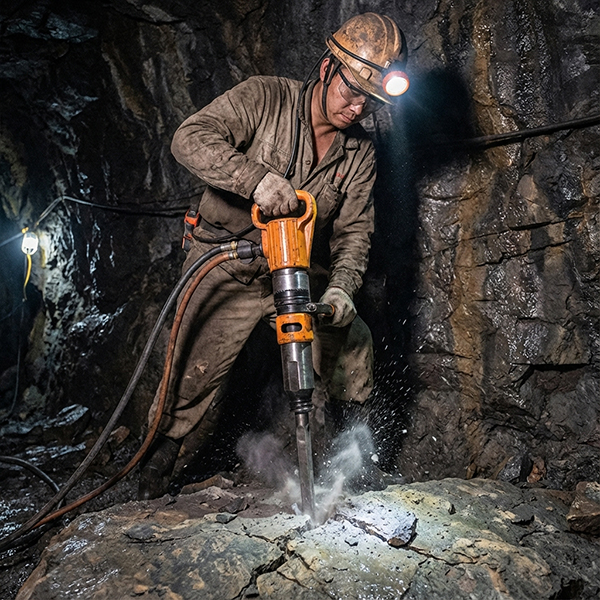
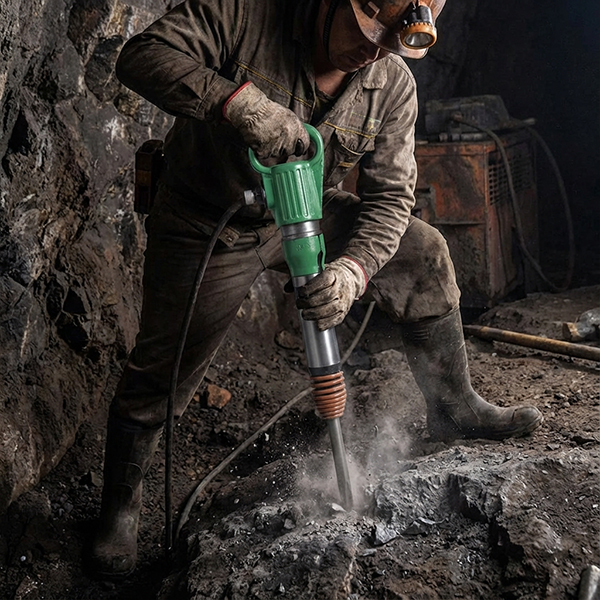
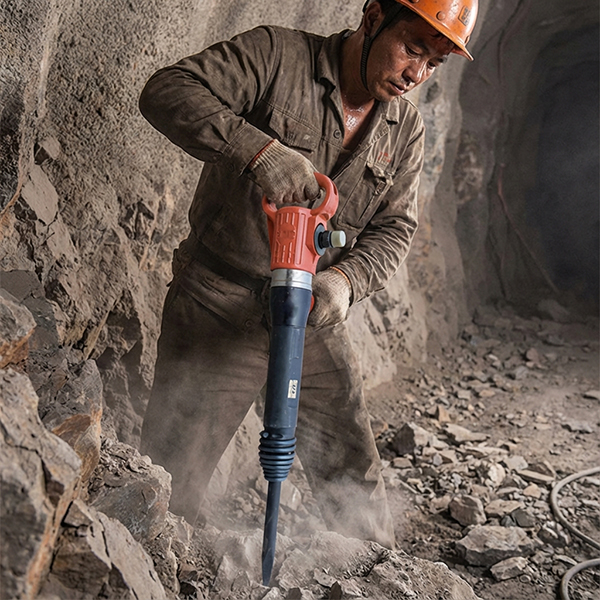
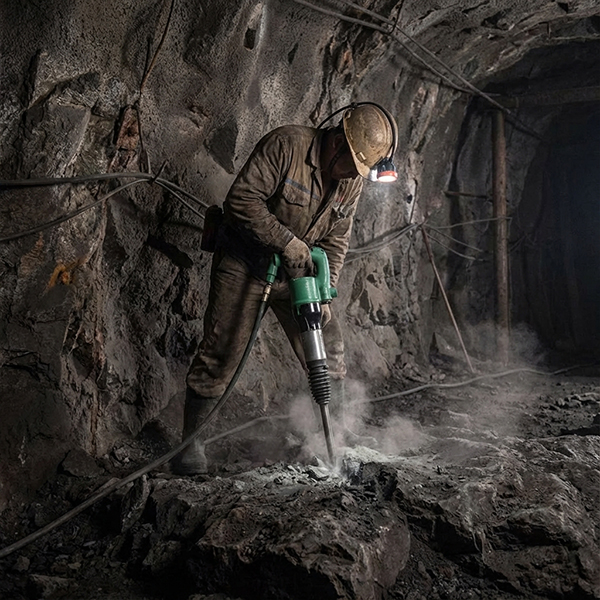
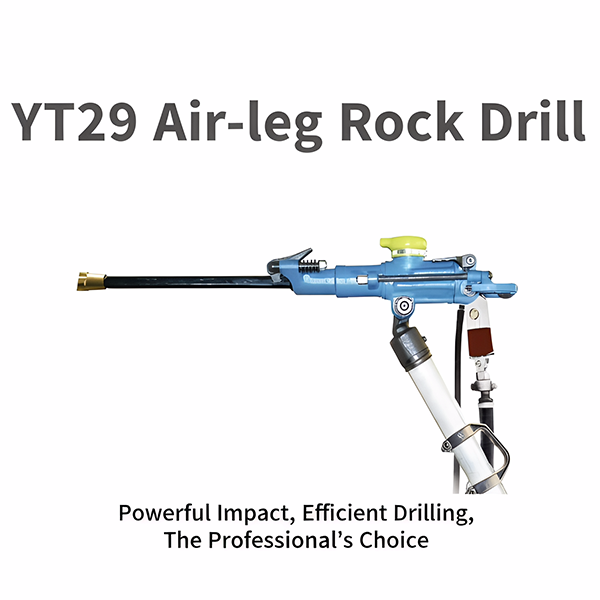
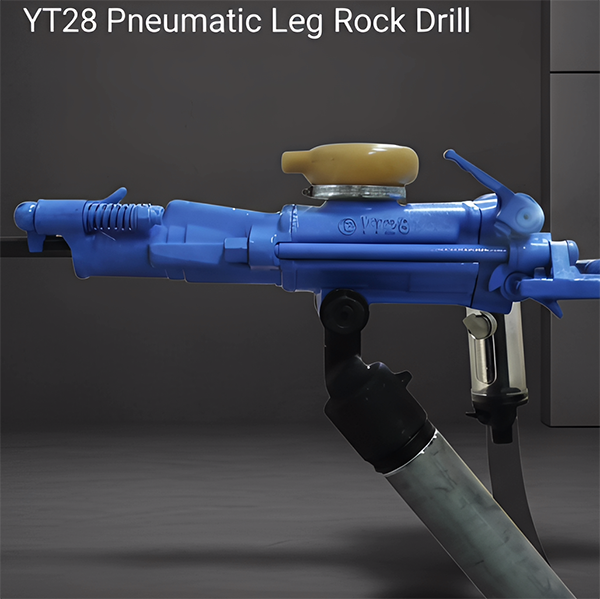
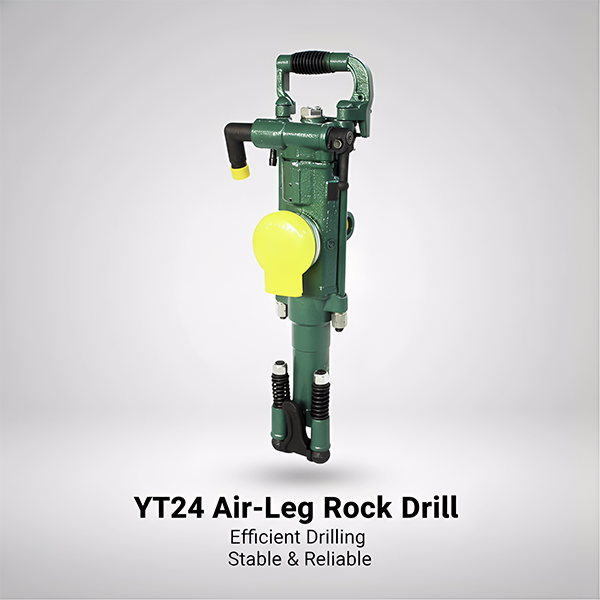
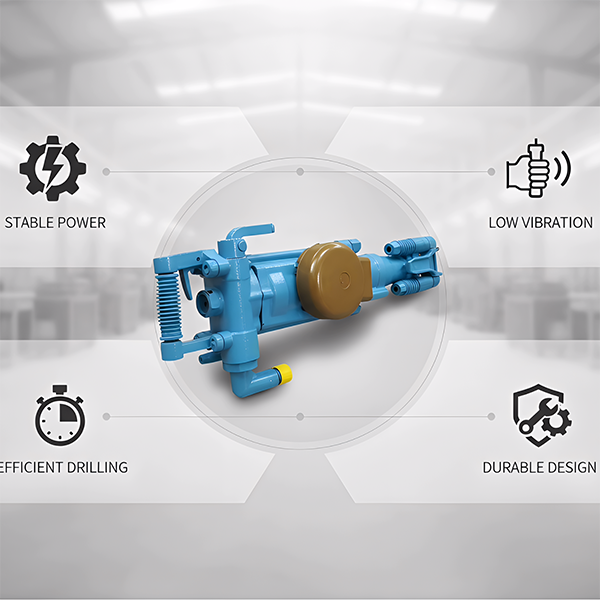
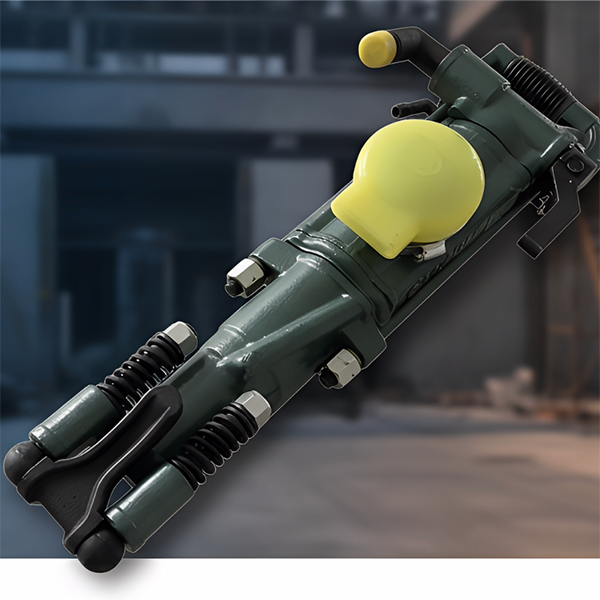
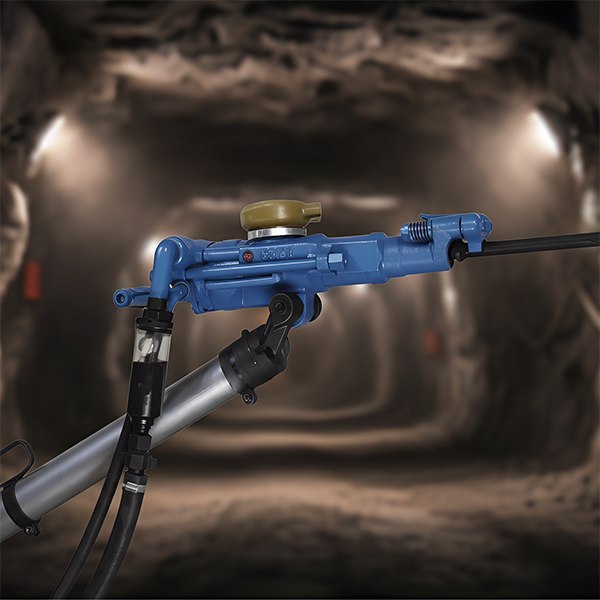
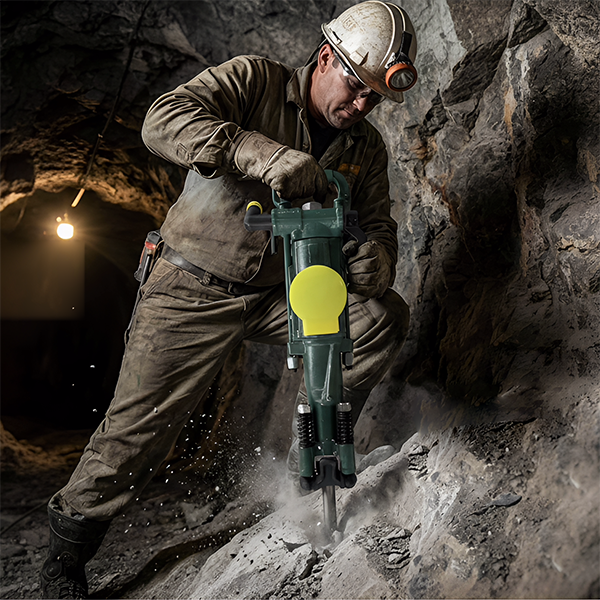
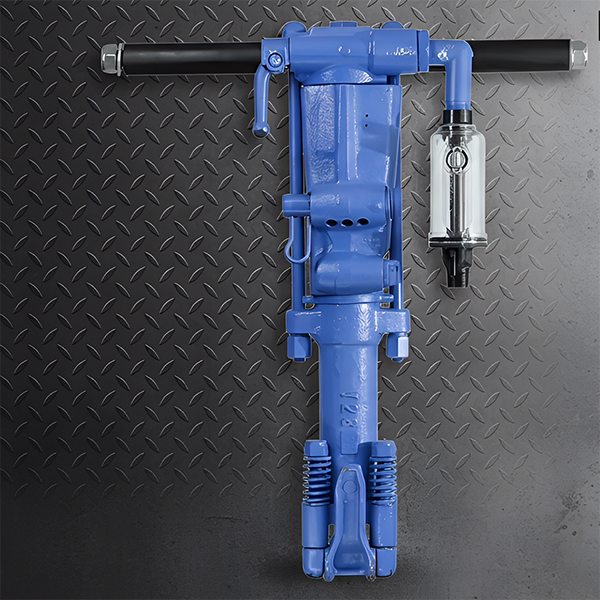
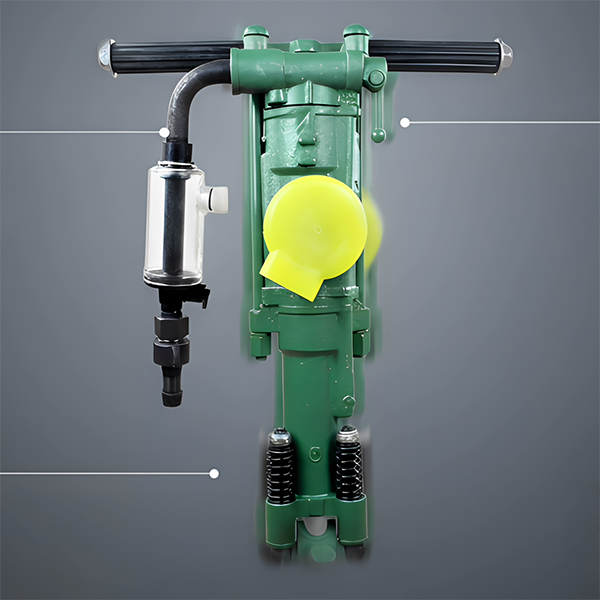
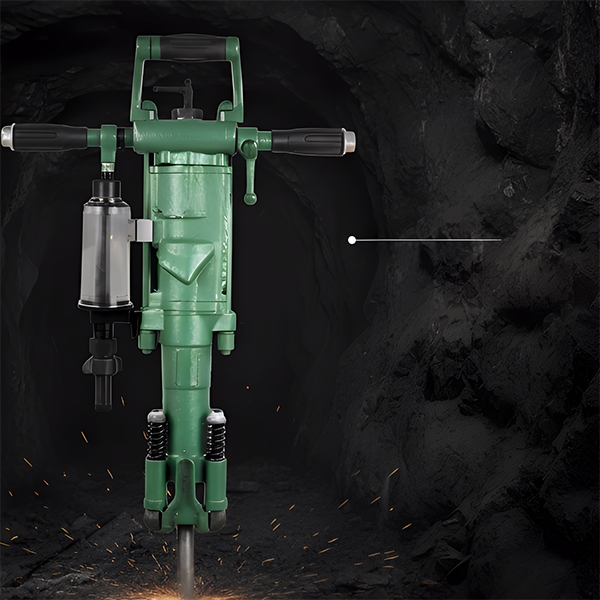
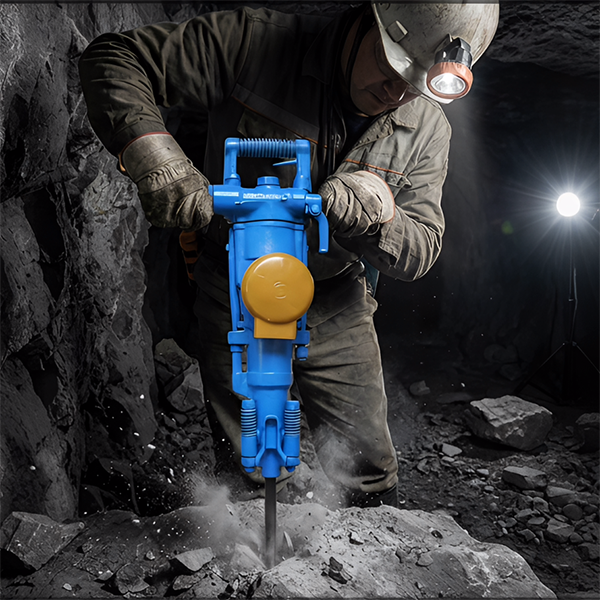
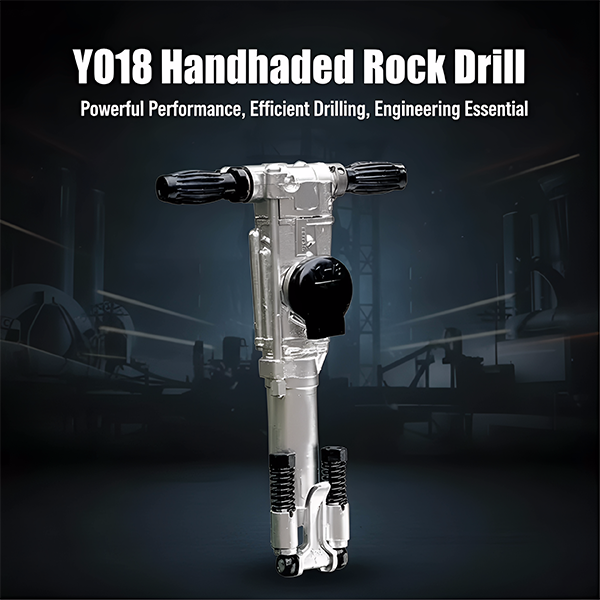
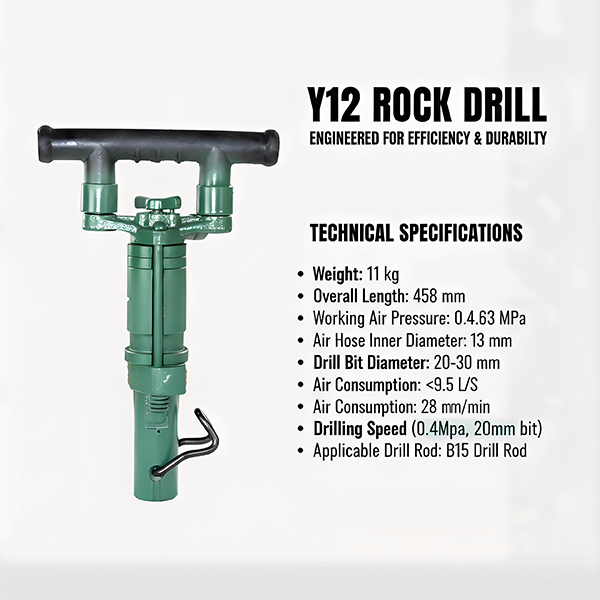
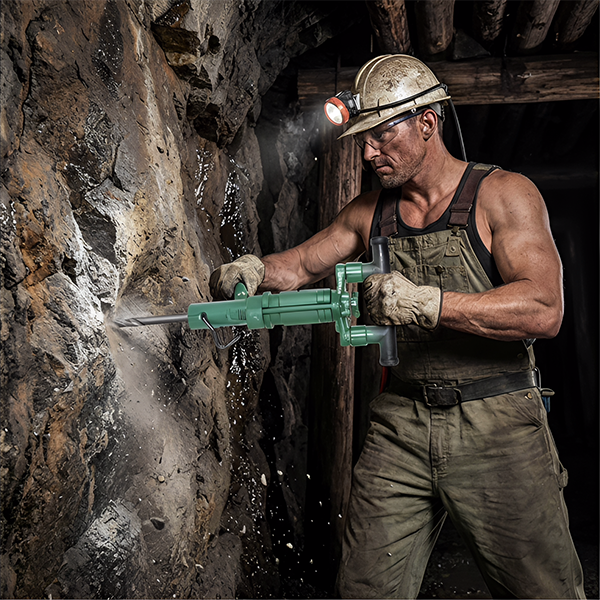
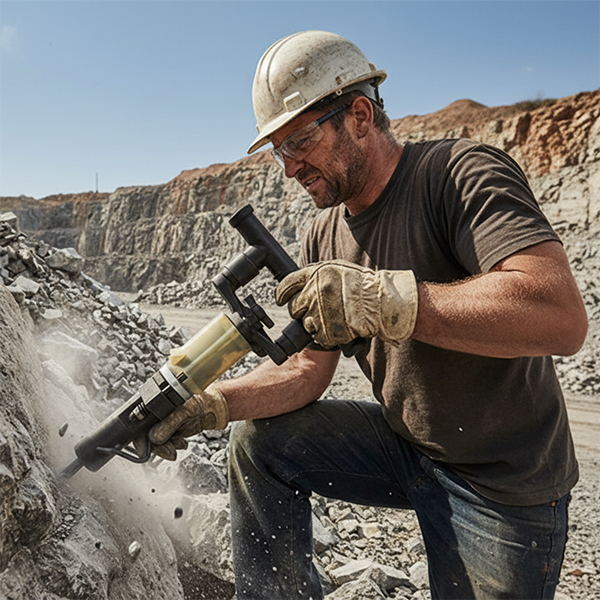
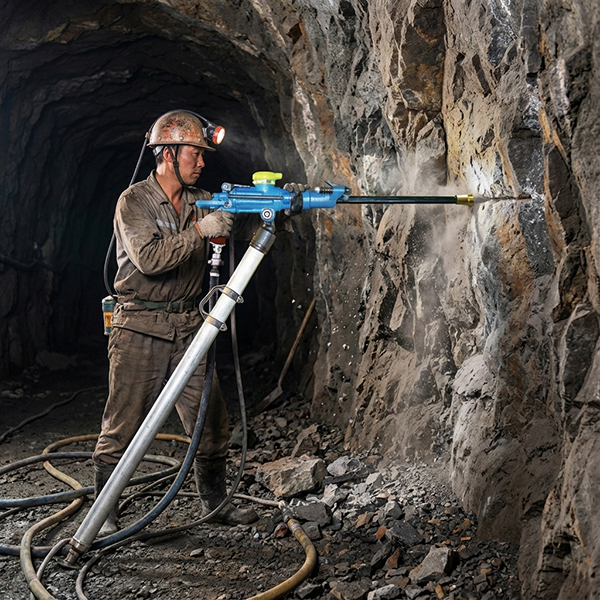
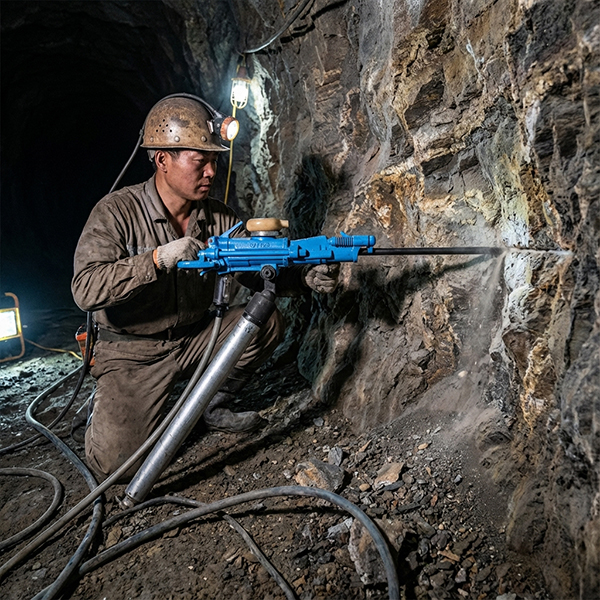
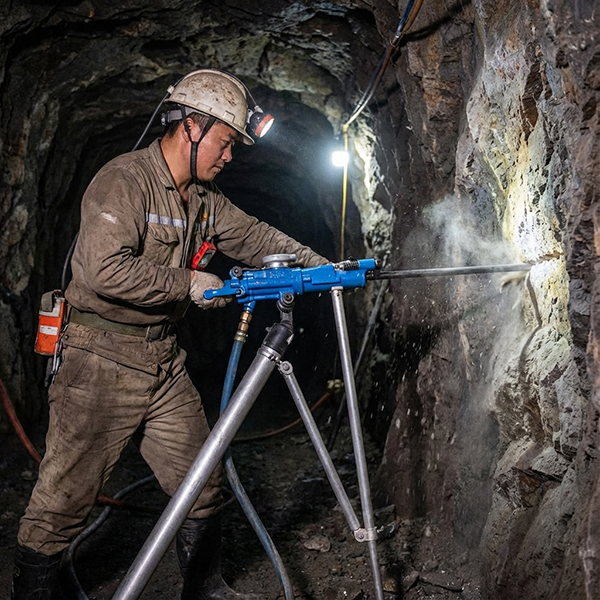
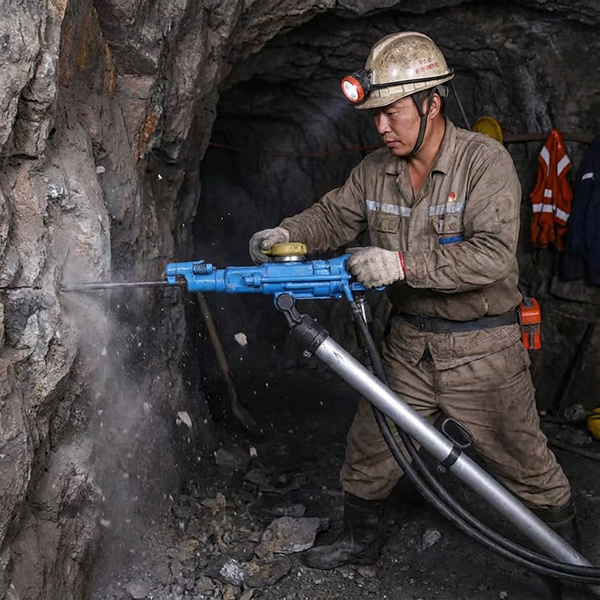
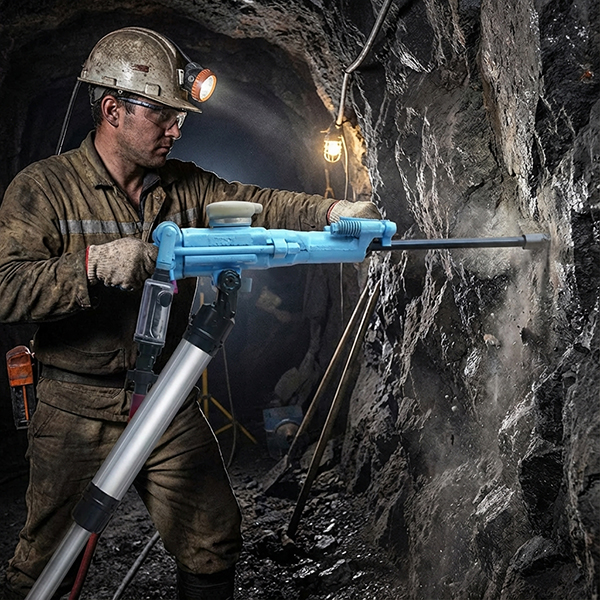
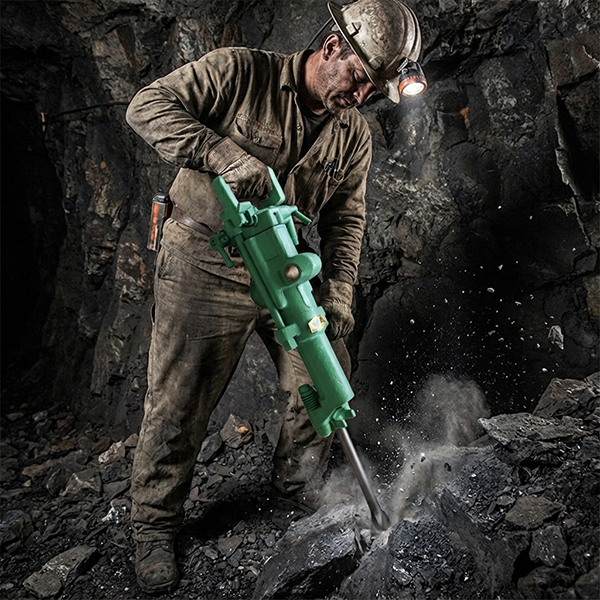
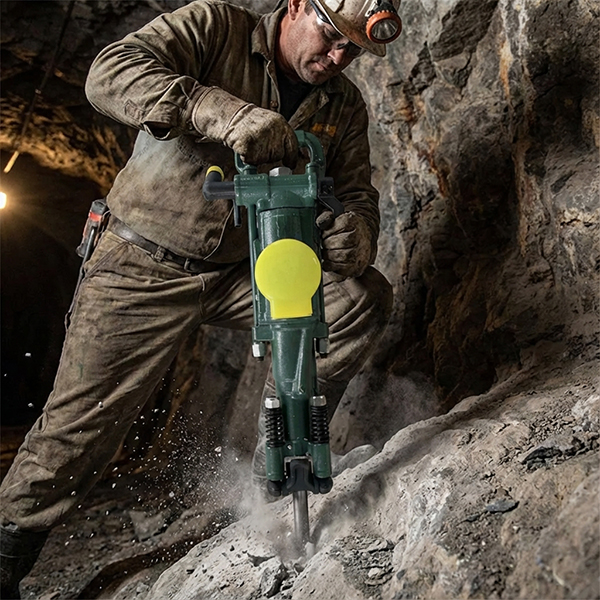
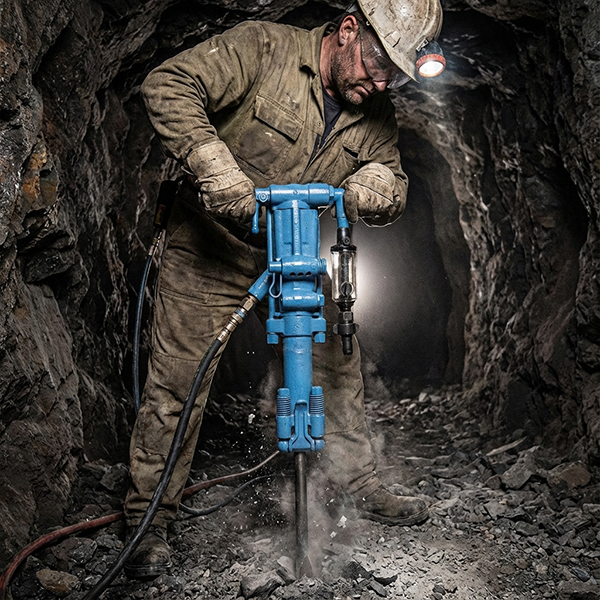
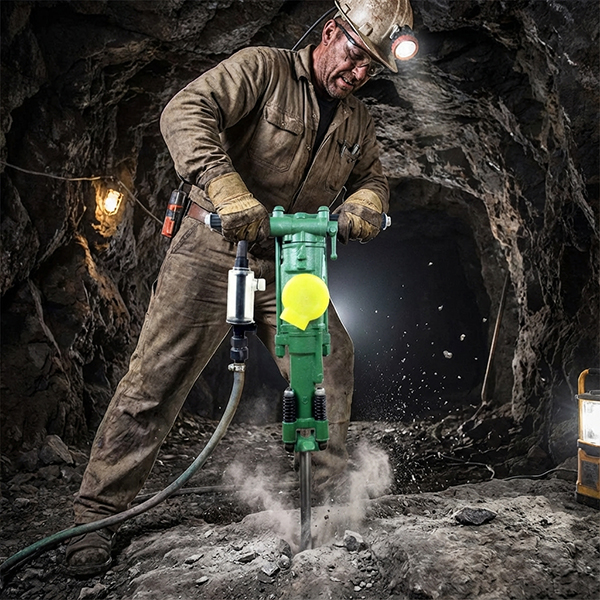
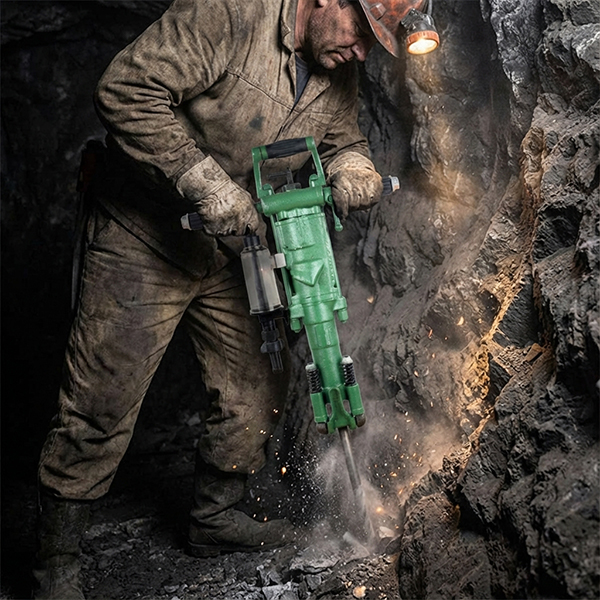
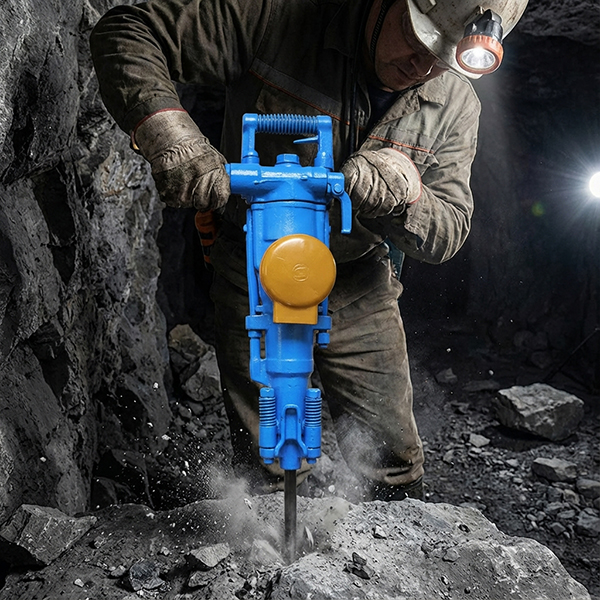
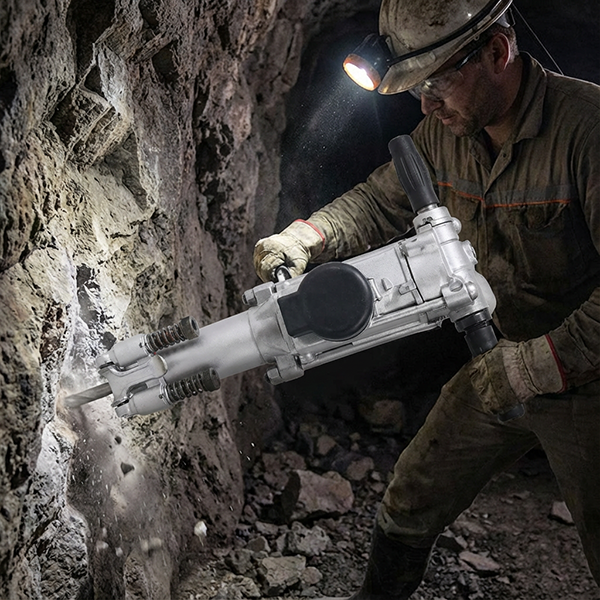
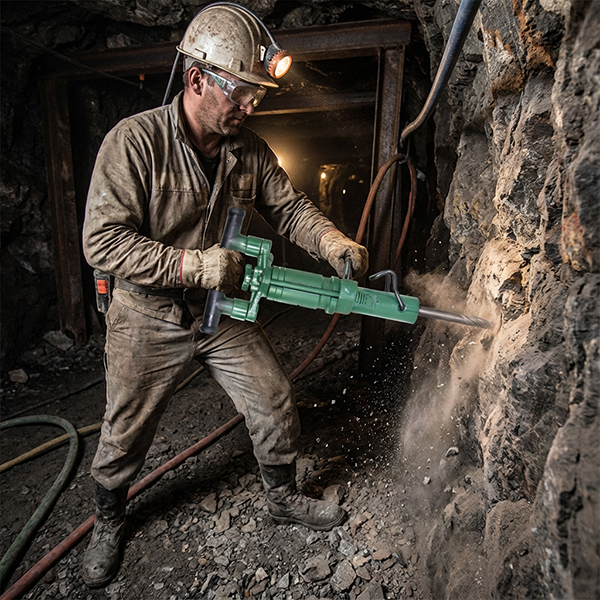
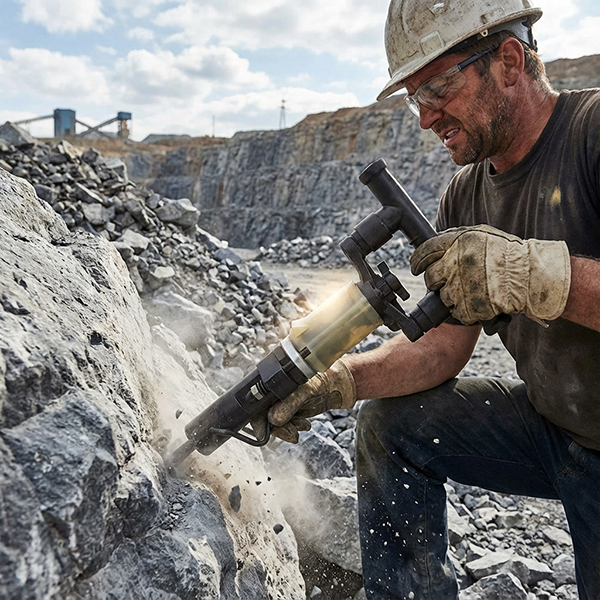
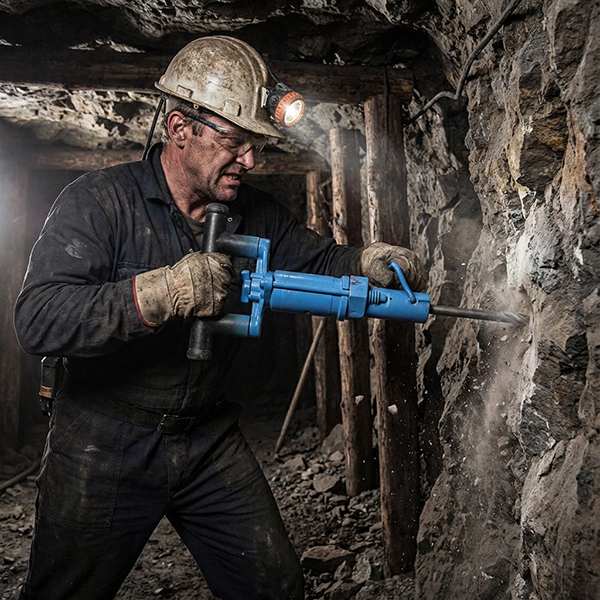
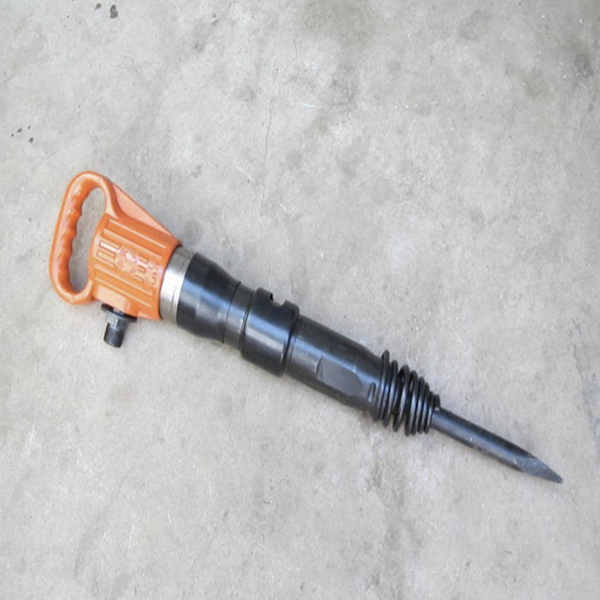
As a core tool for underground coal cutting, the pneumatic air pick has a direct impact on face safety, construction quality, and worker protection. Based on requirements for standardized coal mine safety management, this paper systematically organizes operator qualifications, work sequence, equipment inspection, operational essentials, and end-of-shift procedures. It establishes a full-process technical framework covering general provisions, preparation and inspection, core operation, and final acceptance. By clarifying key safety controls at each stage, the framework provides technical support for standardized air-pick operations and helps coal enterprises prevent risks such as rib spalling, roof falls, and equipment-related injuries.
In underground mining and excavation, pneumatic air picks are widely used for coal breaking and face trimming because of their simple structure and flexible handling. Operator skill and safety awareness directly affect production efficiency, engineering quality, and on-site safety. Statistics show that incidents linked to non-standard air-pick operation, including rib spalling, roof falls, and equipment injuries, account for more than 15 percent of underground coal mine accidents. To implement standardized safety management, regulate operator behavior, and reduce accident risk, this paper refines and optimizes practical field procedures into a scientific, rigorous, and executable operating standard.
1. General Provisions
1.1 Personnel Qualification Requirements
Pneumatic air pick operators must be familiar with the tool’s structure, working principle, and maintenance methods. They may work independently only after professional training, passing assessment, and obtaining a valid qualification certificate.
1.2 Coordination and Site Management Requirements
Air-pick operators shall work in coordination with support crews and coal-loading workers, with clear division of responsibilities to jointly ensure safe production and required face dimensions and quality.
Before operation, the unsupported roof area must be checked. If it exceeds the allowable limit in the operating rules, work must stop immediately and may resume only after support is corrected and verified compliant.
Mining height parameters must be strictly controlled according to the operating code. No roof coal or floor coal shall be left, and the coal wall shall remain straight and regular, with no overhang and no obvious local protrusions.
Sidewall and roof bracing shall be completed as required to maintain roof and rib stability.
Disassembly or repair of the air pick at the face is prohibited. Injecting any liquid other than approved lubricating oil into the tool is prohibited.
1.3 Standard Work Sequence
Operations shall follow a fixed sequence: preparation (tool and material pickup, transport, and standardized storage), inspection, issue handling, operation (air line connection, trial run, removal of side and roof bracing rods, pushing cut, breakthrough cut, quality check), and end-of-shift closure.
2. Work Preparation, Inspection, and Handling
2.1 Tool Pickup and Inspection
2.1.1 Air Pick Inspection Criteria
When receiving an air pick, verify the following item by item:
No cracks or damage on the tool body.
Collar, head assembly, and handle spring are complete, flexible, and reliable.
Air filter screen is clear; screws, retaining pins, and other parts are complete and undamaged.
The steel sleeve inside the head fixing section is clean and free of debris.
2.1.2 Chisel Bit Inspection Criteria
Chisel bits must meet the following requirements:
Sharp tip without excessive wear; tail is flat, notch-free, and perpendicular to the bit axis.
Correct and secure fit between bit tail and air-pick socket; no offset between bit tail and steel sleeve; fit clearance is appropriate.
Sufficient working bits and spare bits are prepared to ensure continuity.
2.1.3 Hose and Auxiliary Material Preparation
After receiving hoses, conduct a connection test in the tool room with air pick and bit installed. Blow out hose contaminants first to ensure line cleanliness; report and repair or replace immediately if leakage or abnormal operation is found.
Prepare sufficient compatible lubricating oil.
Carry air pick, bit, and hose separately. Hoses shall be coiled and hand-carried or shoulder-carried to prevent collision damage. Transport by scraper conveyor is prohibited.
2.2 Tool Storage Requirements
Spare air picks, bits, oil cans, and other tools shall be placed in safe and stable areas. On inclined and steeply inclined faces, tools must be securely tied to prevent falling injuries.
2.3 Site Inspection and Risk Handling
Verify that basic and special support systems are complete, compliant, and free from breakage or deformation, with sufficient support capacity.
Conduct sounding and roof-rib checks to confirm roof, floor, and sidewall stability. If loose coal or rock, roof-fall risk, or rib-spalling risk is identified, hazards must be eliminated before operation.
If roof control distance exceeds the limit, handle immediately according to operating rules until safe conditions are restored.
Inspect installation quality of the main face air line, confirming sufficient airflow, no leakage, flexible nozzle adjustment, and compliance with all parameters.
Check cleanliness of hose-joint filter screens to prevent airflow restriction.
2.4 Pre-Operation Setup
After connecting the hose to the main air line, open the valve slowly and blow toward an unoccupied area to remove residual debris, then connect the air pick and tighten joints. Joint tightness must be checked continuously during operation to prevent accidental disconnection. Lubrication must be performed before and during use.
Clean the bit tail and insert it into the air pick, securing it firmly with the spring mechanism.
Prepare all support and side-roof bracing materials and place them neatly along the chute edge or walkway. Random stacking that obstructs passage is prohibited.
Verify face centerline marks or guide lines and confirm side width control requirements to meet dimensional standards.
3. Core Operating Procedure and Safety Precautions
3.1 Safety Preparation Before Cutting
Before coal cutting begins, a safe retreat path must be planned in advance to prevent injury from rib spalling or falling coal and rock.
3.2 Coal-Cutting Standards
3.2.1 Selection of Entry Point
For opening cuts, rib pushing, and breakthrough operations, priority should be given to weaker coal bands or zones with well-developed bedding and joints. Cut top coal first, then bottom coal, and avoid hard-force impact.
3.2.2 Posture and Force Control
Use a two-hand posture: one hand on the handle, one hand supporting the tool body. Apply steady pushing force toward the coal wall. A 90-degree thrust angle against the wall is prohibited to reduce arm vibration and bit wear.
3.2.3 Requirements for Special Conditions
In horizontal or upward work, keep the arm holding the tool body close to the torso to improve control and force. Monitor conveyor status and overhead conditions continuously to prevent injury from falling coal or gangue.
At composite seam faces, if interlayer rock reaches the specified threshold for separate extraction, layered operation is mandatory. Mixed discharge of coal and gangue is prohibited; interlayer gangue must be mined separately and transported to the goaf.
3.3 Key Safety Precautions
Continuously check tightness of the top spring, filter screen, cross pin, and joints to prevent part detachment.
If the bit jams, loosen it by rocking the tool or clearing surrounding coal and rock, then extract it. Forced pulling is prohibited.
Replace blunt bits in time to maintain efficiency and equipment life.
During breaks, place the air pick in a safe, dry area to prevent moisture damage and impact.
Hoses must not be sharply bent or kinked; keep them straight or in gentle curves to ensure airflow and prevent damage from falling gangue or objects.
During continuous operation, replenish lubricating oil as needed. Stabilize the tool during fueling to prevent tipping or pinch-impact injury.
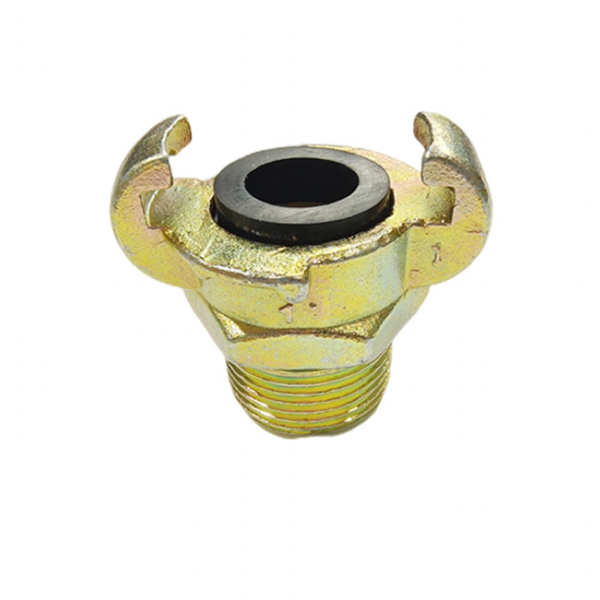
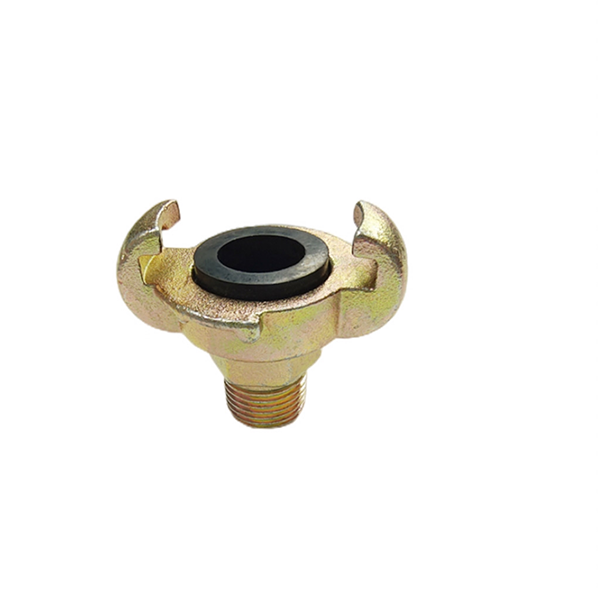
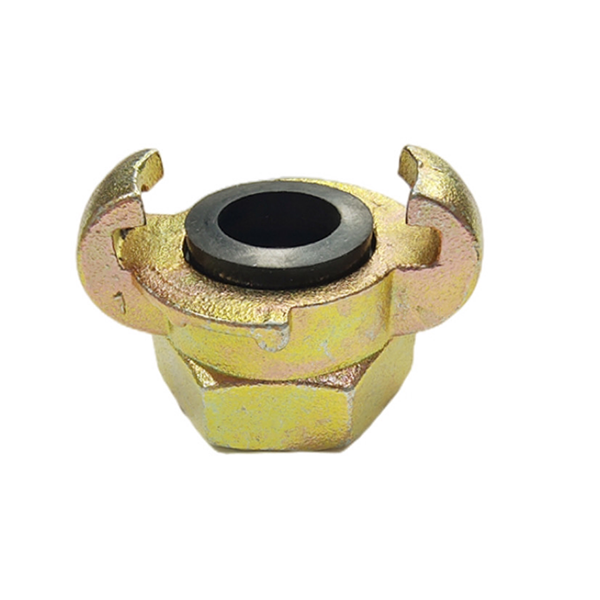
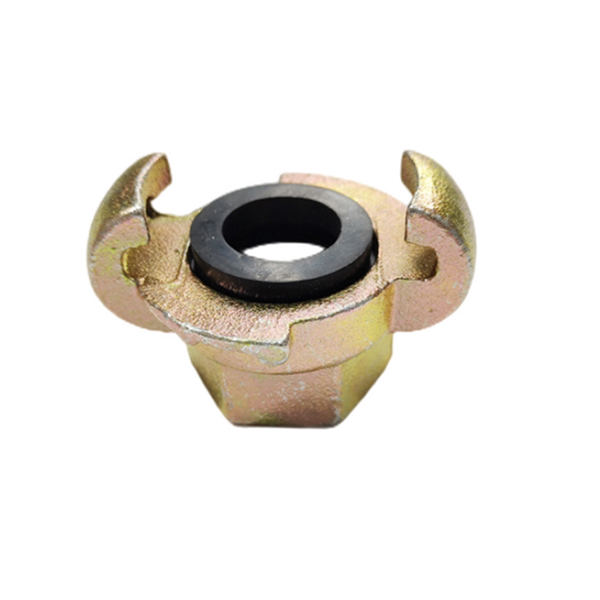
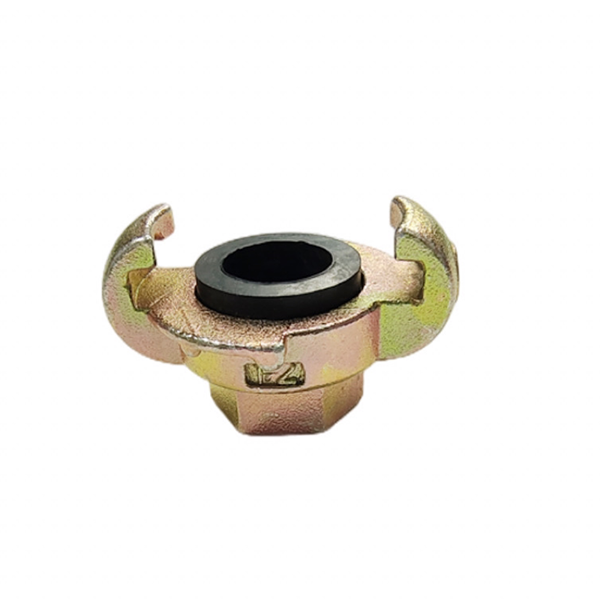
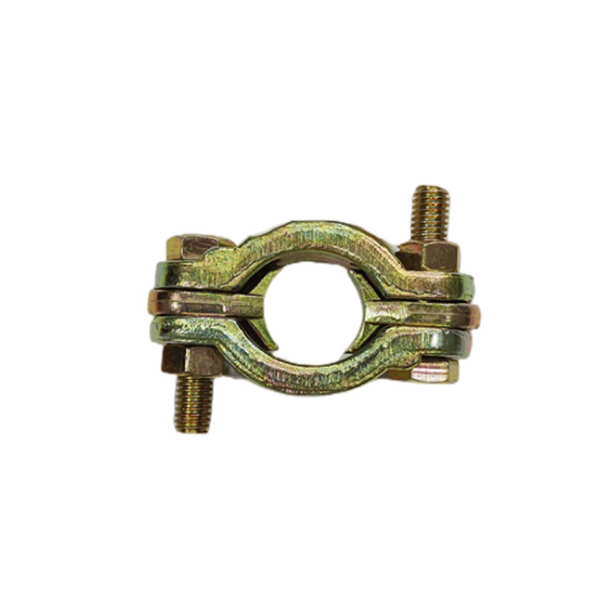
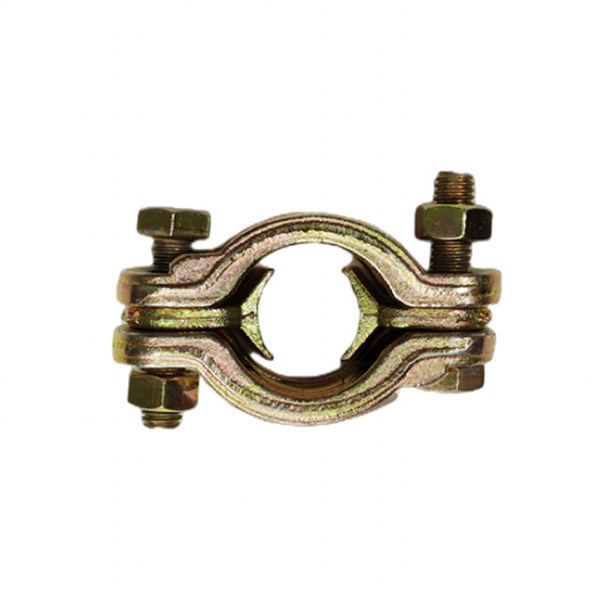
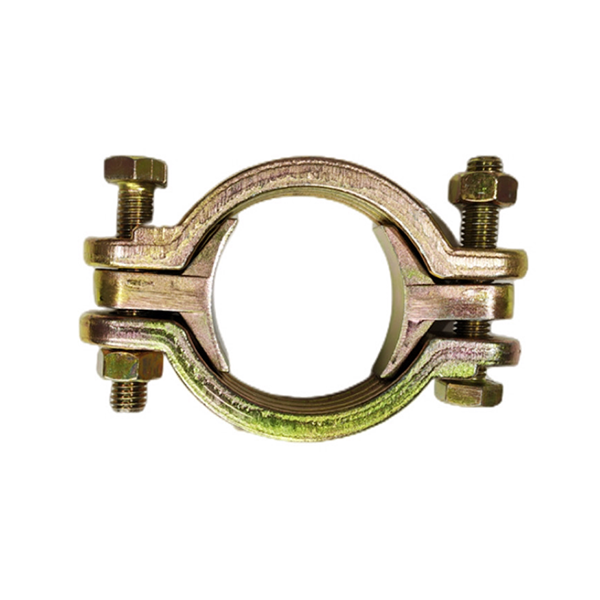
Check hose couplings and connecting pipes frequently. Retighten immediately if loose. High-pressure straight-through joints must be secured with U-clips; wire substitution is prohibited.
Prevent bit seizure in rock. Bit penetration depth must remain below the spring position. Prying rock while striking is prohibited.
If tool failure occurs, stop use immediately and send the unit to mechanical maintenance for replacement or repair. Unauthorized dismantling at the work site is prohibited.
3.4 Operating Rules for Different Face Conditions
3.4.1 Metal-Supported Faces in Medium-Thick Seams
Where roof conditions are stable, coal is hard, and rib-spalling risk is low, adopt an alternating beam-hanging pattern, then perform bottom pulling, post setting, and beam supplement from bottom to top.
Under normal roof and rib conditions, up to eight beams may be hung in sequence. Follow the order: bottom pulling and post setting from bottom to top, then secure upper blocking. Roof beams must be hung and roof bracing completed in time.
Where roof is fractured and coal is soft with high spalling risk, use the beam-pocket method, with roof bracing performed simultaneously as beams are installed. Under a six-beam gate-opening arrangement, set the third and fourth central posts first, then the second and first upper posts, and finally the fifth and sixth posts. Brace sidewalls while setting posts and complete upper blocking treatment. Use one-beam rib pushing and one-beam breakthrough operation. In pressure-concentrated zones, add temporary posts during breakthrough. Missing posts after completion are strictly prohibited.
3.4.2 Steeply Inclined Faces
Before operation, install firm footboards, coal-retaining boards, and scaffolds, and inspect and maintain them regularly to prevent loosening and falling.
Keep sufficient spare air picks, bits, turbine oil, wire, and other tools in safe storage areas.
Select small sublayers with developed bedding and joints and soft coal. Follow the sequence: groove from top to bottom, mine top coal first, then bottom coal. In thin seams, groove at mid-height or near the floor; in medium-thick seams, groove near the roof first. If seam thickness requires two air picks on one bench, the roof-side tool cuts first and the floor-side tool second; maintain a stagger of 1.5 to 2.0 meters along dip direction.
Maintain stable footing and reliable support while working. When cutting through top and bottom coal, hold the post with one hand and operate the air pick with the other, with both feet firmly planted. Secure the hose and frequently check the tool body, head spring, and swivel joint.
Break down large fallen coal blocks to prevent support damage and personnel injury.
When moving along the face, follow the rule: move your foot only after your handhold is stable, and release your hand only after your footing is secure.
Air-pick coal cutting is prohibited in unsupported face zones.
Upper and lower workers must maintain mutual lookout and call-and-response communication for coordinated risk control.
4. End-of-Shift Standards
4.1 Quality Acceptance
Check side-cutting progress against the face centerline and trim the coal wall to a straight and regular profile. Work may end only after team-leader inspection and acceptance.
4.2 Equipment and Tool Handling
Close the main air-line valve and remove the air hose. Before disassembly, wipe the hose exterior clean. After lubricating the air pick, plug the air inlet with a wooden stopper to prevent contamination.
Remove the air pick and bit, seal the inlet and sleeve hole, and coil the hose neatly.
Store the air pick in a safe, dry area to prevent rust from moisture. Prevent gangue impact and foreign matter entry into the tool.
Return all tools to the tool room, or transfer promptly to the maintenance team for professional cleaning, servicing, and storage to ensure stable performance.
4.3 Shift Handover
Provide the next-shift operator with a clear and detailed handover on work completed, equipment condition, on-site hazards, and key precautions to ensure clear responsibility transfer.
The technical operating code for pneumatic air pick workers is one of the core elements of standardized underground coal mine safety management. It covers the full process from qualifications and preparation to operation, safety control, closure, and handover. The standardized framework presented here clarifies technical requirements such as equipment inspection, operating posture, and special-condition handling, while strengthening safety management in collaborative work, risk anticipation, and hazard screening. It also refines practical details including tool cleaning, coupling fixation, and fault response, providing comprehensive guidance for standardized operation. Coal enterprises should reinforce procedure training and on-site supervision so that standardized execution can reduce accident rates, improve mining efficiency, and raise engineering quality, thereby delivering stronger assurance for safe coal mine production.